Europe is not in the grip of an Islamic uprising. Yet in Israel, that is increasingly becoming the explanation for its unrest.
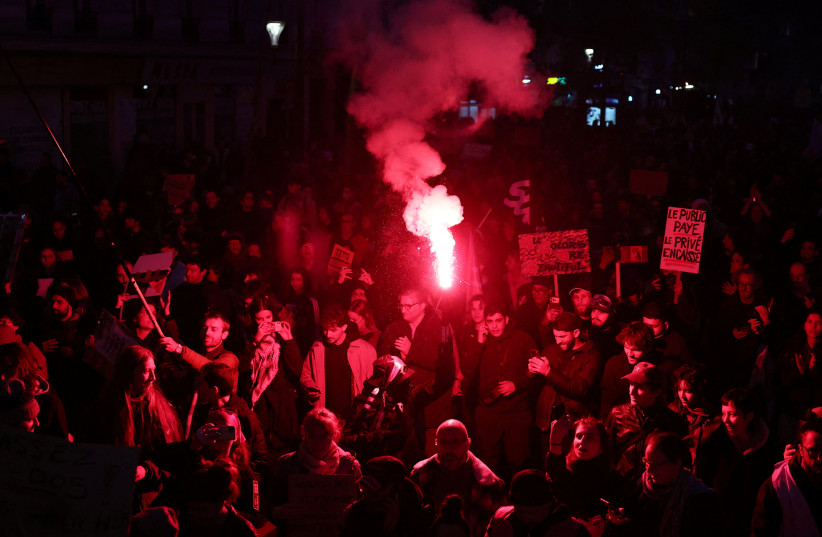
US President Donald Trump supplied the script. As French students filled the streets, he dismissed their grievances as a pretext and blamed mass migration and “Islam wanting to take over.” Burning storefronts, masked youths, occasional Palestinian flags, and contextless viral footage made the story easy to assemble: Europe opened its doors, ignored Islamism and uncontrolled immigration, and is now losing control.
That mistakes a real European problem for the cause of everything. Europe does face irregular migration, failed integration, Islamist networks, and antisemitic violence. But the French protests began in schools serving disadvantaged communities over teacher shortages, deteriorating facilities, university access, and social inequality, then widened to living costs and public services.
Violent groups and looters operated within and alongside a much broader movement whose demands remained overwhelmingly social. Islamism is a security threat; it is not the explanation for these protests.
The narrative persists because it serves a powerful Israeli conclusion: We warned you. You lectured us about borders, security, and human rights; now you are paying for your naivety. After October 7, that conclusion became easier to sustain as distinctions between Muslim, Arab, migrant, refugee, pro-Palestinian activist, Islamist, and rioter blurred into a single threatening figure.
The error is not border control. It is carrying the logic of the border into citizenship.
Liberalism does not abolish borders. A democratic nation-state has the lawful authority to decide who may enter, remain, and become citizens, and European law recognizes its power to control entry, residence, and removal subject to asylum obligations, due process, and the prohibition on returning people to persecution.
That authority is not a retreat from liberalism; exercised lawfully, it helps preserve the public consent on which liberal order depends. Asylum is a legal protection, labor migration a policy choice, and irregular entry does not itself confer a right to remain.
Citizenship is the line that logic cannot cross. A third-generation French citizen of Algerian origin is not an immigration problem awaiting a belated solution. Whatever a state failed to resolve at its border cannot be corrected decades later by treating its own citizens as provisional members. Admission is an exercise of sovereignty; citizenship confers equal membership.
The political distinction in Israel
Israel imports the same confusion into two populations that require opposite policies. The distinction is political, not ethnic: shared history, kinship, and identity do not erase the difference in their relationship to the Israeli state.
The conflict with the Palestinians in the West Bank and Gaza is national, not migratory. Israel’s strategic objective must be political separation: a defensible border, enforceable security arrangements, and ultimately a demilitarized Palestinian state, rather than permanent rule over millions who are not Israeli citizens.
Permanent control is not integration. Annexation without equal citizenship is not separation.
Arab citizens of Israel present the inverse challenge. They are not newcomers awaiting admission into somebody else’s country; they are already home. Most descend from communities that remained within Israel after 1948, with families rooted here for generations. The state’s task is not separation but equal citizenship: security, opportunity, public investment, and political representation.
Palestinians outside Israeli citizenship should not remain permanently under Israeli rule; Arabs within it cannot remain permanently outside Israeli power.
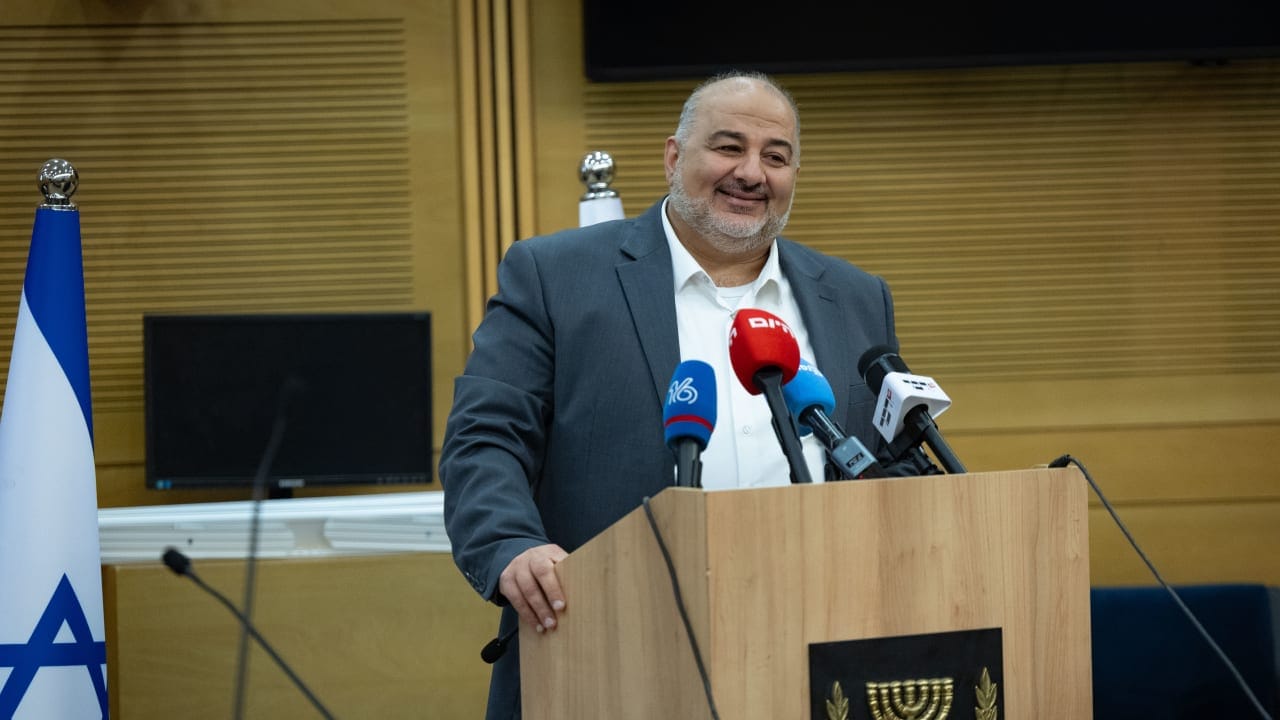
Nearly 840,000 Israelis voted for the Arab parties Ra’am and the Joint List, 64% more than in 2022. Together they won 19 Knesset seats, the highest Arab representation in Israel’s history. They did not reject the system; they chose it.
Months earlier, a representative survey found that 77.2% of Arab respondents supported an Arab party joining the next governing coalition and 63.7% supported Arab-Jewish political partnership. Israel’s Arab citizens are asking for political power at home – through Israeli institutions.
Nor is Arab influence over government unprecedented. Yitzhak Rabin’s government survived with Arab parliamentary support from outside the coalition; Prime Minister Benjamin Netanyahu himself courted Ra’am when he needed its votes; and in 2021, Ra’am joined the governing coalition, turning representation into budgets and policy for Arab communities. None of this made Israel less Jewish or democratic; governments are made and unmade by a Knesset majority, not a Jewish majority.
Netanyahu’s bloc has 53 seats, the Jewish-led opposition 48, and the Arab parties 19; the latter two together hold 67. Three of the four Jewish-led opposition parties nevertheless ruled out governing with Arab parties, although much of the same camp had governed with Ra’am in 2021. By ruling them out, they accepted Netanyahu’s premise that Arab votes count differently when governments are formed – even though an anti-Netanyahu majority of 67 does not become a minority because 19 of its MKs are Arab.
After the vote, specific inquiries into alleged irregularities and foreign interference were generalized into suspicion of Arab political participation itself, despite election officials rejecting claims of systematic electoral abuse and the Shin Bet (Israel Security Agency) stressing that its inquiries concerned individuals, not a community. Likud’s warning of an “Islamization” of Israel recasts Arab citizens as invaders.
Arab parties as legitimate governing partners
No party has an automatic right to govern; every party should be judged by its program, conduct, and willingness to assume the obligations of coalition government. Ethnicity is not a governing criterion. Arab parties prepared to accept those obligations should be treated as legitimate governing partners, sharing responsibility for budgets, security, public services, and collective decisions.
Equal citizenship cannot mean permanent spectatorship.
A democratic state has an interest in channeling political power through ballots, parties, parliament, and government. Exclusion does not extinguish that power; it drives it elsewhere, into abstention, alienation, or protest. A state that blocks political influence erodes the incentive to seek change through the system.
Israel is making two opposite errors at once: It resists separation where separation is necessary and equality where equality is indispensable. It binds itself ever more tightly to Palestinians who are not its citizens while treating citizens as though their place inside the political community remains conditional.
The current protest wave in Europe is social and political, not civilizational. Europe must control entry, confront extremism where it exists, grant asylum where protection is owed, return those who have no right to remain, and integrate those who do. Once people are citizens, ancestry cannot leave them permanently on probation.
Israel requires the same clarity: separation from Palestinians who are not its citizens, and full political membership for the Arab citizens who are. Borders define the state; citizenship defines who owns it.
The writer is founder and principal of Line of State, a strategic practice working with governments, institutions, and decision-makers on strategy, risk, access, and security decisions in high-stakes environments.