I recently finished rereading Joseph Roth’s The Radetzky March. This time, I found myself thinking about Israel.
Perhaps it was the timing. In May, Roth’s masterpiece, first published in German in 1932, returned to Israeli bookstores in a new Hebrew edition, translated by Ilana Hammerman. Then came the October 27 election, and this story of the Habsburg Empire’s final decades suddenly felt closer to home.
Not because Prime Minister Benjamin Netanyahu resembles emperor Franz Joseph, or because Israel is an empire approaching collapse. What interested me was something simpler: how hard it becomes to imagine politics without someone who has dominated it for so long.
Roth tells the story of three generations of the Trotta family. It begins in 1859, when Joseph Trotta saves the emperor’s life at the Battle of Solferino. His courage earns him a title and a place in imperial history. Yet Austria lost the battle. The family’s great patriotic legend was born from defeat.
Years later, Trotta discovers that a school textbook has turned his actions into an exaggerated tale of heroism. He protests to the emperor himself. The account eventually disappears, but Trotta leaves the army, disillusioned with an institution he once admired.
He is not rejecting his country. He cares enough about it to insist that its history be truthful.
Reading those pages, I thought about Israel’s debate over October 7, 2023. More than three years have passed, and Israelis are still arguing about responsibility. Who failed? Who knew what? And who will ultimately tell the story future generations learn?
The dispute over a state commission of inquiry reflects these disagreements. The government argues that a different appointment mechanism would command broader public confidence. Critics insist that the established procedure would better protect the investigation’s independence.
Whatever the mechanism, an investigation should discover what happened, not validate what politicians already believe.
Trotta wanted the truth restored to a textbook. The families of October 7 deserve an investigation whose conclusions have not been determined in advance.
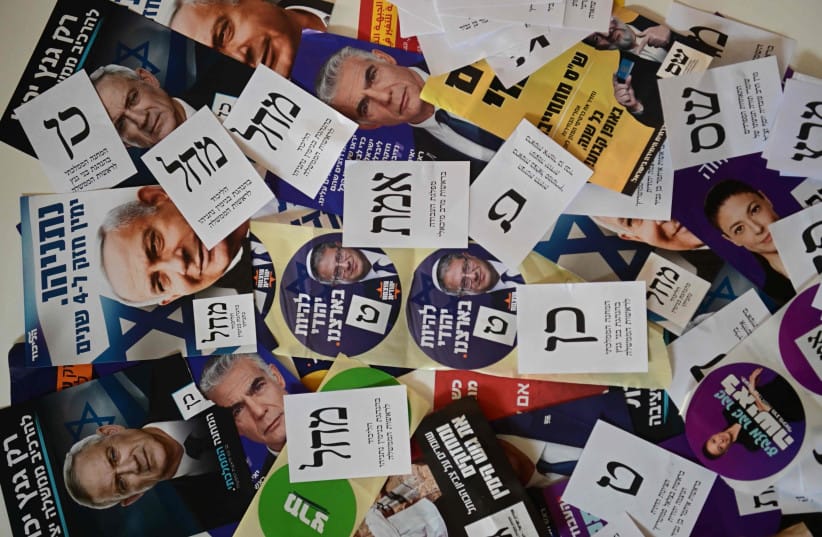
The election leaves Netanyahu in office, but his political future remains uncertain. His opponents want to replace him, yet still cannot agree on how to form a government.
For years, Israeli politics has revolved around one man. His supporters see him as indispensable. His opponents have devoted enormous energy to removing him. But what happens the morning after?
One of the characters who stayed with me most was Franz von Trotta, the district commissioner who devotes his life to serving emperor Franz Joseph. He is decent, dutiful, and sincerely loyal. But that loyalty comes at a price. After so many years serving the emperor and the monarchy, he can scarcely imagine life without them.
Near the novel’s end, the emperor dies. Two years later, the grieving commissioner dies too. The world he knew is gone, and he cannot find his place in what follows. His son, Carl Joseph, inherits expectations and loyalties he never chose, and struggles in a society that no longer makes much sense to him.
Many young Israelis have known scarcely any other prime minister. Whether they admire Netanyahu or oppose him, they have inherited a political culture built around him. For his supporters, the difficult realization may be that loyalty to Israel and loyalty to Netanyahu are not the same thing.
For his opponents, removing Netanyahu may have become a substitute for explaining what they would actually do differently.
Striking reversal
There is another reason Roth’s novel speaks to me. Born in 1894 into a Jewish family in Galicia, then part of the Habsburg Empire, he grew up in a society where someone could be Jewish, speak German, and feel attached to a state composed of many peoples.
That empire was hardly ideal. Antisemitism was real, and discrimination was part of everyday life. Yet Roth mourned its disappearance because it had offered minorities a way to belong without sharing the nationality of the majority. He distrusted nationalism, including Zionism, and feared what happened when ancestry became the measure of belonging.
Roth died in exile in Paris in 1939, shortly before the Holocaust would demonstrate so terribly why Jewish sovereignty mattered.
Reading him again as an Israeli, I was struck by the reversal. Roth was a Jew mourning the loss of a political order in which Jews had been a minority. Israel was created so that Jews would no longer have to depend on others for their collective security.
But what happens when Jews become the majority? How does a Jewish state ensure that its Arab citizens can participate fully in political life? The question is not new. The 2018 Basic Law defining Israel as the nation-state of the Jewish people brought it into sharp focus.
Now Arab parties have won a record 19 seats. Their representatives could help determine Israel’s next government, yet several Jewish party leaders remain unwilling to rely on their parliamentary support.
The reversal is striking. A state created to free Jews from dependence on others now finds itself uneasy with the prospect of political dependence on its own Arab citizens.
The historical circumstances are different, of course. Many Arab citizens identify as Palestinians, and their representatives disagree profoundly about Israel’s character and future. Those differences are real and cannot be wished away.
But there is a precedent. In 2021, Mansour Abbas’s Ra’am joined the Bennett-Lapid coalition. Abbas later publicly acknowledged Israel’s Jewish character. The experiment showed both that partnership was possible and how difficult it could be to sustain.
Jewish political leaders should explain under what conditions they would govern with Arab parties. Arab leaders should be equally clear about the commitments and compromises they would bring to such a government. The question is no longer whether partnership is imaginable; Israel has already seen it happen. The question is whether it can endure.
Roth’s Habsburg Empire could not adapt to the changes taking place within it. Israel has something the monarchy lacked: democratic institutions that allow governments to change without the state itself coming apart.
Whether Netanyahu stays or goes, Israelis will still have to confront October 7, rebuild trust, and make room for Arab citizens to help shape the country’s future.
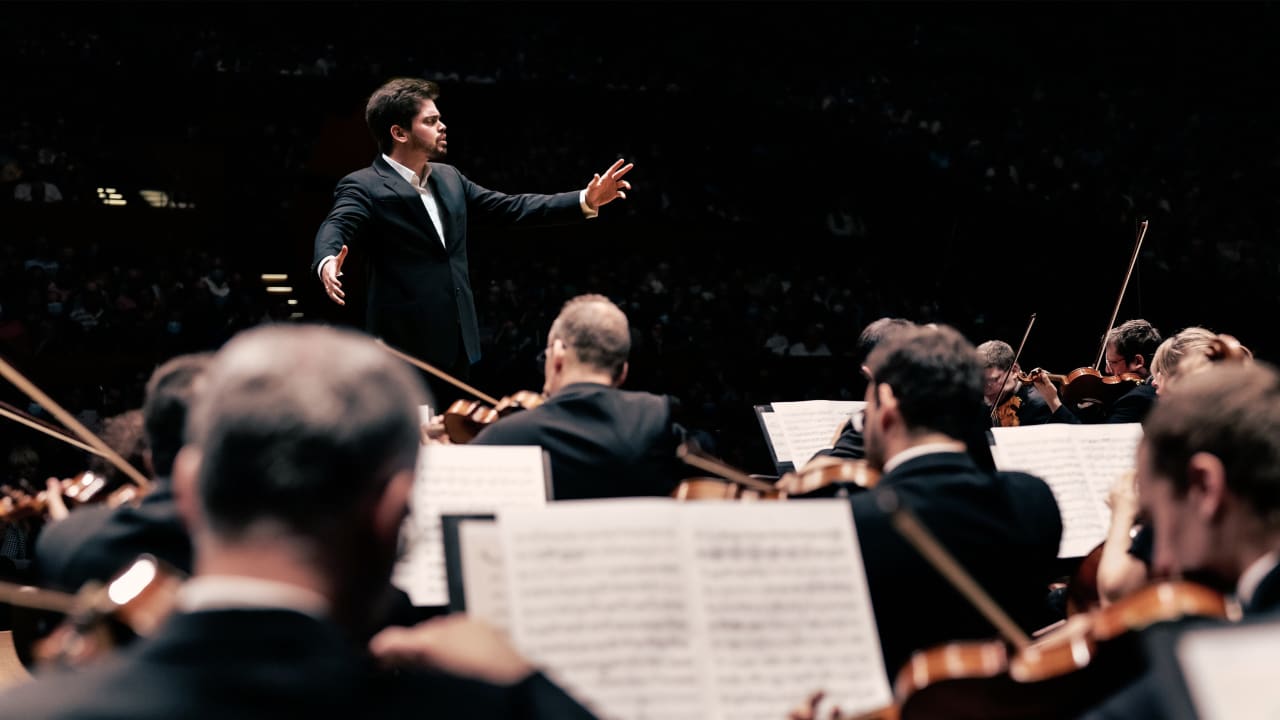
Vienna’s New Year’s Concert has a lovely tradition: when the orchestra plays the "Radetzky March," the conductor turns toward the audience and invites everyone to clap along.
The march was composed in 1848 to celebrate an imperial military victory over an Italian national movement. Today, that familiar music offers a different image: an entire hall joining in. The conductor matters. But the music belongs to the country.
The writer is a senior fellow at the Jewish People Policy Institute (JPPI) and a professor of European studies and international relations in the Department of Politics and Government at Ben-Gurion University of the Negev.