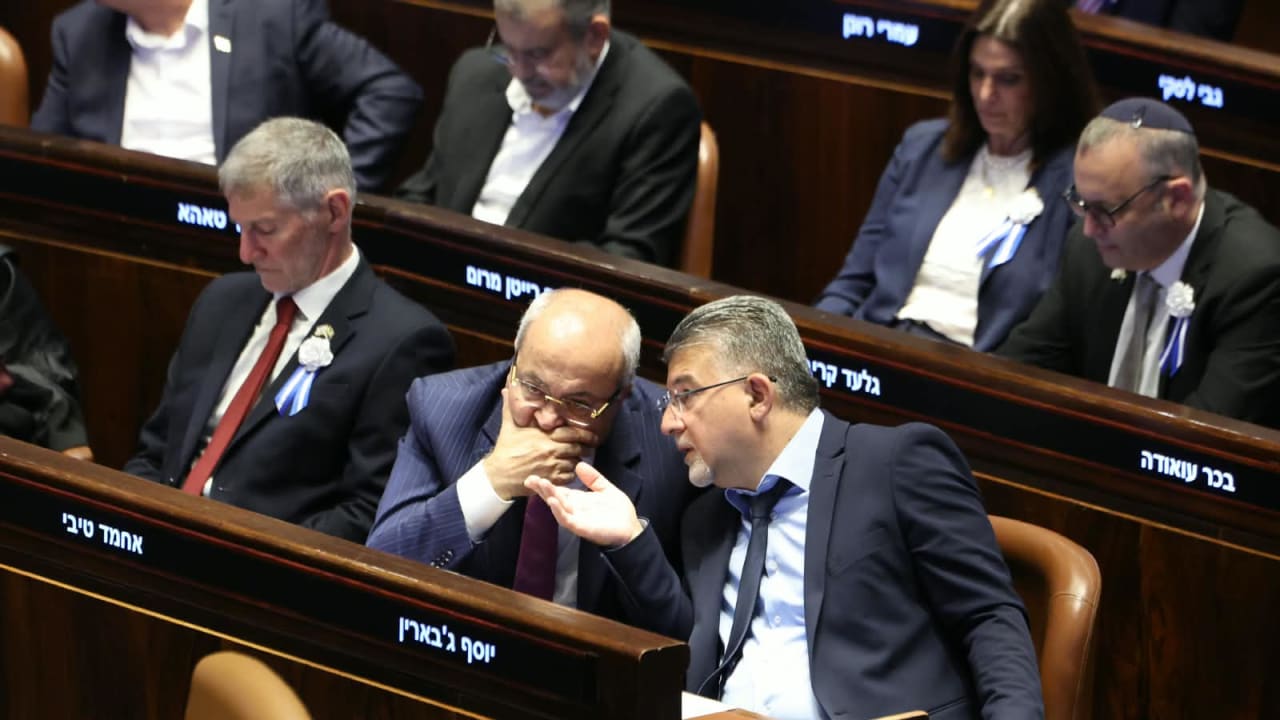
Gadi Eisenkot, Yair Lapid, Naftali Bennett, Avigdor Liberman, Yair Golan – I want to request something from you. I don't need you to agree with me on everything or abandon your positions. I simply ask that you not rule me out from the start as a legitimate partner in shaping this country's future.
I am Hyam Tannous. An Arab, a Christian, an Israeli citizen, and a board member of Women Wage Peace. I know that the prospect of political partnership with Arab parties raises genuine fears among many Jewish Israelis. After the difficult years we have been through, I understand those fears. I, too, know what it means to be afraid and to worry about our children's future. Those fears deserve to be heard, but we must not allow them to determine in advance what is possible and what is not.
One of the main concerns is that a government that includes Arab parties would struggle to make essential security decisions. What would happen if Israel needed to take military action to protect its citizens, and its coalition partners opposed it? This is a serious question. A government must be able to protect its citizens, even in the most difficult circumstances.
Sitting at the table to reach agreements
That is why genuine negotiations are needed to establish the government's coalition guidelines, defining policy and how disagreements would be handled. Is it possible to reach such agreements? I don't know. But to find out, we first have to sit down and talk. And perhaps such a partnership could even broaden our understanding of security, allowing us to discuss not only how to respond to the next threat but also how to prevent it.
But fear is not only about security. We have grown accustomed to talking about one another rather than talking to one another, and that distance deepens mistrust. From my own experience, I know that things can be different. For years, I worked as a supervisor in the Education Ministry, alongside Jewish and Arab educators. We did not always agree, but we knew how to take shared responsibility for our children's education. The same kind of cooperation takes place every day in hospitals, universities, and workplaces across the country.
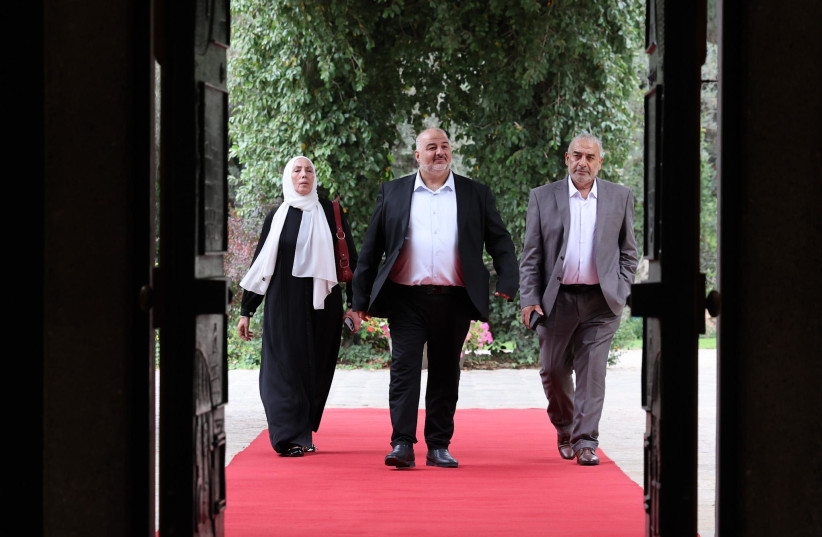
There is also a voice in Israel that is not heard often enough: Jews and Arabs who do not see one another as enemies, who refuse to accept separation and mistrust as inevitable, and who believe in a shared future. I encounter these people in Women Wage Peace, but they can be found far beyond our movement. It is time for our political leadership to give that voice a place as well.
In the recent elections, the Arab parties won 19 seats in the Knesset. Hundreds of thousands of citizens went to the polls to elect representatives who would have a say in the country's future. For years, we heard the same questions: Where are the Arabs? Why don't they come out and vote? And now, when Arab citizens have turned out in large numbers, suddenly our voices are no longer legitimate?
It is hard to describe the sense of hurt and insult that such statements cause. Those seats are not merely numbers in coalition negotiations. They represent a community that has the right to influence the country's future. This does not mean that every party is automatically entitled to a place in government, but there is no justification for ruling out elected representatives in advance simply because of their national identity.
Partners in shaping Israel's future
Especially now, when Israeli society is wounded and deeply divided, the question is not only what kind of government will be formed. The question is what kind of country we want to be. Will we continue to let fear define the boundaries of possible partnership between us, or will we be willing to consider another possibility?
An Israel in which Jews and Arabs do not merely share the same space but are partners in shaping its future will not emerge overnight. But the willingness of political leaders to recognize such a partnership as a legitimate possibility could mark the beginning of profound change.
That is why I call on the leaders of the parties seeking to form the next government: Sit down with representatives of the Arab parties. Ask the difficult questions and seriously explore whether agreements can be reached. No one can guarantee that negotiations will succeed, but we must not decide in advance that they are bound to fail.
I am not asking us to stop being afraid. I am asking that we not allow fear to determine our future. Our children, Jewish and Arab alike, deserve a future in which they can grow up here without fearing one another. A future of security, equality, and peace.
The writer is a board member of Women Wage Peace.