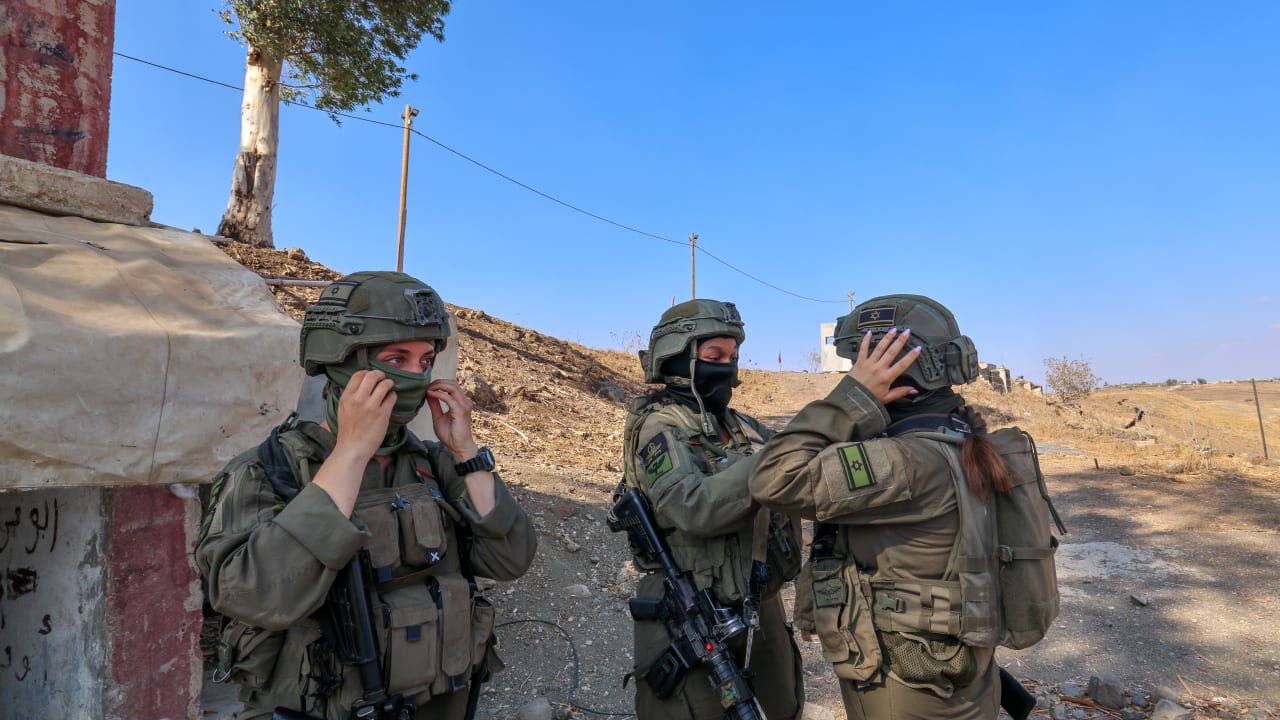
The events following October 7, 2023, brought visibility to the roles of Israeli women in crisis. Reports of female combat soldiers, surveillance operators, tank crews, security coordinators, and police officers revealed an extraordinary level of active heroism.
Yet, this involvement extended far beyond the battlefield, encompassing female paramedics, mental health professionals tending to invisible wounds, reservists' partners maintaining systemic stability at home, and mothers managing the acute anxiety of having deployed children.
Without preparation, Israeli women effectively became the primary structural backbone of both the frontlines and the home front.
Observing their functional capacity reveals a profound clinical phenomenon: Women appear to possess a phenomenal adaptive mechanism, demonstrating the ability to sustain a career, family structure, and caregiving duties, all while suffering through severe internal chaos and psychological strain.
This high level of functioning presents a critical scientific and therapeutic opportunity. However, it cannot be viewed as a finished model for recovery; rather, it is a complex survival mechanism that requires deconstruction.
If we can isolate this mechanism, understanding how women harness the psychological endurance to maintain daily life while concurrently addressing the internal cost they pay to do so, we can develop a more sophisticated rehabilitation protocol.
Decoding how functionality is sustained in the shadow of trauma is essential not only for women, but for treating men returning from the battlefield who struggle to readjust, children who have lost their safety net, and a society seeking a path to sustainable recovery.
Just as pharmaceutical research can no longer rely solely on the male physiology, understanding trauma and recovery demands a rigorous analysis of women's specific adaptive responses.
To extract clinical value from this phenomenon, we must objectively measure its cost. A comprehensive study conducted by the NATAL Research Unit, supported by the Jewish Women's Foundation of Metropolitan Chicago, evaluated the functioning, distress levels, and resilience of women in Israel.
The unrecognized psychological, physiological toll on Women
The data present a complex clinical picture termed the Female Paradox. The research indicates that behind impressive daily functionality lies a heavy, often unrecognized psychological and physiological toll.
Statistically, 55% of women in treated NATAL reported a deterioration in their mental health since the outbreak of the war, compared to 31% of men.
Furthermore, 62% of women reported cumulative exhaustion and sleep disturbances, compared to 38% of men. This defines the core of the paradox: the capacity to maintain high external functioning frequently coexists with acute, suppressed mental distress.
Clinically, this presents a dangerous oversight. High functioning is often deceptive, broadcasting a reassuring metric of "healthy adaptation" or robust resilience. Flawless external functioning is frequently a survival strategy designed to maintain environmental stability for others, sustained at the cost of severe internal burnout.
Due to this paradox, the individuals who successfully uphold daily routines are at the highest risk of falling through the cracks of current diagnostic and support systems, simply because their distress does not manifest as an overt behavioral breakdown.
The NATAL research also analyzed women in secondary circles of trauma, those not on the immediate frontlines but subjected to continuous psychological strain.
The data showed that 47.4% of mothers with drafted children reported poor or fair physical health, compared to 25.8% of mothers without drafted children.
Among the partners of reservists who served for more than 200 days, 57% reported a negative impact on their relationship. The intensity of these metrics confirms that secondary trauma constitutes a highly significant, standalone clinical injury.
Alongside the psychological impact, the study quantifies a severe somatic toll. 45% of women reported a systemic decline in their overall physical condition.
The imperative to sustain high functioning can drive individuals toward self-medicating behaviors to manage somatic symptoms.
For example, among women evacuated from their homes due to the war, there was a 136% increase in the reliance on sleeping pills. Ultimately, the body absorbs the physiological cost of the psychological burden carried in silence.
These findings necessitate a paradigm shift in how therapeutic frameworks identify trauma and measure recovery. If the female adaptive response is to inform broader rehabilitation models, clinical metrics cannot rely solely on external markers of stability. We must develop tailored diagnostic tools capable of piercing the mask of high functioning.
Concurrently, as clinical systems often use the restoration of functioning as the primary metric for male rehabilitation, this paradox forces a critical reevaluation: we have to recognize that a return to function can be a deceptive symptom masking deeper, unresolved trauma.
The primary conclusion of this research is that distress and functional resilience are not mutually exclusive. Women are demonstrating remarkable resolve during a period of deep crisis. While acknowledging this strength is culturally and clinically vital, it must not serve as justification to ignore the unsustainable cost of that endurance.
Decoding the female survival architecture and addressing this hidden paradox is an essential step toward building accurate therapeutic models and establishing genuine, long-term societal resilience.
The writer, who holds a PhD, is head of the Research Department at NATAL and a social economy expert.