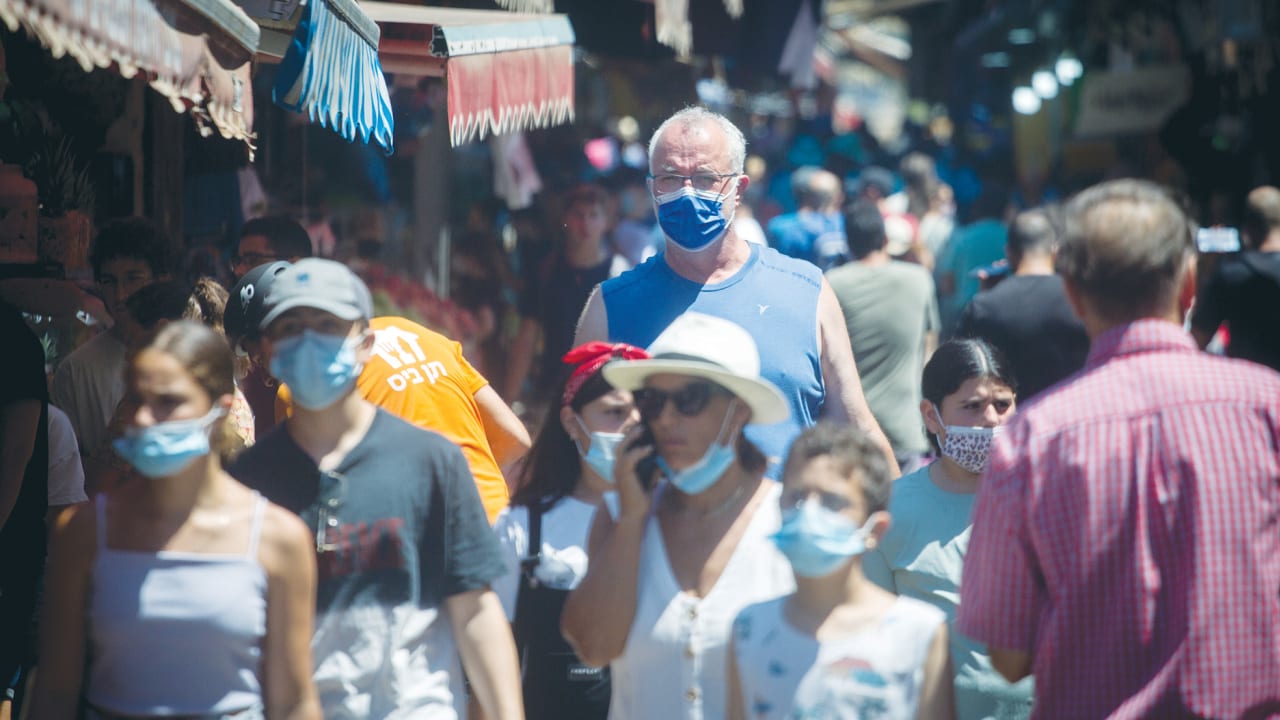
Incidents of physical altercations are already going on and will undoubtedly become worse as frustration mounts over what appears to be the government’s complete helplessness in stemming the resurgence of the pandemic. Reports of violence toward bus drivers who have asked ill-tempered passengers to don masks have been trickling in, and sooner or later uncooperative mall shoppers, synagogue worshipers and hospital visitors will, too, grow restless with the necessary but burdensome restrictions that have become part of our day to day lives. And while we may not quite parallel Dickens’s “best of times and worst of times” scenario, we dare not ignore the lessons of history. It takes very little to bring about a state of anarchy, and unless something is done immediately to bring an end to this worrying trend, concern over contracting the virus and becoming fatally ill will not be all that will threaten our peace of mind.
Throughout the earlier stages of the pandemic, violent behavior was virtually unheard of. Here and there someone would become agitated when asked to don a mask, but such events – which usually involved nothing more serious than a shouting match – were far and few between. And understandably so. After all, for a good number of months during the first year that the virus was rampant, Israel was in shut-down mode, resulting in a reduced number of malcontents roaming the streets. In addition, during the time that the possible variations of the vaccination were still being configured in laboratories and testing facilities, there was a legitimate fear of becoming seriously ill from the virus, so the general public was more than ready to be compliant with the restrictions that were issued by the Ministry of Health. True, some areas and locations were less accommodating than others to adherence to the regulations, but Israel, for the most part, understood that we were facing a crisis and accepted the need to keep mouths and noses covered, both indoors and outdoors.
But then the winter of despair turned into the spring of hope, and how free we felt when the seemingly draconian but clearly prudent policies in concert with the vaccination rollout brought about the desired results. Slowly but steadily the number of serious cases and deaths from the virus began to lessen, businesses were once again open and in full operation, children went back to the classroom and light replaced the darkness. By late spring, masks were hidden away and social distancing was no longer mandatory. The Red Sea, in other words, had been crossed and Israel was back on solid ground.
The Delta variant, needless to say, changed everything within a matter of weeks. And while the strangling restrictions of the first three phases of the pandemic have not yet resurfaced, the requirement to wear masks have returned, at least to some extent. Now, however, Israeli patience has become a good deal thinner, and the public less ready to be quietly compliant. The strain is beginning to show.
What neither the Health nor Public Security ministries have given any attention to is how stringent are citizens who are not empowered as law enforcement officers expected to be when confronted with intentional and unreasonable defiance of the regulations. I’m thinking, obviously, of the bus drivers who were injured as a result of attempting to protect the safety of their passengers. Unless that third booster quickly brings the virus, again, under control and returns the country to the stability it enjoyed several months ago, ordinary citizens who face the public – shop and store staff, medical and dental personnel, garages and parking lot attendants – will likely be called upon to insist that customers and clients wear masks while in enclosed premises. The Green Pass regulations have no provision on how to proceed when such requests are defiantly refused.
Many years ago, I was on a bus in New York when a passenger boarded, paid his fare, sat down, and lit up a cigarette. The bus driver, of course, politely reminded the passenger that smoking on the bus was not permitted. The passenger, a good deal less than politely, told the driver to..., well, let’s just say his response was not particularly friendly. The driver sighed and picked up a telephone receiver that was adjacent to his seat. After speaking for a few minutes, he changed to public address mode and told the passengers that police were on the way to remove the unlawful smoker and the bus would not be moving until they arrived. No more than 30 seconds passed before the smoker was “escorted” off the bus by other riders. And the driver, displaying extraordinary professionalism, made sure to provide the passenger with a transfer that he could use on another bus; he did, after all, pay his fare.
This is the kind of policy that needs to be legislated and implemented. Ordinary citizens must not be expected to enforce compliance with COVID-related regulations. When faced with refusal to cover up as required, they should be advised to contact the police or whatever office has the authority for ensuring the health and well being of the public. The slope between civil responsibility and willful disobedience of the constraints demanded of us has not yet turned slippery, and now is the time to ensure that it doesn’t.
It is not too much to ask our national and local leaders to ensure that we get through these dreadful experiences as intact as possible, and that history records this period of time as an epoch of wisdom and not one of foolishness.
The writer is a retired technical communicator currently assisting nonprofit organizations in the preparation of grant submissions and struggling to master the ins and outs of social media.