
Haifa in the summer no longer acts like a city trying to hold onto tourists for two hours. It is starting to look like a place that understands it has a complete story – it is just that it took about a hundred years to decide how to tell it. And this summer, between the heat rising from the asphalt and the cool breeze coming from the sea, this story is finally settling into a clearer rhythm: A city trying to turn itself from a transit space – into a destination.
Haifa is still not Tel Aviv. It is still stuck somewhere in the eighties in many ways – from neglected buildings to old-school characters – but on the other hand, that is what is beautiful about it. Because traveling to Haifa is a bit like traveling to the past – yearning for arcades with shops, buildings with rough stucco, streets with thick, shading tree trunks, and street food at stalls (not coffee carts. Stalls or at most a booth).
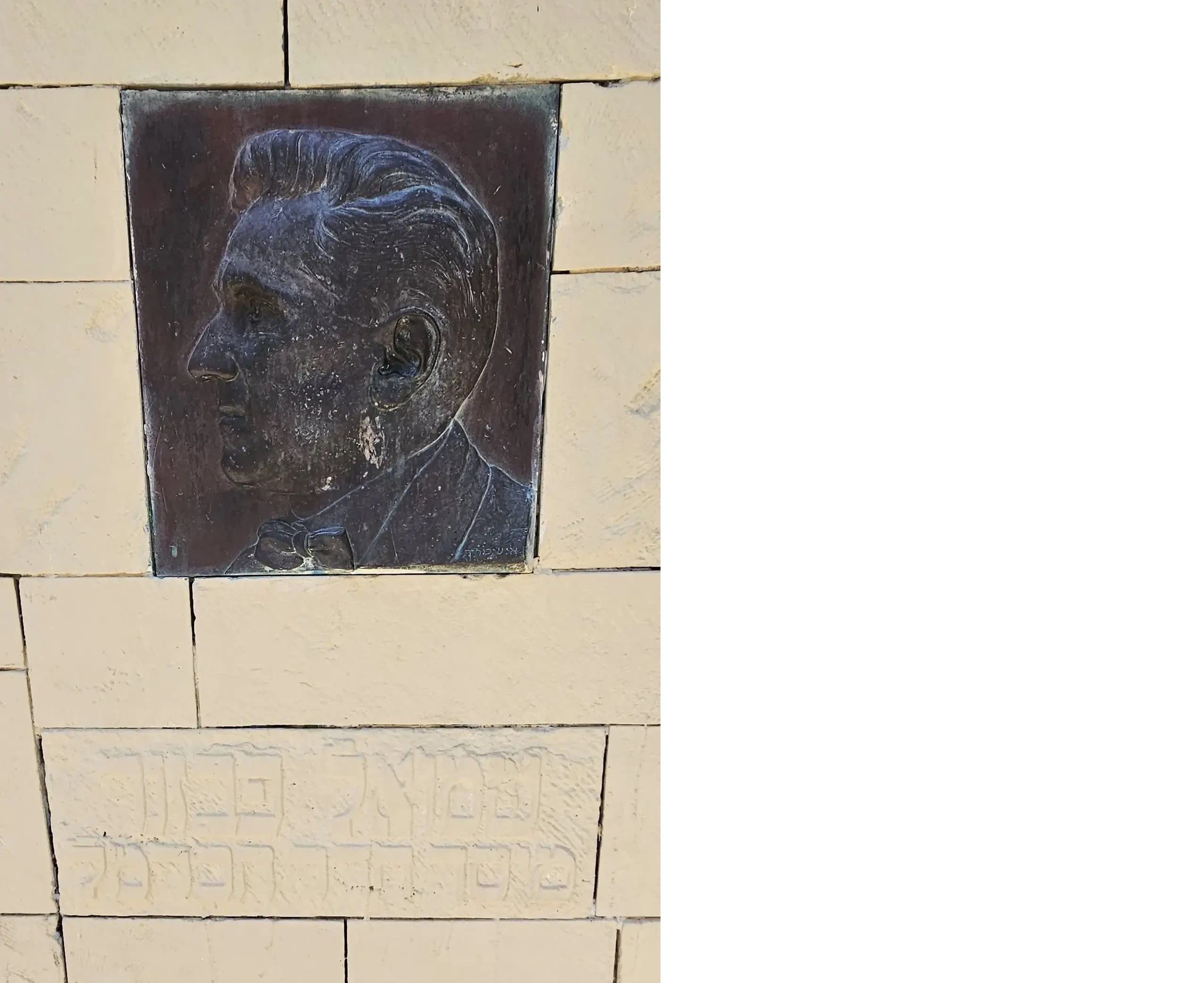
If you are looking for the starting point of all this, you need to go back to an almost utopian planning. It is no coincidence that the Hadar neighborhood comes up again and again in conversations about the new Haifa. The person who laid the foundations for the idea of a planned, green, and orderly neighborhood was the architect Richard Kaufmann, who conceived Hadar as a garden city before this concept turned into real estate marketing. Binyamin Garden, established in 1925 and considered one of the first public gardens in the country, was not just a piece of greenery – but a statement: A city can also be a space for walking, meeting, and staying, not just a transition between points.
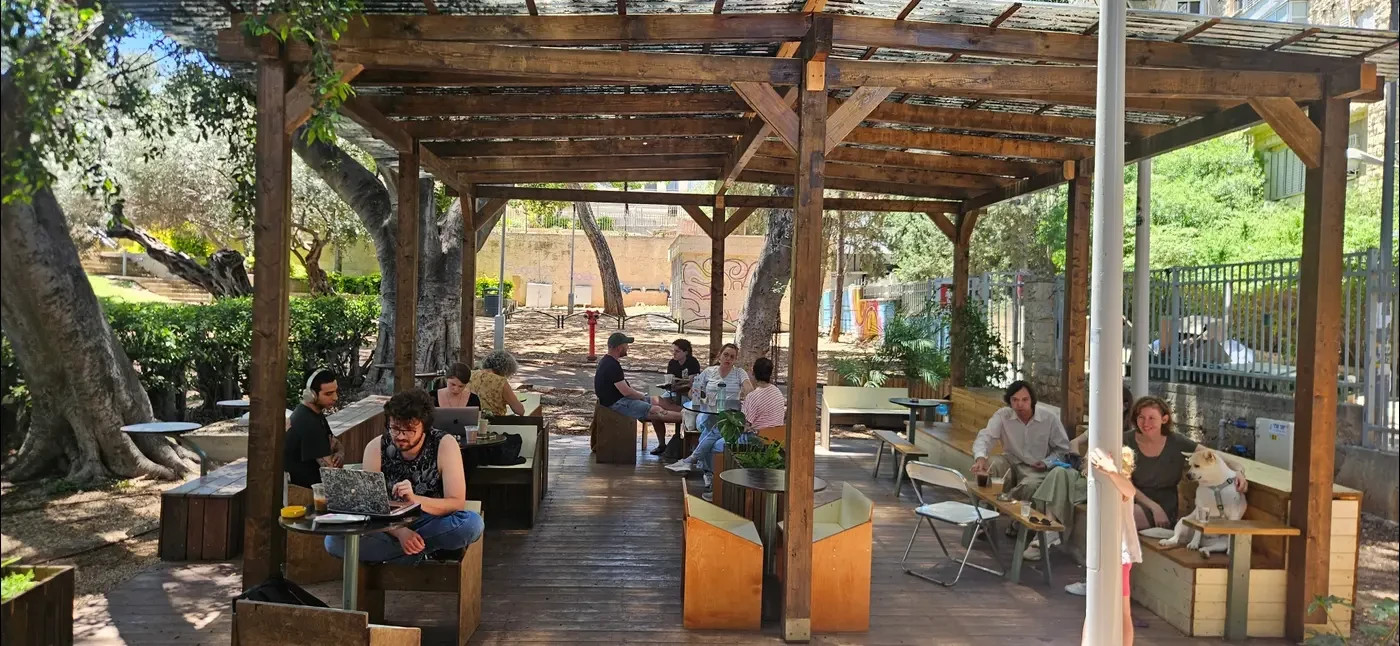
The problem is that Haifa, over decades, forgot this statement a bit. But what is interesting about the current summer is not just the physical renovation – but the attempt to restore its urban meaning. Around Binyamin Garden, at the foot of the Haifa Theater, a new-old fabric is beginning to form: Preservation buildings receiving modern uses, historic kiosks turning into cafes with WiFi and charging sockets, and above all a feeling that someone is trying to re-stitch the logic of walking in the city. In one of these buildings, Untitled Cafe recently opened – part of the Untitled business group, which is trying to revive the Hadar neighborhood.
"Upcycling" the veteran streets
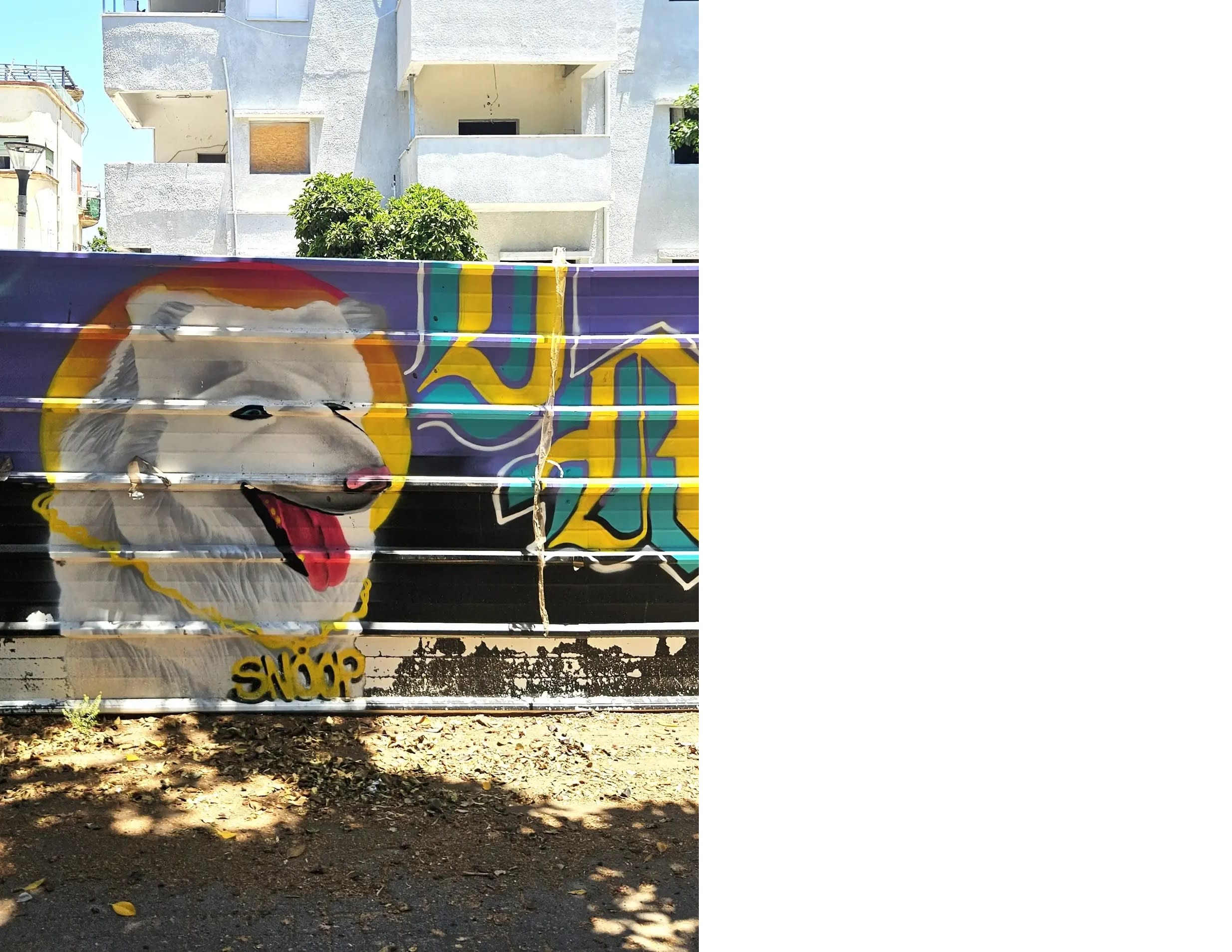
Within this move, Nordau Street, also in the Hadar neighborhood, is entering the picture, starting to look like an unofficial urban experiment. Once it was just another crumbling street below Hadar, today it is part of a broader planning that tries to assign roles to neighborhoods: Herzl Street as a shopping axis, HeHalutz Street as an art area, Sirkin Street as a culinary space. This might sound a bit like architecture on paper, but on the ground something else is beginning to form – layers of uses instead of the one-dimensionality of commerce or housing.
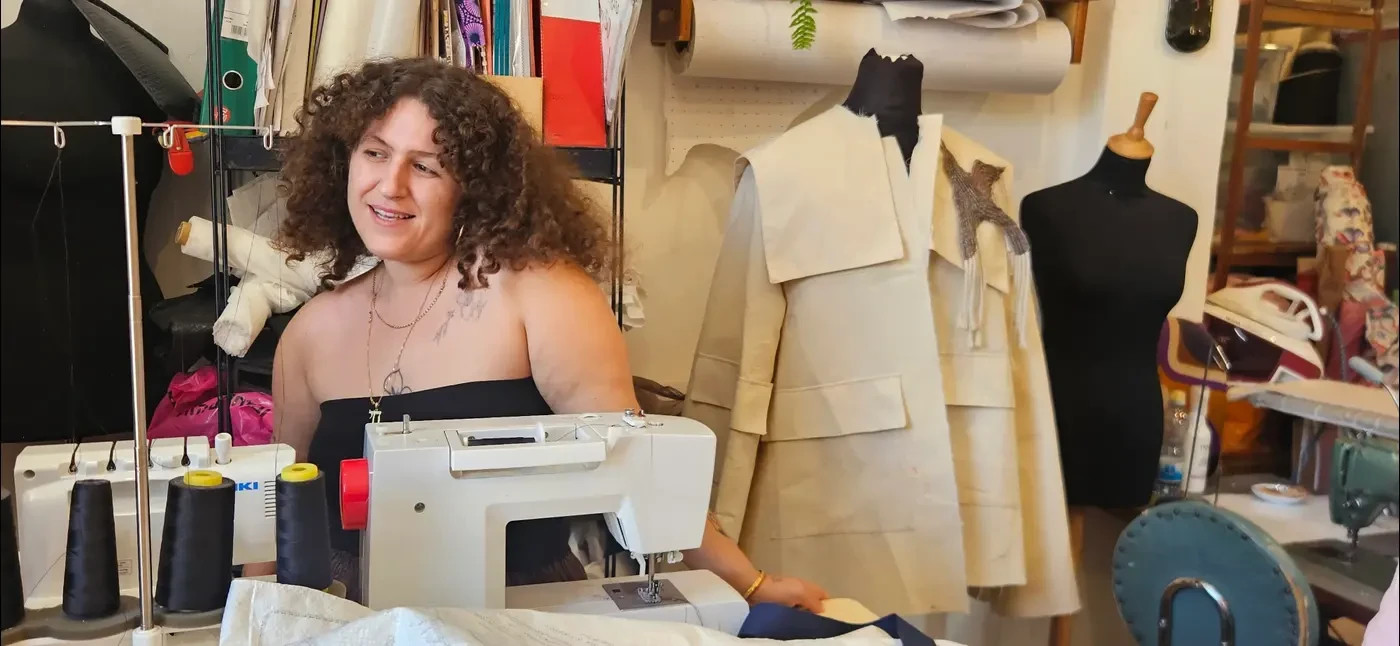
Precisely there, inside the old buildings, the places that tell the story of the new Haifa in the most accurate way are growing. Not the big ones, but the small ones. For example, Ofri Yosef Azulay from the Center for Sustainable Fashion, whose purpose is a sewing school and also a sewing workshop for students from WIZO. In her old shop, which was once the first branch of Haifa's optometrist Ziggy Shaul and features a painted ceiling from the 1920s, she does slow fashion, meaning sustainable fashion: Buying fabrics with forward planning. She calls it upcycling, and was the first to present a recycled project at WIZO as part of her studies. In the venue, she conducts sewing workshops that connect students to local creation, sewing workshops for Sachs bags, scrunchies for teenage girls, and more.
The rooftops of Haifa
But if there is a place that demonstrates this transition between an old city and a city trying to reinvent itself, it is Talpiot Market. This market has long ceased to be just about food. It has become a kind of urban laboratory, sometimes messy, sometimes genius. Between the concrete alleys and small shops, projects are entering that try to bring life back to a place that has already gone through almost every possible wave – including less pleasant periods. Today you can also find fresh pasta made daily in a small and intimate place, with a limited menu and prices that remained relatively accessible, alongside live music under a mulberry tree, as if someone decided that the market also needs a soundtrack.
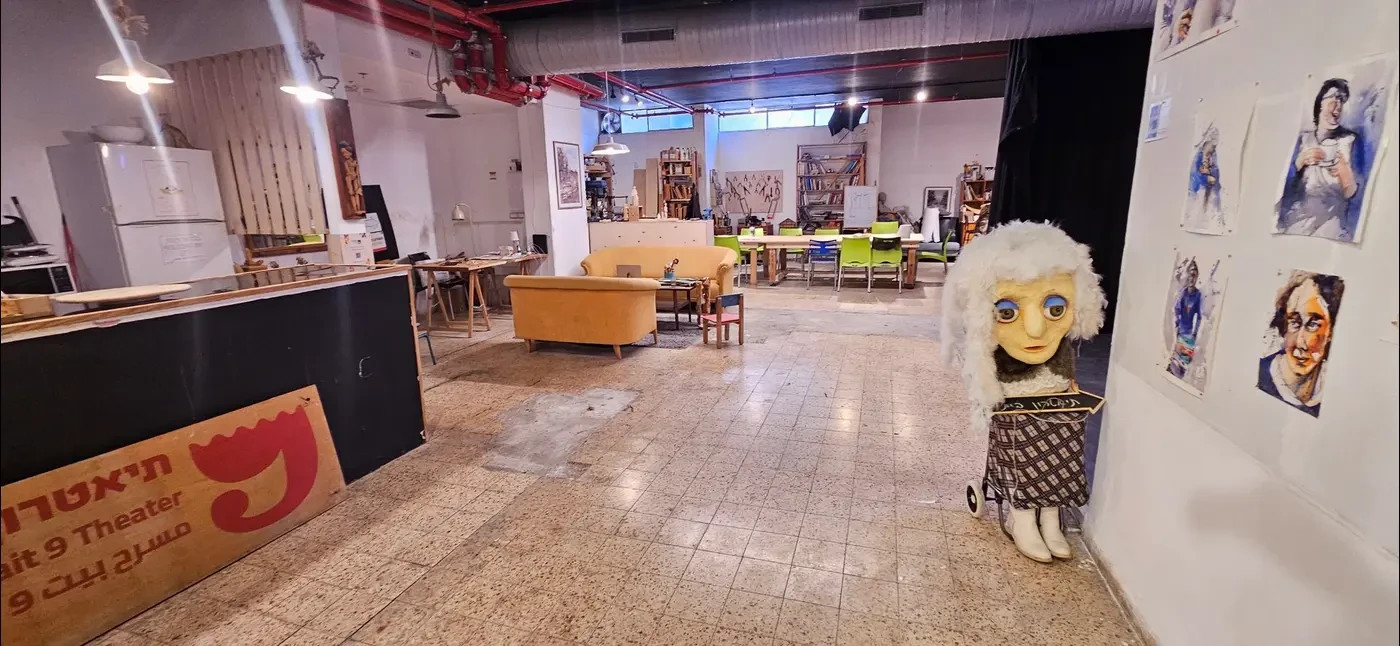
Above all this is one of the most Haifa-esque elements of recent times – the rooftops. Roof 21 (Sirkin Street), above a small theater building, has become one of the simplest and strongest places in the city. We will get to it in a moment, but first a word about the Bait 9 Theater. Udi and Yael Ehrlich, his mother, have been operating this special place for 16 years, which began in Acre and moved to Haifa. "This is a creative theater for the family with an emphasis on objects and puppets," they explain regarding the uniqueness of the place. Bait 9 Theater contains 10 plays in its repertoire, for example "Kafka of All People" – a story about Kafka for children. There is also a multidisciplinary theater and puppetry school here, as well as a woodcarving workshop – carving puppets and marionettes. This summer, a children's play marathon will take place on August 19–22, as well as a carving marathon.

Like Dizengoff Center and Hod Passage, but of Haifa
Still at 21 Sirkin. Passing several restaurants, cafes, a shop specializing in coffee, and a Haifa art shop – a kind of combination of Tel Aviv's Dizengoff Center and Hod Passage, but on a small scale. Continuing a bit further up the stairs, to the roof, and to Roof 21, a wonderful view of the Haifa Port with its cranes, tankers scattered in the sea, and a lot of blue and western wind is revealed. A great place for an afternoon or sunset drink, a huge space where fairs, a marketplace, and also performances by various DJs take place at night. Admission is free. With a drink in hand and a view before your eyes, this is also the place for the Haifa "L'chaim" blessing: "May we see Rambam from the sea and not the sea from Rambam."
The drug station that turned into a pasta station
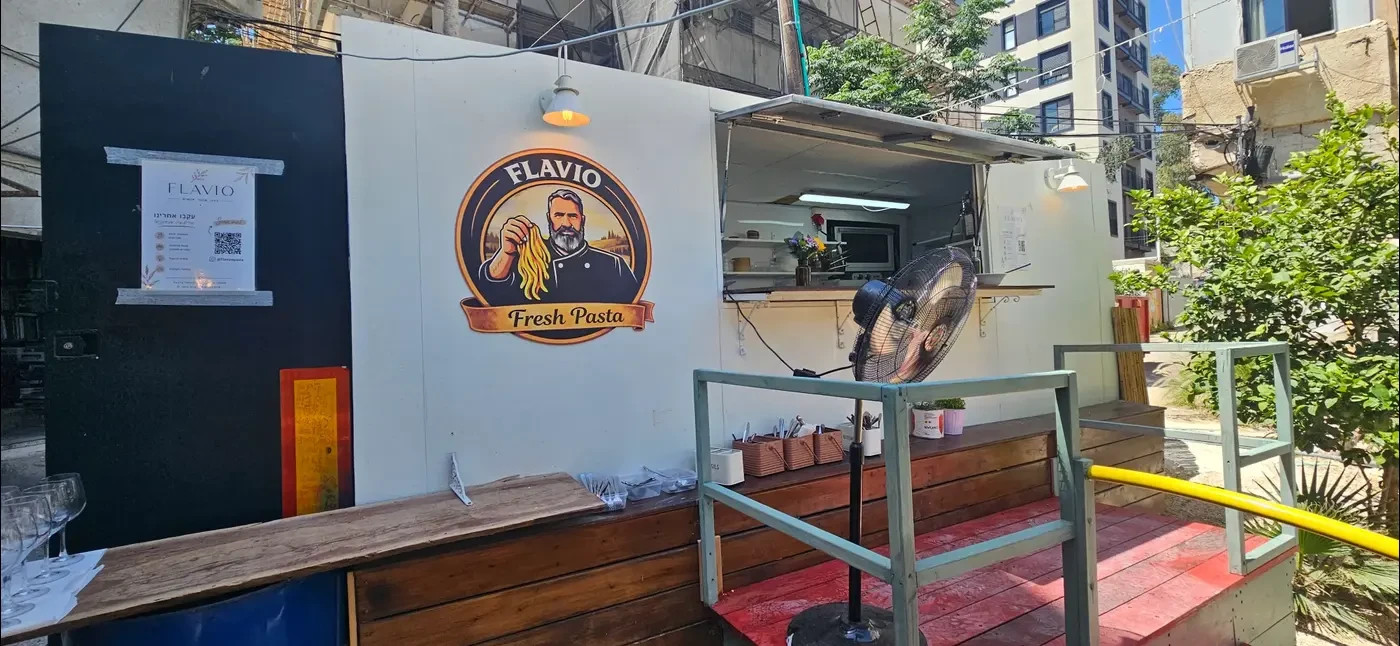
Back to Sirkin. Continuing a bit further to the north of the street, and there, with a slight right turn into a small garden, sits Flavio – a pasta place where a coffee cart used to be. Uri Cohen from Ein Hod entered the picture here, and established a kind of coffee cart – but for pasta – inside a community garden with a small stage for performances and live music under the mulberry tree.
"I fell in love with Talpiot Market and came in with my family, and we invested here," he says. "There was an active drug station working here, but I said we would bring life and artists here to encourage artists like painters, a local barber, and more." His partner, Flavio Frenkel from Brazil, prepares fresh pasta every day, and the menu here is indeed small but also accessible in price, from NIS 52 for a pasta dish with meat.
Haifa's "double decker bus"
And within all this, one cannot ignore the tourism layer that is finally entering the game. The double-decker bus wandering around the city is not just an attraction, but a real attempt to bring order to the geography of Haifa – a city where every ascent is also a change of story. For families, it is perhaps the most effective tool to understand how a port, Carmel, market, and neighborhood can feel like completely different cities, a few minutes' drive away.
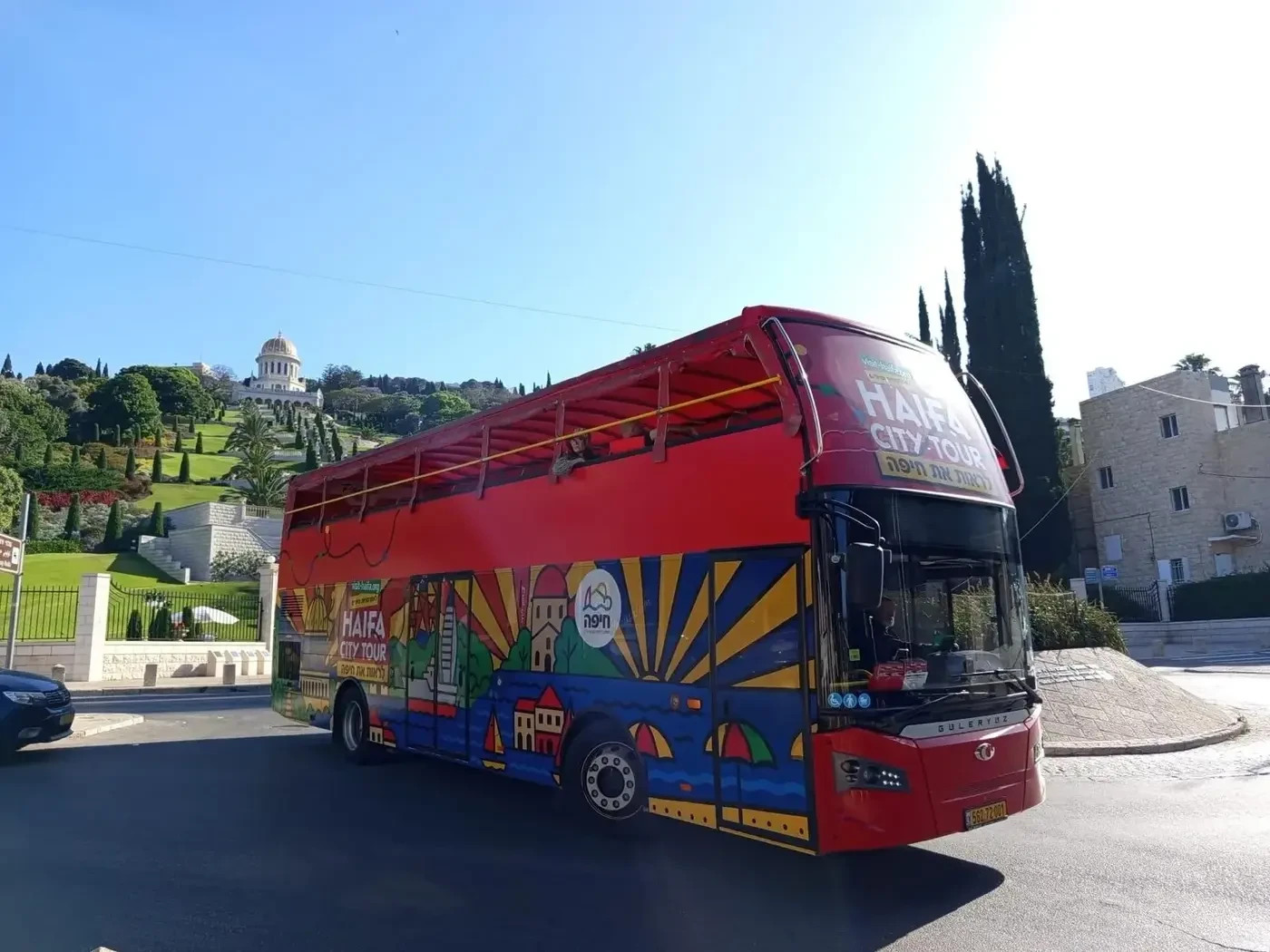
The same red "double decker bus" (like in the immortal song by The Smiths) of the Haifa Tourism Association – offers a guided tour on an open tourist bus, passing between the Carmel Center, Ben Gurion Boulevard and the German Colony, Louis Promenade, observation points, the port, and the main historical sites. For someone arriving in the city for the first time, this is probably the most convenient way to understand how all the different neighborhoods connect into one story. Alongside it, lantern tours are also held at Tel Shikmona, setting out at sunset to one of the oldest archaeological sites in the country, where thousands of years ago purple dye was produced on site from marine snails. And there are also graffiti tours, showcasing the city's developing street art through colorful works and local stories, while tradition-keepers will enjoy special Shabbat tours in the Carmel Center, Hadar, and the German Colony – all for a symbolic price of only NIS 15.
To eat, to sleep, to travel
And among all the new places, renovations, and attempts to reinvent the city, there are also small signs of a return to more precise cultural life – like the Nirvana restaurant (kosher), which recently reopened on the beach and marks another attempt to return places to the city that were part of its culinary memory. This is not just a matter of food, but of continuity: Haifa is learning not only to open new things, but also to bring back the old without turning it into a museum.
The change is also felt in the hospitality world. The Dan Carmel Hotel, perched on the Carmel ridge, is no longer just a place to sleep. It offers its guests a collaboration that includes guided tours of the city, whether in the culinary field or other content tours. Its location, facing the Bahai Gardens and above the Haifa Bay, also makes it an observation point that illustrates perhaps more than anything what makes the city different from any other city in Israel – a city stretched between mountain and sea, between port and culture, between industry and nature. Beyond a wonderful pool, a good breakfast, and a sea view from every room, the advantage of Dan Carmel is its location adjacent to the Louis Promenade, which extends along Hanassi Boulevard and overlooks the Haifa Bay, the Bahai Gardens, and the sea. Try going out for a walk specifically in the evenings, when the heat drops and a wonderful breeze comes from the sea – then the entire illuminated Haifa Bay is spread out before your eyes, and there are quite a few benches dotting the promenade for a stop and observation.
In the end, maybe that is what is most interesting about this Haifa summer: It does not try to be perfect, and does not try to look like Tel Aviv or Jerusalem. It is simply starting to accept itself as a city with difficult topography, complex history, and very many layers that do not always connect quickly. But precisely there, between Hadar and the rooftops, between Talpiot Market and the double-decker bus, Haifa manages to create a relatively rare feeling in Israel: A city you do not just pass through – but start to understand why it is worth staying in just a bit longer.
The writer was a guest of the Haifa Tourism Association.