
Anyone who visited Nazareth in December just a few years ago recalls the vibrant scene. The Old City was illuminated, a towering Christmas tree stood at its center, and pilgrim groups from around the globe mingled with Israeli families who flocked to soak in the holiday atmosphere in the alleyways surrounding the Basilica of the Annunciation. Restaurants operated at full capacity, and securing an empty hotel room was virtually impossible.
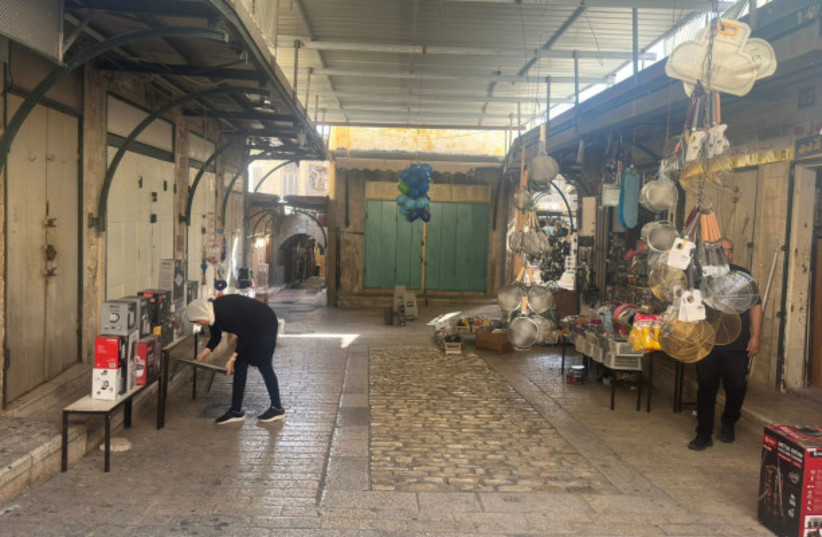
As November and December approach once again, Nazareth awaits the holiday season without certainty regarding visitor turnout. International pilgrims remain sparse, domestic tourism has slowed, and much of the signature atmosphere of years past has dissipated. Nevertheless, operators in hotels, restaurants, and shops refuse to surrender, exploring every possible avenue to revive visitor numbers.
From seasonal crisis to regional partnership
Nazareth - historically one of Israel’s and the world's premier tourist destinations - is confronting a protracted sectoral crisis that impacts surrounding localities due to several interconnected factors. Chief among these are the strains in Jewish-Arab relations across the region following the outbreak of the war in October 2023. In response, The Abraham Initiatives has presented a new project in Nazareth aimed at fostering tourism development throughout the city, the Lower Galilee, and the Valleys via close cooperation between Jewish and Arab local authorities.
The core premise of the project is that tourism transcends municipal borders. A visitor exploring Nazareth might equally tour the Jezreel Valley or Ramat Yishai, meaning cross-border collaboration can unlock economic dividends beyond the reach of any single municipality acting alone. Ahead of the rollout, regional tourist attractions, authorities, and relevant organizations underwent a comprehensive mapping process. While the initiative's final geographical boundaries remain fluid, it could ultimately encompass roughly 20 local authorities representing a population of some 500,000 residents, evenly split between Jews and Arabs. The planning phase is being guided by the consulting firm T.A.R.A.
The gathering brought together Yaakov Efrati, Chairman of the Appointed Committee at the Nazareth Municipality, alongside senior municipal officials. They were joined by representatives from the Jezreel Valley, Megiddo, and Bustan al-Marj regional councils; the Ramat Yishai, Ilut, Yafia, and Reineh local councils; and the Migdal Ha’emek and Shfaram municipalities. Additional participants included representatives from the Galilee and Valleys Cluster of Authorities, the Galilee Development Authority, the Agriculture Ministry, the Southern Jordan Drainage and River Authority, and key figures from the tourism industry. The event was hosted by businessman Waleed Afifi, a co-founder of the Association for the Development of Tourism in Nazareth.
Building a national model for shared tourism
During the proceedings, participants criticized the erosion of Nazareth's status as a tourism hub and the historical lack of investment in the city. Efrati asserted that following years of neglect, the municipality plans to place tourism development at the core of its municipal strategy by 2027. Afifi urged government ministries overseeing tourism to assume greater accountability and step up their engagement in Nazareth and the wider region.

Creating new attractions and bridging socio-economic gaps
Klil Knaani, Director of Economic Development at the Galilee and Valleys Cluster, noted that relying strictly on legacy attractions is insufficient, advocating for the creation of new draws geared toward domestic travelers, particularly in leisure and sports. Reyad Husari, Director of Economic Development at the Reineh Local Council, emphasized the need for the projects to help bridge socio-economic gaps between authorities. Tour guide and social activist Tareq Shihada observed that tourism has historically served as a moderating and unifying force during periods of heightened tension.
Shahira Shalaby and Amnon Be'eri-Sulitzeanu, co-CEOs of The Abraham Initiatives, stressed that existing resource disparities among authorities necessitate a shared regional framework, empowering all participating bodies to contribute to growth and share in its rewards. "Instead of each authority dealing with its challenges alone, we aim to create a space where Jewish and Arab authorities identify common interests and work together to achieve them," they stated. "We hope this initiative becomes a national model."