Women's groups outraged by all-male rabbinical c'tee
Israel Bar Association fails to select a woman to serve on the Appointments Committee for Rabbinical Judges.
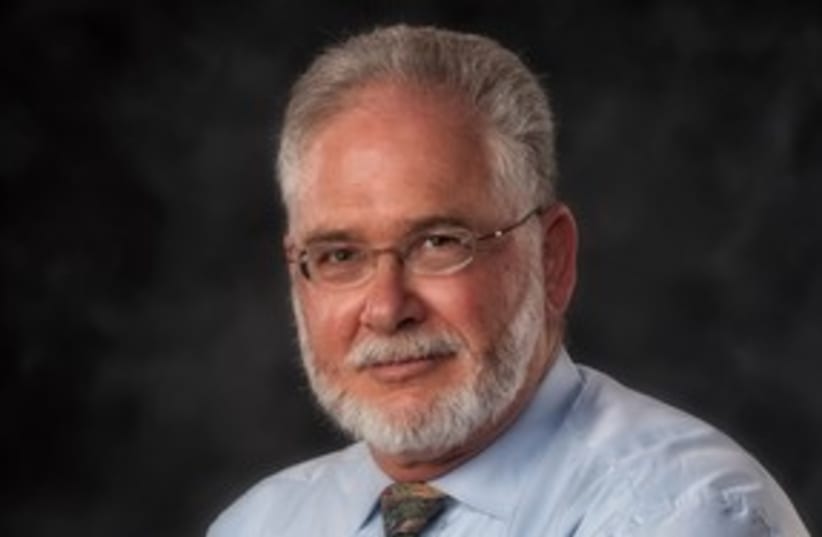
By JEREMY SHARONUri Regev 311(photo credit: Courtesy Uri Regev)
The Israel Bar Association angered a raft of liberal and women’s groups on Tuesday by failing to select a woman to serve on the Appointments Committee for Rabbinical Judges.The committee, which is headed by Justice Minister Yaakov Neeman and holds the power to elect judges to the country’s 12 regional rabbinical courts, voted instead to elect attorneys Asher Axelrod and Mordechai Eisenberg.One of the principle powers of the rabbinical courts is jurisdiction over matters of divorce, something that progressive groups see as prejudicial to the rights of women, who are at a disadvantage in divorce proceedings due to certain stipulations of Jewish law.Rabbi Uri Regev, director of the religious equality organization Hiddush, denounced the result as “a victory of political deals over the values and principles of equality and civil liberties” – a reference to a deal struck between internal factions of the Bar Association, which eliminated the chance that a woman would be elected.“To have an all-male committee might have been acceptable several decades ago, but in 2011, this is no longer the case,” he told The Jerusalem Post.“I would have expected the Bar Association to be guided, formally or informally, by the notion of advancing the status of women in Israel, especially in light of the tremendous impact the selection of dayanim [judges] has on the plight of women who fall into hands of the rabbinic courts,” he went on.“Their freedom, dignity and property are all impacted directly by the identity of the dayanim who will be appointed.”Hiddush and similar organizations regard the appointment of women to the committee as a vital goal in influencing the makeup of rabbinical courts across the country. The 10-member committee consists of the two chief rabbis, two rabbinical judges from the Rabbinical Court of Appeals, two government ministers, two Knesset members, and two attorneys selected by the Bar Association.There has been at least one woman on the committee for the past 12 years.A source within the Bar Association described the panel’s new composition as a 20-year setback in the pursuit of reform on critical issues such as divorce and mamzerut (the status of children born out of wedlock to a married woman). According to the source, the once-in-a-generation opportunity to fill empty seats on the Rabbinic Court of Appeals with progressive rabbinical judges will be lost.Two months ago, Yuri Geiron, the head of the Bar Association’s largest internal faction, pledged to the International Coalition for Agunah Rights (ICAR) to support the candidacy of a woman. According to sources within the bar, however, due to a deal with Eisenberg – the head of the association’s haredi (ultra- Orthodox) faction – Geiron shifted his support to him, and in return, Eisenberg pledged support for Geiron in the elections for the bar chairmanship – which he nevertheless lost.“It is a black day for the Bar Association, that they had to sell out women for the ultra-Orthodox, and everyone will pay the price in the future,” said Robyn Shames, ICAR’s executive director.Among those who lost out in the election, which took place on Tuesday evening, were two unaffiliated candidates running on a liberal, religious Zionist platform.“I understand the position of the women’s rights organizations,” Geiron told the Post in response, “and I also believe that it is the right one, and for 12 years I personally implemented this stance, voting for women to represent the Bar Association on the committee for appointing rabbinical judges. Unfortunately, due to certain circumstances that arose and the storm engulfing the legal world in Israel, and specifically the Bar Association, I had to give up this principle, which until now was a guiding light for me.”He stated that his faction had been a leader in promoting and electing women to public office in a number of legal realms, such as the selection committee for Qadis of the state Sharia courts.“No other faction or grouping in the Bar Association office has done as much as has my faction, ‘Lishka Aheret,’” he said. “This time it was not feasible, but it is possible that in light of this, it will oblige me to double my commitment in the future.”ICAR announced on Monday that in light of the (then-expected) selection of Axelrod and Eisenberg, it had prepared a draft bill for the Knesset to reserve two slots on the committee for women. The law was proposed on Monday by MKs Uri Orbach (Habayit Hayehudi), Tzipi Hotovely (Likud), Einat Wilf (Labor), Orit Zuaretz (Kadima) and Zehava Gal-On (Meretz).Batya Kehane, director of women’s divorce rights organization Mavoi Satum, called the failure to appoint even one female representative to the committee “a badge of shame” for society and the legal system.“The lack of female representation deepens the outrageous [religious and gender] imbalance that exists on the committee, which also includes only three non-haredi members,” she said. “The rabbinical courts are a state institution which are supposed to serve the general public.”Religious Zionist parties also weighed in on the issue, including the Ne’emanei Torah Ve’avodah group, which deplored “the takeover of the courts system by extreme haredi, anti-Zionist [elements].”
“The Bar Association’s selection of a haredi representative, because of a political deal... will result in the tightening of ultra-Orthodox parties’ control over the appointment of rabbinical judges,” the group said in a statement.It also criticized the lack of female representation. “The fact that the committee is responsible for the fate of many women, but that there is no room for even one woman, proves once again the extent to which the committee is completely detached from the people.”
if(catID != 151){
var cont = `Take Israel home with the new Jerusalem Post Store