Fundamentally Freund: The Vilna Gaon and Jewish destiny
It was 215 years ago that Rabbi Elijah the Gaon (Hebrew for genius) of Vilna returned his soul to its Maker.
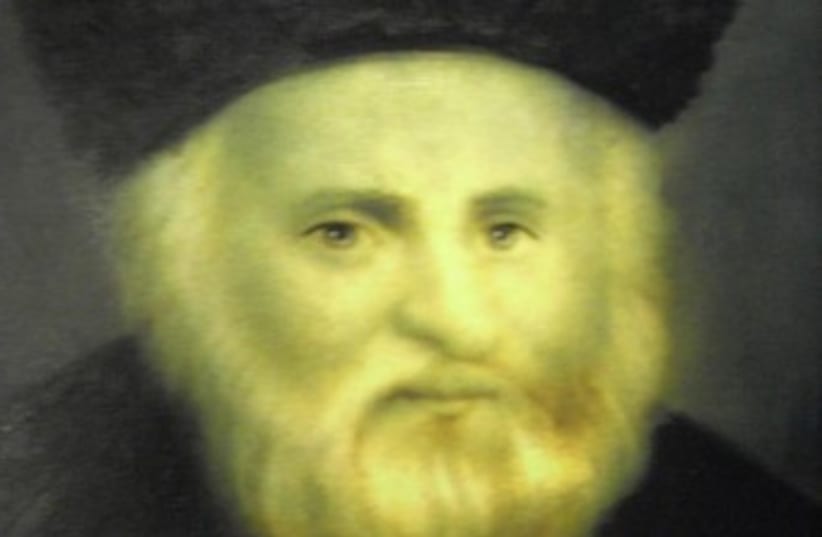
By MICHAEL FREUNDRabbi Elijah the Gaon 370(photo credit: Wikimedia Commons)
This Friday marks the anniversary of the passing of one of the greatest men to have walked this earth over the past few centuries, a figure that had a lasting impact on the Jewish people, as well as the State of Israel.It was 215 years ago this Friday, on the 19th of Tishrei during the intermediate days of Succot, that Rabbi Elijah the Gaon (Hebrew for genius) of Vilna returned his soul to its Maker.Most contemporary Jews have heard of this prodigious scholar, his vast erudition and unmitigated commitment to exploring all aspects of Jewish knowledge and learning.But few are familiar with how he laid the intellectual, spiritual and physical groundwork for the rebirth of the modern Jewish state more than a century before Theodor Herzl raised the banner of political Zionism.And in light of some of the challenges now facing Israel in the international arena, it is well worth taking a look back at the revolution that the Gaon wrought, the lessons of which remain remarkably relevant even today.Indeed, much has been written about the Vilna Gaon’s towering scholarship and achievements. As Prof. Jay M. Harris of Harvard has noted, the Vilna Gaon “set in motion an ethos of study that was to revolutionize rabbinic learning.”He revived the study of the Jerusalem Talmud and other ancient Jewish texts, sought to harmonize conflicting passages that had confounded other scholars for generations and meticulously traced the sources for the rulings contained in the Shulchan Aruch (the code of Jewish law).He waded through the vast sea of Jewish lore, correcting inconsistencies and making emendations where necessary, driven by an unquenchable thirst for truth and accuracy.A profoundly humble man, the Vilna Gaon neither held nor sought any public or communal position, devoting himself with all his might to the texts of our people. But his influence would extend far beyond the bookshelf, thanks in part to a simple yet weighty idea that he passionately advocated: the Jewish people should not remain passive in bringing about their own redemption.Though this belief went against the grain of much of European Jewry’s worldview at the time, the Gaon nonetheless encouraged his students to make aliya, which many did in three large waves that began in 1808.Eventually, thousands of his disciples and their families moved to the Land of Israel. As a result, by the middle of the 19th century, the majority of Jerusalem’s population was Jewish for the first time since the Roman invasion, and thus it has remained ever since.All thanks to the vision of a lone Jewish scholar in a study-hall in Lithuania.The Vilna Gaon’s groundbreaking conviction that the Jewish people needed to take practical steps to reclaim their ancient homeland were best expressed in the volume Kol HaTor (Hebrew for “Voice of the Turtledove,” a reference to a verse in the “Song of Songs”), which was written by his student Rabbi Hillel of Shklov.The book cites the words of the prophet Isaiah (54:2-3), who said, “Enlarge (“Harchivi” in the original Hebrew) the place of your tent and let them stretch forth the curtains of your dwelling places… for you shall spread out to the right and left, and your descendants shall possess the nations and inhabit the desolate cities.”The Kol HaTor says in the name of the Vilna Gaon that these verses contain within them the key to Jewish redemption, for the prophet Isaiah’s call of “Harchivi” is a command – a call to action to Jews everywhere to move to Israel and settle every corner of the Land.He notes chillingly that the only alternative to “Harchivi,” to Jewish growth and expansion, is “Hachrivi” (Hebrew for destruction). In other words, there is no room for withdrawal, or for turning back.Finally, says the Gaon, “we must know in advance that all the precious treasures included in the blessing of ‘Harchavah’ (enlargement) will come only when action is first take by the people of Israel themselves in an awakening from below.”With these words, the Vilna Gaon laid down a clear challenge to each and every Jew, delineating that our task is not to sit passively and wait for redemption from exile, but rather to take action and bring it about.Through this novel approach, the Gaon became a harbinger of modern Zionism, a forceful promoter of Jewish activism and a restorer of Jewish self-confidence and esteem.He stared at the seemingly impossible and overcame it. Propelled by a belief in the justness of our cause and deep faith in the Creator, he left behind a legacy of Jewish reclamation and restoration.After centuries of endless exile and persecution, the Vilna Gaon taught us all a critical lesson, one which resonates particularly strongly in light of today’s often frightening headlines: the Jewish people are not prisoners of fate, but partners with God in shaping our own destiny.It is a lesson that we would all do well to learn.
if(catID != 151){
var cont = `Take Israel home with the new Jerusalem Post Store