Though few lost sleep when Elvis Costello or the Pixies caved to anti-Israel pressure,their decisions merit a second glance.
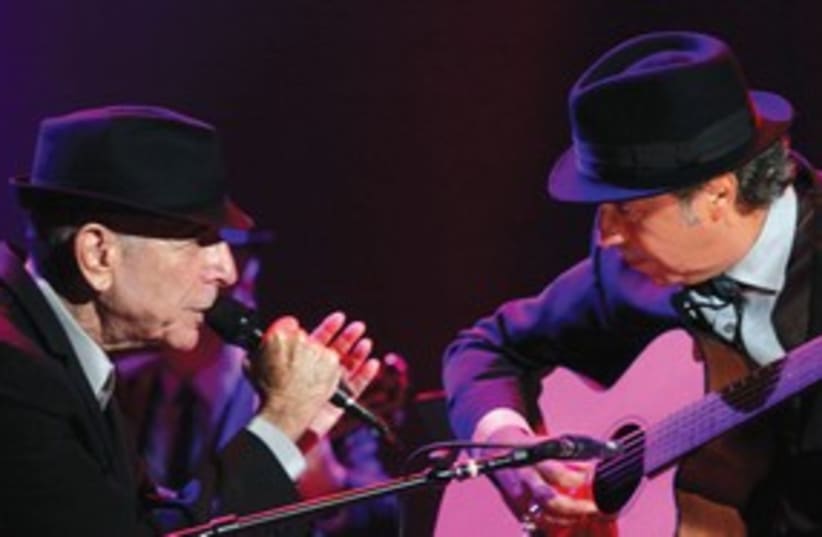
By CHARLEY J. LEVINECohen 311(photo credit: Sivan Farag)
Though few lost sleep when Elvis Costello or the Pixies cravenly caved to anti-Israel pressure and cancelled their scheduled appearances in Tel Aviv, their decisions merit a second glance in light of future boycott threats yet to be wielded against other artists. Not only did they disappoint loyal fans and break formal contracts, but the precedent set and message conveyed were immoral, mean-spirited and just plain wimpy.Leonard Cohen, on the other hand, came and gave what was acclaimed the best concert in Israel of the year this past fall. Stars like Madonna and Phil Collins have come in recent years and Elton John, who has already appeared here twice in the past, is scheduled to play Ramat Gan on Thursday night. What makes some icons turn up to perform while others brazenly renege on their commitments? I can answer that question from the inside at least insofar as the Leonard Cohen visit is concerned.It is instructive to understand the dynamics of “cultural boycott,” since this is one predictable and time-tested dagger in the arsenal of Israel-bashers worldwide.COHEN WAS not a typical case. Following an extended stint in a Buddhist monastery in California and larcenous loss of much of his life-earned fortune by white collar “friends,” he actually decided to circumnavigate the planet in a quixotic effort to replenish his coffers, probably not something many 70-year-olds would elect to do. In short: His concert tour was both necessary and somewhat removed from current trends, since he had removed himself from that scene for some time.It was only natural to add Israel to his itinerary. Jewish thought envelopes much of his poetry and some of his best known songs (“Hallelujah,” “Who by Fire”), and he rushed to perform for the IDF during the Yom Kippur War. Moreover, he has a large, fervently committed fan base here.I was somewhat surprised by my first conversation with the concert tour’s top organizers. Rather than discussing the routine who-what-how of media interest in his upcoming concert at the Ramat Gan Stadium, the conversation bore an entirely different tenor.Here the model was raised that has been and will continue to face top performers whenever Israel pops up as a possible performance venue. The organizers had barely announced the likelihood of Cohen’s touring Israel when Israel bashers immediately orchestrated a drumbeat of “boycott Israel or else!” Internet protests spread and veiled threats of disruptions at other concerts were shamelessly raised as leverage in the campaign.The Cohen people were understandably concerned.The poet-musician wanted to conduct a positive, successful tour – and who needed the injection of politics, Middle Eastern cacophony and threats. Who needed keffiyeh-wearing street demonstrators outside of concert halls, or disruptions within them, in Berlin or London? Such concerns undoubtedly weighed in on the decisions of Elvis Costello and the Pixies (15,000 people planned to attend the group’s performance here). A Pixies statement averred, “The decision was not reached easily, and we’d like to extend our deepest apologies to the fans, but events beyond all our control have conspired against us.”They, as did Cohen, faced the same threats – yet why did some surrender while others stood firm? EVERY TOP artist thinking about playing here must realize in advance that the Palestinian Campaign for the Academic and Cultural Boycott of Israel will put him or her clearly into its propaganda sights, as it’s done since 2004. The artists will be called all manner of names under the sun and will face threats and slander if they do not instantly cancel their scheduled appearance in Zion.The Cohen folks were not necessarily impressed most by my calls to morality. How dare they give in to proterrorist coercion? How dare they consider betraying tens of thousands of lifelong loyal fans here? But I clearly remember they sat up and listened attentively when I fell back on one specific example: “If Paul McCartney actually ignored death threats along with the boycott pressures to play in Israel – as he did in September 2008 – then how could Leonard Cohen possibly do anything other than follow in Sir Paul’s principled footsteps?” That rhetorical question led to a request for my firm to prepare an unusual research document entitled “Sir Paul McCartney’s Israel Concert,” which delved in detail into the nature of the threats and to the astute manner in which Paul ignored and overrode the boycott threats, concluding in a 40,000 sellout crowd and $6 million in income generated. The puffed up boycott shouters were shown to be nothing more than shadow boxers filled with hot air.I understand that Leonard Cohen reviewed my analysis and drew his own conclusions. Later we advised on the theme of this special appearance which took on a charitable character in support of Israel-Arab reconciliation, elevating it to still a higher plane.Hopefully, other top performers will hearken to Leonard Cohen’s vision and values. His concert here demonstrated, truly, “I’m Your Man.”And Cohen’s Priestly Blessing to his audience, in Hebrew, at the conclusion of the concert – days before Yom Kippur – was no less meaningful for those attending than the hours of sublime music that preceded it.The writer is a public relations expert based in Jerusalem.
Related TagsMadonnaleonard cohen
if(catID != 151){
var cont = `Take Israel home with the new Jerusalem Post Store