
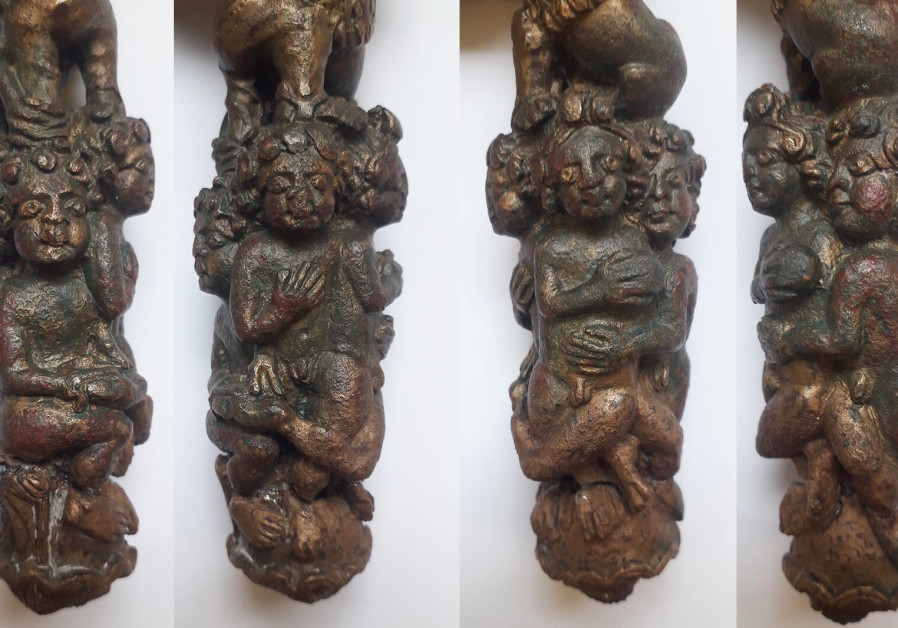
The man battling the lion has long hair, a bushy beard and no shirt, which could mean that he is a barbarian. The scene would be a symbol of the futility of opposition against the Roman Empire.
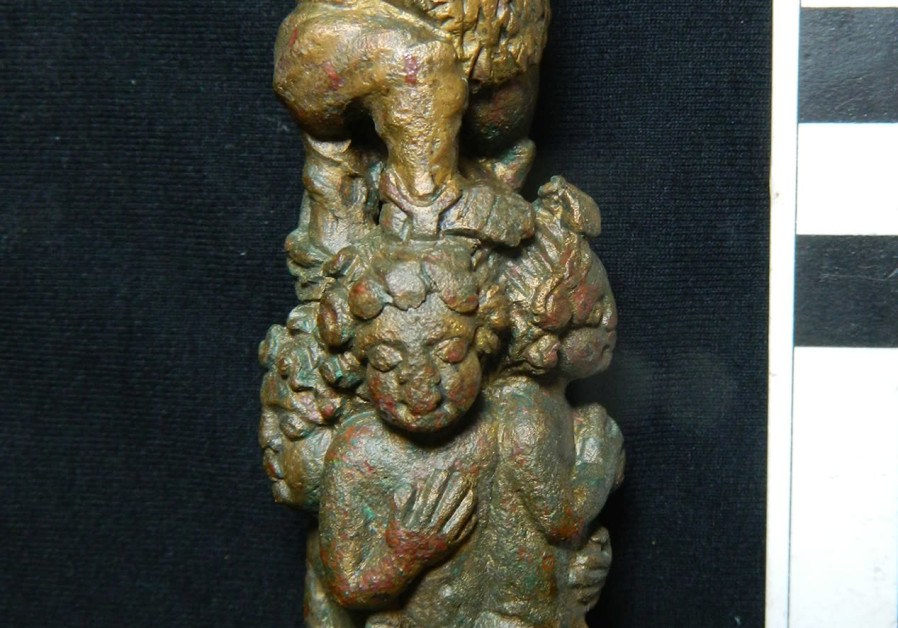
"When first found, it appeared as an indistinguishable bronze object, but after we carefully cleaned off the soil, remarkably, we revealed several small faces looking back at us," said Dr Gavin Speed, an archaeologist and co-author of the article.
"Nothing quite like this has been discovered anywhere in the Roman Empire before."
"It illuminates the brutal character of the Roman authority in this province," added Dr. John Pearce, another co-author.
"That was slightly worse than being condemned to the mines, which is the other way that prisoners often met their end," Said Nicholas Cooper, an archaeologist and the articles third author.
The key handle is believed to have been made around 200 AD and is set to go on display at the Jewry Wall Museum in 2023.