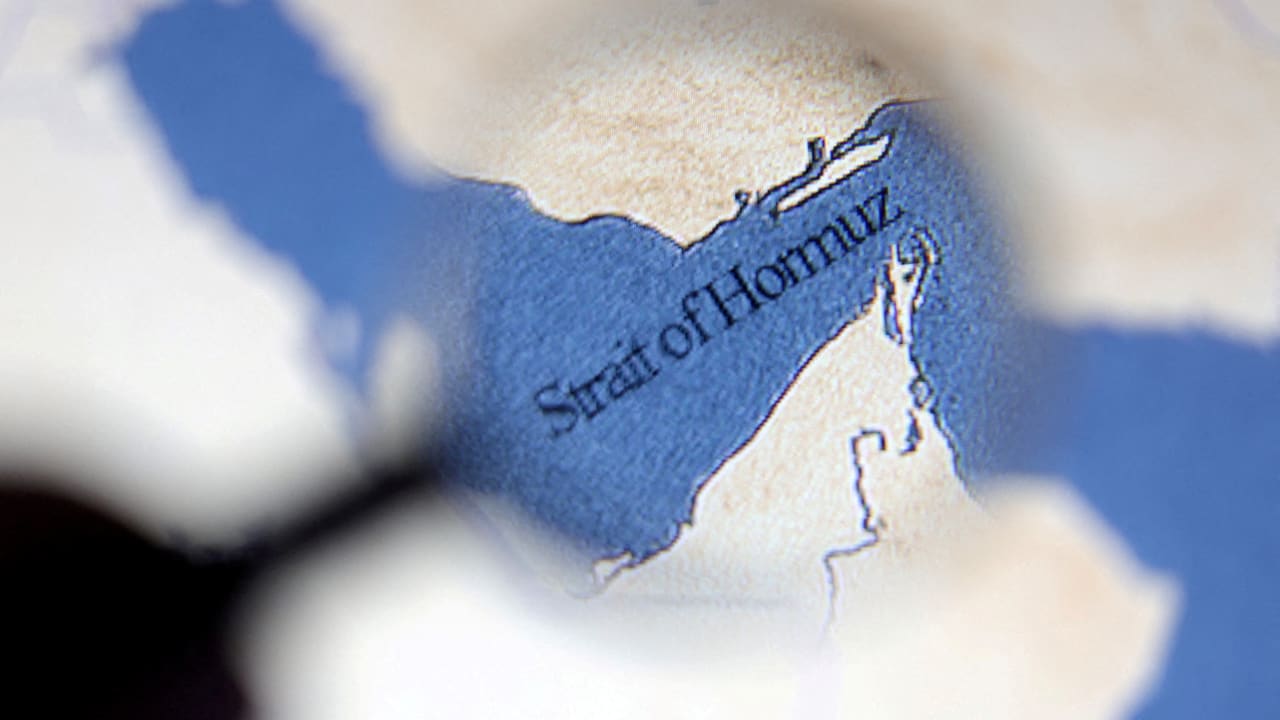
The International Monetary Fund warned that the closure and reduced traffic in the Strait of Hormuz might become the new reality for the waterway, similar to what happened with the Strait of Bab al-Mandeb in the Red Sea.
IMF Managing Director Kristalina Georgieva gave a speech on Thursday at the Fund’s 2026 Spring Meetings in Washington, where she warned about the effects of the war in the world, calling it a “supply shock that is large, global, and asymmetric.”
Alongside the already known effects on the oil price, which jumped from $72 a barrel to over $100 a barrel -reaching $120 at the peak of the crisis-, and the disruption of key supply chains that especially affected Asian markets, Georgieva warned that the crisis could push to a “new reality” where the Strait of Hormuz loses most of it’s traffic and is ceases to be a key waterway.
The main example given by the IMF director was Bab al-Mandeb, which, since October 7, 2023, has seen its traffic almost halved after the Houthis, which operate as one of Iran’s proxy groups in the region, attacked the shipping lane where vessels were sailing.
According to the Fund, “ship passages through Bab-el-Mandeb on the Red Sea have never quite recovered from the devastating disruptions there, and remain stuck at about half their 2023 level.”

The IMF also said that the fact that many oil and gas fields in the Gulf region were struck during the war and will need several years to resume normal operations will be another key factor in this new reality.
The main example cited is Qatar’s Ras Laffan, which accounts for 93% of Qatar’s LNG production and has essentially been shut since March 2, with an estimated 3 to 5 years needed to restore its full capacity.
With these factors in mind, the IMF says that, due in part to the unpredictability of the security situation, the only estimate that it can give is that growth will be slower in the near future, calling on countries to “reject go-it-alone actions, export controls, price controls, and so on, that can further upset global conditions.”
Trump’s hint at possible blockade of Hormuz raises alarms
In addition to the IMF report, a social media post from US President Donald Trump raised the alerts about the possibility of a total shutdown of the Strait of Hormuz.
The US President shared an article on Truth Social, the main social media platform used by Trump for official statements, which said that an option to solve the crisis in the region would be a total blockade of the Strait, stopping ships from even entering Iran.
According to analysts, this could be another part of the “maximum pressure" policy that Trump has been employing against Iran, while it can also be only a bluff to give the US more leverage during the negotiations.
For the moment, the US delegation, led by US Vice President JD Vance, has returned to America after failing to secure a deal with the Iranian regime.
Netanyahu’s plan of rerouting Gulf’s pipelines
A couple of weeks before the IMF’s warning, Prime Minister Benjamin Netanyahu suggested that the main solution to the crisis in the Strait might be to reroute the Gulf State’s pipelines towards the Mediterranean, hinting at Israel as a possible secure location for this project.
"Long-term solutions include rerouting energy pipelines westward, across Saudi Arabia to the Red Sea and Mediterranean, bypassing Iran's geographic choke point," Netanyahu explained in an interview with conservative US media outlet Newsmax.
The project would most likely involve a network of pipelines and roads that would allow other products, such as fertilizers (another of the region's main exports and a key to the global food supply), to be exported through this new road.
A report by The Financial Times revealed that the Gulf States are considering this possibility, with one of the main options reportedly being a trade route connecting the Arabian Peninsula to the Mediterranean via the port of Haifa.
According to the report, Saudi Arabia has been the only Gulf state to maintain a steady flow of oil exports amid the war, mainly thanks to the East-West pipeline, which connects its oil fields to the Red Sea port of Yanbu and bypasses the Strait.
“In hindsight, the East-West pipeline looks like a genius masterstroke,” a senior Gulf energy executive told FT.
The main project mentioned in the FT report is the US-led IMEC, which would connect India to the Mediterranean Sea via a network of roads, railways, and pipelines. The main challenge for this plan would be securing Saudi Arabia's agreement to include the port of Haifa on the route.