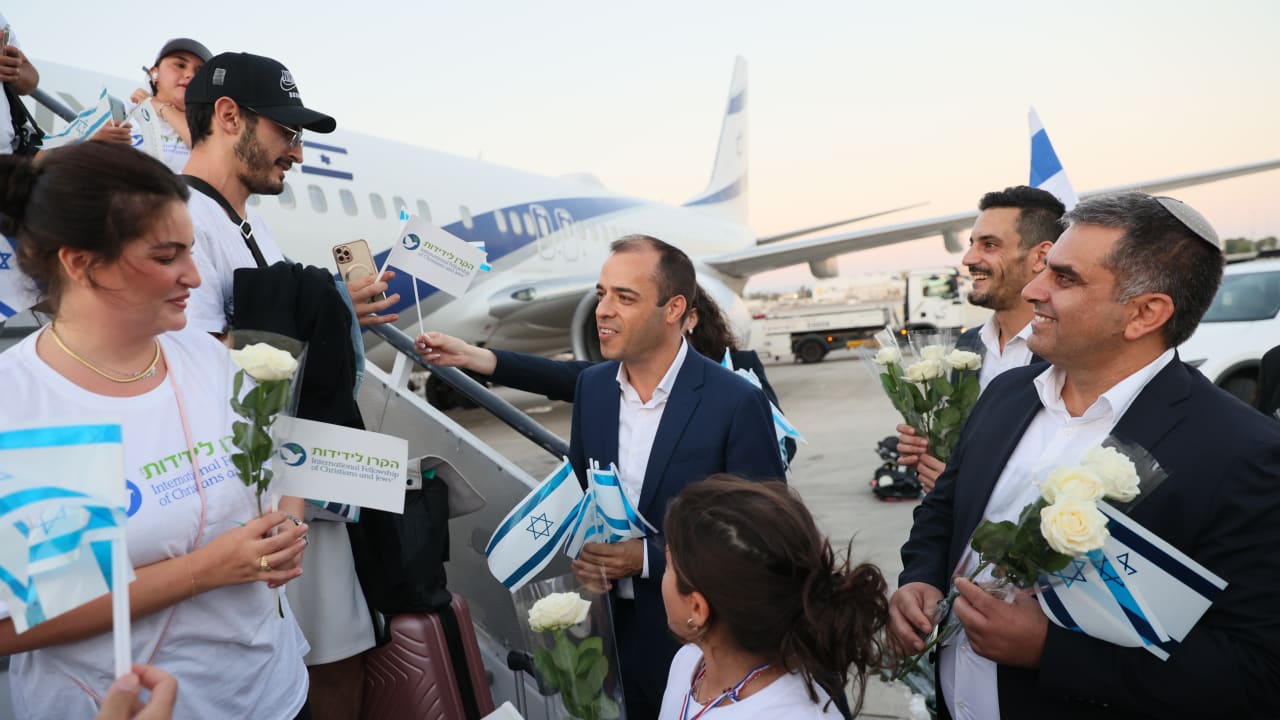
Israel is facing a “strategic opportunity unlike any since the founding of the state” regarding Aliyah, Director General of the Ministry of Aliyah and Integration Avichai Kahana said, citing a sharp rise in interest among Jewish communities worldwide seeking to make aliya to Israel.
“From the very start of the State of Israel, Aliyah was never just about adding people,” Kahana said. “Aliyah built this country. Every major step in Israel’s history was shaped by new Olim, in the economy, in society, and in culture.”
According to Kahana, that historic pattern is repeating itself today. The ministry is seeing Aliyah applications “double and even triple” in some regions, reflecting what he described as a deep desire among Jews abroad to play an active role in Israel’s future. “These are people who want to take part in Israel’s recovery and in shaping what comes next,” he said.
Within this policy framework, and under the leadership of the Minister of Aliyah and Integration MK Ofir Sofer, the Ministry is advancing a series of operational initiatives aimed at removing barriers, reducing bureaucracy, and ensuring the successful integration of new olim.
In response, Kahana said the ministry has redefined its mission. “We see the Ministry of Aliyah and Integration as the human resources department of the State of Israel,” he explained. “Our role is not just to bring people to Israel. Our role is to make them succeed, because when they succeed, Israel flourishes.” He highlighted the healthcare sector as a model for how targeted Aliyah can strengthen national resilience.
“We started with doctors,” Kahana said. “Over the past two years, more than 1,000 physicians made Aliyah.” Many of them, he noted, are now working in Israel’s northern and southern periphery. “They are making a real impact on the health system, especially in areas that need it most.”
Beyond healthcare, the ministry is expanding its focus to additional professions as part of a broader postwar rebuilding effort. “Today, we are taking responsibility not only for Aliyah, but for rebuilding Israel after the war,” Kahana said. Central to that effort, he stressed, is cutting red tape.
“Our goal is clear: to reduce bureaucracy, to remove barriers, and to create real opportunities,” he said. “We don’t just want to invite olim to come to Israel. We want to make them true partners in strengthening the State of Israel.” Kahana concluded with a note of confidence. “This is our mission,” he said. “And we will succeed.”