The IDF on Tuesday announced that it has slightly expanded its security zone in southern Lebanon, adding to the five positions that it has held there since the November 2024 ceasefire.
However, the IDF Northern Command said that it was unlikely to initiate a larger ground invasion into Lebanon until the situation with Iran was calmer, if at all.
Rather, its expansion in southern Lebanon was to deter any imminent potential invasion ideas from Hezbollah, not yet invading on a large-scale as it did in September 2024.
According to the IDF, Hezbollah could fall apart without Iranian training and guidance – likely to diminish now as Iran’s regime fights for its survival.
In addition, it said that Hezbollah will be substantially harmed by losing access to Iranian funds, which were almost its sole source of support since the war started, and that the terror group has angered its own constituency, who have not yet gotten reparations for their losses from the 2023-2024 conflict with Israel.
Most Hezbollah rockets land in sea, open areas
Collectively, the military said that all these factors could finally lead to the Lebanese military disarming Hezbollah, though the organization still has power sources, so this remains an unpredictable question.
Regarding Hezbollah’s attack on Israel to date, the IDF stated that most of its rockets landed in the sea or in open areas, with the IDF only having to shoot down one, and that the terror group has not used its larger arsenal of thousands or more rockets.
Further, the IDF credited the Lebanese military with trying to prevent Hezbollah from moving south toward Israel. As a result, most of Hezbollah’s 2,000 Radwan commandos stayed in Beirut for safety, with only a small number managing to travel south, it said.
Syria has yet to take advantage of Iran conflict to attack Druze
Regarding the Syrian front, the IDF said that Syrian leader Ahmed al-Sharaa’s forces have not tried to take advantage of the conflict with Iran in order to attack the Syrian Druze.
The IDF expressed the hope that Sharaa’s forces would prevent Iranian-sponsored Iraqi militias from coming through their territory toward Israel.
It was also very optimistic about the fact that so far, Israel’s northern residents did not need to evacuate officially, nor had many residents evacuated of their own initiative.
Defense Minister Israel Katz stated on Tuesday morning that he and Prime Minister Benjamin Netanyahu authorized the IDF to enter and hold positions in Lebanese territory in order to prevent further danger to Israeli border communities.
“Hezbollah is paying, and will continue to pay, a price for its fire toward Israel,” Katz wrote. “We promised security for the communities of the Galilee, and that is what we will deliver.”
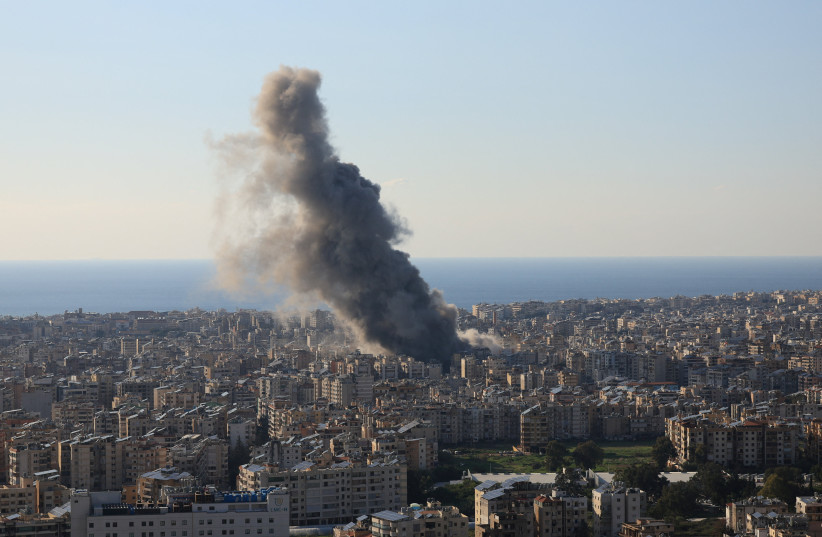
IDF conducts wave of strikes on Hezbollah infrastructure in Beirut
Israeli forces struck Hezbollah communication and intelligence infrastructure in Beirut, the IDF stated on Tuesday morning, adding that the targets were disguised as having civilian use.
As part of the strikes, the military struck Hezbollah and Radwan Force terrorists, as well as Hezbollah military command centers. Despite the civilian cover, the IDF emphasized that all targets were being used to conduct terrorist activity.
Citizens were warned before the strikes in order to reduce the chance of harming civilians, the IDF said.
James Genn contributed to this report.