Another friend told me this week that he decided to abandon Carmel Market in favor of Tikva Market, something that started with a few drips and turned into a full-blown trend. It's a bit farther for him on the motorcycle, he explained, but he’s tired of food tourists who have driven up prices in a market that was once the most reasonably priced in Israel. Tikva Market is more spacious, renovated, no less diverse, and above all, much cheaper.
Why did I start my weekly recommendation for a winning bite with a “market review”? Because quite a few markets around the country, which were once a source of cheap abundance, have turned into mall-style food courts.
Take Mahane Yehuda Market in Jerusalem, for example - it’s completely ruined. If you used to go there to buy a bell pepper for a salad or neck meat for a soup, today you have to navigate through hundreds of youth flocking to yet another generic schnitzel stand - the icon that will soon replace the Star of David in the center of the Israeli flag. Mahane Yehuda is the extreme example, but it paved the way for Carmel Market, Ramla Market - and even Talpiot Market in Haifa or Netanya Market, which are slowly turning from places you visit to buy ingredients to cook at home, into places you go to eat.
From Sea to Bun
Don’t get me wrong: A food stall in a market can be great fun, a real pleasure that can only exist in the market itself and has a direct connection to the fresh produce that arrives there daily. The next dish is a perfect example - and it’s not even new. About 11 years ago, a fish stall called Rostom the Fisherman popped up at the corner of 40 Carmel Street and Shefer 1. I must admit I was never a regular customer of this stall - not because of it, of course, but because of me: When I buy fish at the market instead of my usual shop, I go to Mosi - it’s a habit. Nevertheless, it must be noted that Rostom’s goods look fantastic: A wide variety of fish and fresh seafood.
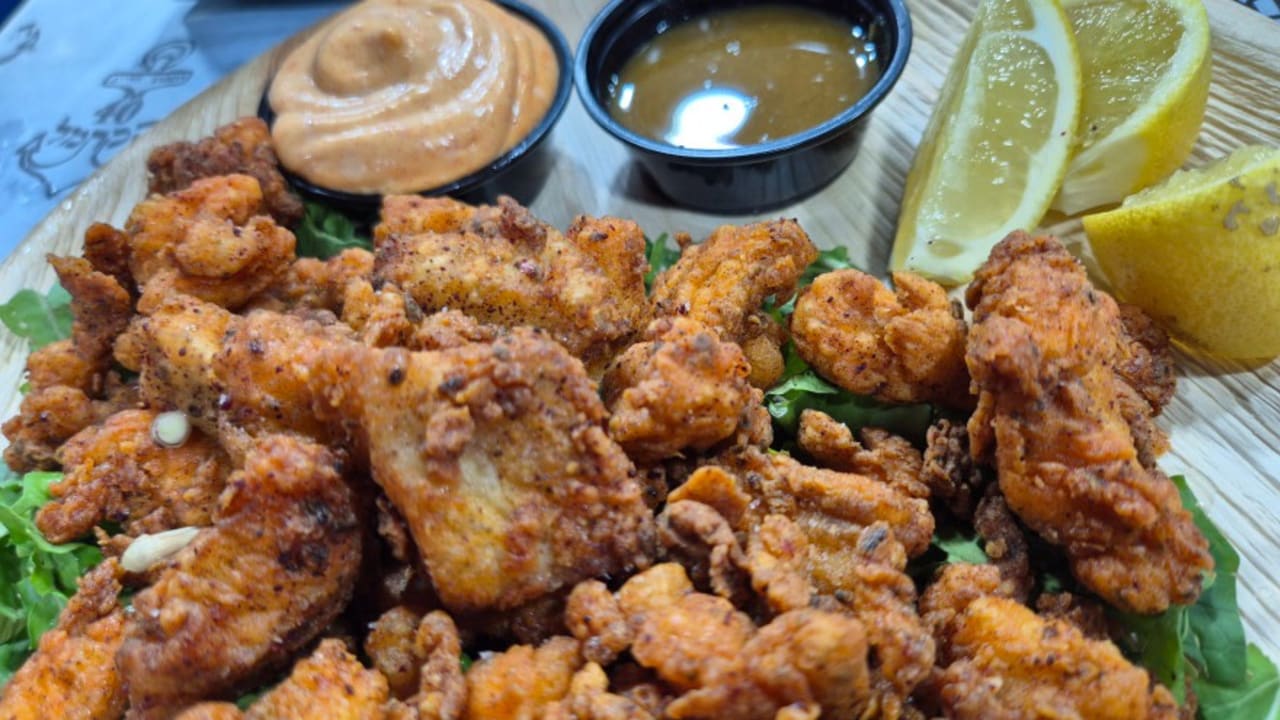
I admit I have a soft spot for fish stalls. Even abroad (in every city I visit, the local market is a must-stop), I can spend hours standing by these stalls, even if some people shy away from their smell - and watch in fascination as the seller handles the fish, and if possible, taste the fresh products, even better. This is exactly the idea behind the seafood stall called simply Carmel 40, which was created through a collaboration between chef Elad Amitai and Rostom the Fisherman: Two planchas (grill plates), a chip fryer, and plenty of fresh fish, vegetables, lemons, and sauces. We’ll skip, with your permission, dishes like fish nuggets, for example, and others, straight to what I consider the best reason to eat here: The sandwich called Fishermen’s Sandwich.

The Perfect Bite
We’re about to sink our teeth into this perfect sandwich, but first, a few words about its Balkan origin, which can be found across Turkey, a little in Bulgaria, or northern Greece. Unlike meat sandwiches (from shawarma to hamburgers), whose culinary logic relies on the meat’s juices and fat soaking into the bread, fish is usually leaner. It’s no coincidence that the more famous fish sandwiches in our region are the Tunisian sandwich or the Frikase, which use lemon, olives, harissa, and other strong ingredients meant to “compensate” for the basic taste of the bread.
In other words, to make a sandwich where the main filling is a fish fillet, you must use the right sauces, precise cooking, the correct bread, and, of course, a fresh cut of fish that preserves its freshness.
At Carmel 40, they have been preparing the perfect Fishermen’s Sandwich for about six years. If my word isn’t enough, try dropping by at noon on a beautiful winter day, only to discover that you’re at the end of a long line of people crowding around the tiny bar, surrounded by a few scattered chairs, some side tables, and plenty of Wolt delivery couriers...
The dish has two main components: A red, slightly spicy, buttery sauce over a fillet of sea bream, and a bun split in half and lightly toasted on the grill to make it crispy and absorb some of the oil and seasoning flavors. Just before placing the fish inside, a few slices of tomato, a leaf of lettuce, some green herbs, and a kind of lemon aioli are added.
Give Me Another One
It’s so tasty that you immediately crave another - and here’s the only drawback of this perfect dish: The price. On one hand, in an era when a non-premium hamburger costs NI 70–90, it’s a bit unfair to complain that this delicious sandwich costs NIS 50. On the other hand, with all due respect to the olives served on the side, a grown man like me won’t settle for fewer than two of these...
If my memory serves me correctly, when the stall first opened, the sandwich cost only NIS 40. So again - it depends on how you look at it. On one hand, a 20% price increase makes sense given what has happened here over the past six years regarding production costs and wages. On the other hand, I don’t recall anyone bothering to upgrade my own wages by such a significant percentage.
And for a change, there’s even a third perspective this time - it says that just talking about money and the cost of living has made me even hungrier, so go ahead - throw me another fresh fish on the grill. Because this stall is exactly the difference between the trendy-but-annoying stands that take the place of the traditional booths, and a real market stall - one that maintains a close connection with the fresh ingredients sold right next to it. One that takes the best of the market and packs it into a small but perfect sandwich, an excellent bite for someone like me, who still does his weekly shopping at the market.