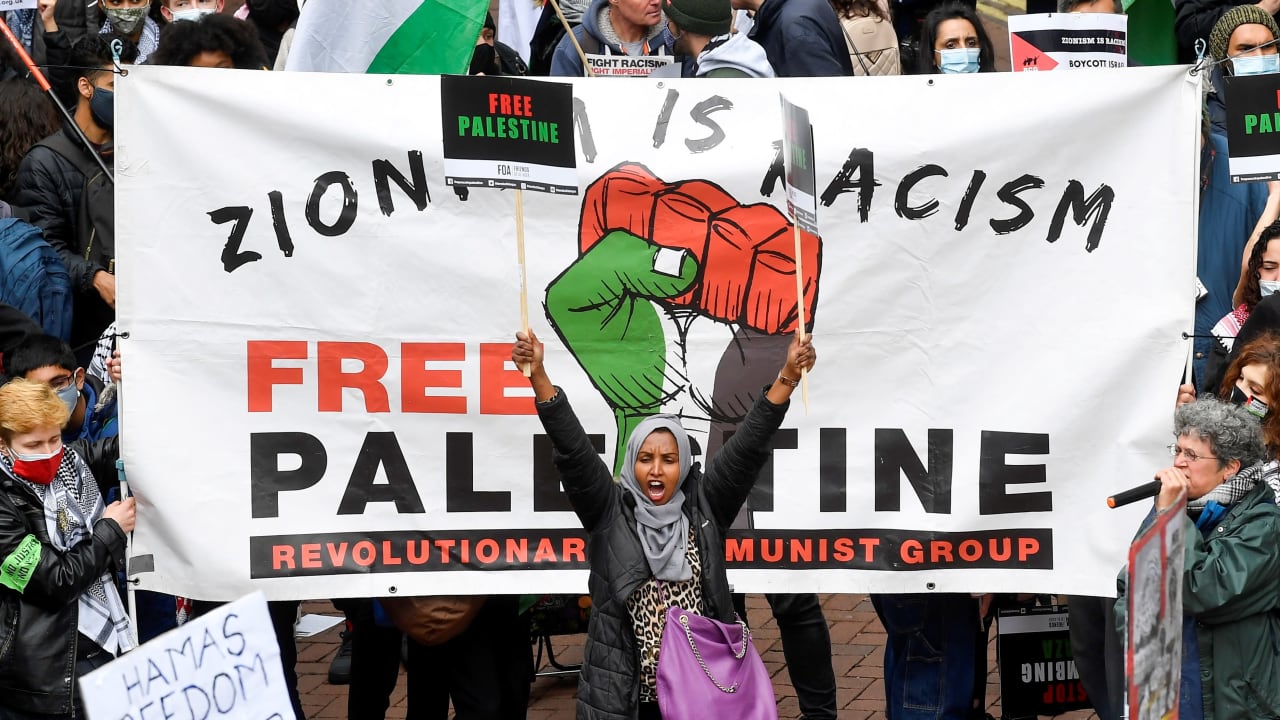
The number of antisemitic incidents in Denmark in 2024 was the highest ever recorded, the Department for Mapping and Knowledge Sharing of Antisemitic Incidents (AKVAH) revealed in a 174-page report earlier this year. AKVAH was established in 2011 as part of the security branch of the Jewish Community in Denmark.
A total of 207 antisemitic incidents were recorded in 2024, an increase of 71% on the previous year (121 incidents) and over eight times higher than 10 years ago. One of the 2024 incidents – the arson attack on a Jewish woman’s home – was an “extreme and life-threatening form of antisemitism, of a kind that AKVAH has not recorded since the 2015 terrorist attack on the synagogue, in which volunteer guard Dan Uzan was killed.”
Of the 207 incidents last year, 60% of them were related to either Israel, the war in Gaza, or other events in the Middle East, said AKVAH. References to the Holocaust, World War II, Hitler, or incidents of explicit Nazi symbolism made up 47% of last year’s antisemitic incidents.
Nine of the instances involved violence, assault, or other physical harassment of Jews, including a stabbing attack on a Jewish boy in Slagelse.
There were also five incidents of concrete and explicit death threats and 20 incidents involving calls for the killing of Jews in general or expressions of a desire for the death of Jews. The report provides examples of a Jewish man being told “All Jews must die” in a pub in Copenhagen.

AKVAH added that 63% of the antisemitic incidents in 2024 were directed at individuals or institutions that could clearly be identified as Jewish, and thus assessed that people or institutions visibly Jewish in public or online spaces are at significantly higher risk of being subjected to antisemitic incidents.
Both online and offline, AKVAH noticed a trend in Jewish citizens, institutions, or organizations in Denmark being held collectively responsible for the actions of Israel (71 incidents).
In terms of geographical distribution, 107 of the 136 offline incidents occurred in and around Copenhagen, while six incidents occurred in the Aarhus area.
It is worth noting that AKVAH only records antisemitic incidents based on actively reported cases, and many Jewish citizens in Denmark are unaware of the possibility of reporting their experiences with antisemitism to AKVAH, or choose not to do so. Therefore, the real number of incidents is likely much higher.
A survey conducted by the European Union Agency for Fundamental Rights (FRA) in 2024 on discrimination and hate crimes against Jews in 13 EU countries found that less than one-third of Danish Jews who experienced antisemitism had reported it to a relevant authority or body.
Specific examples
In January 2024, a Jewish boy was riding a bus home from the Jewish private school Carolineskolen when the bus stopped amid a pro-Palestinian demonstration in Nørrebro, AKVAH said. Ten masked young men boarded the bus and asked passengers if they supported the Palestinians or Israelis. Some approached the Jewish boy and asked if he was Jewish, but he lied and said he was Christian.
In May 2024, someone poured flammable liquid onto the balcony of the Copenhagen home of a Jewish woman while she was sleeping and then set it on fire. A 21-year-old man has since been arrested and charged with arson and terror under Danish law section 114.
In June 2024, a 14-year-old visibly Jewish boy was followed by three young men who grabbed his shirt, dragged him to a spot in front of Fælledparken (a local park), slammed his head into a wall, and called him “Jew pig,” along with other insults.
Pro-Palestinian Jewish activist rebukes report
Jonathan Ofir, who identifies as a Danish-Jewish activist in the Palestine Solidarity Movement, penned a letter in the Danish communist party daily Arbejderen on Wednesday, in which he condemned the AKVAH report for blurring the lines between Israelis and Jews.
“Israelis are clearly attacked because they are Israelis; there is no evidence that it is because they are Jews,” he wrote.
He blamed AKVAH for trying to expand the International Holocaust Remembrance Alliance (IHRA) definition of antisemitism (which the report uses) to include holding Israelis accountable for the actions of the State of Israel as an example of antisemitism.
“As you can see, the text is directed against Zionists, who are something different from Jews,” he wrote.
“The IHRA definition is a tool that has become a weapon, and this trend will continue, predictably, to shield Israel from both criticism and condemnation, while continuing the genocide of the Palestinians.”