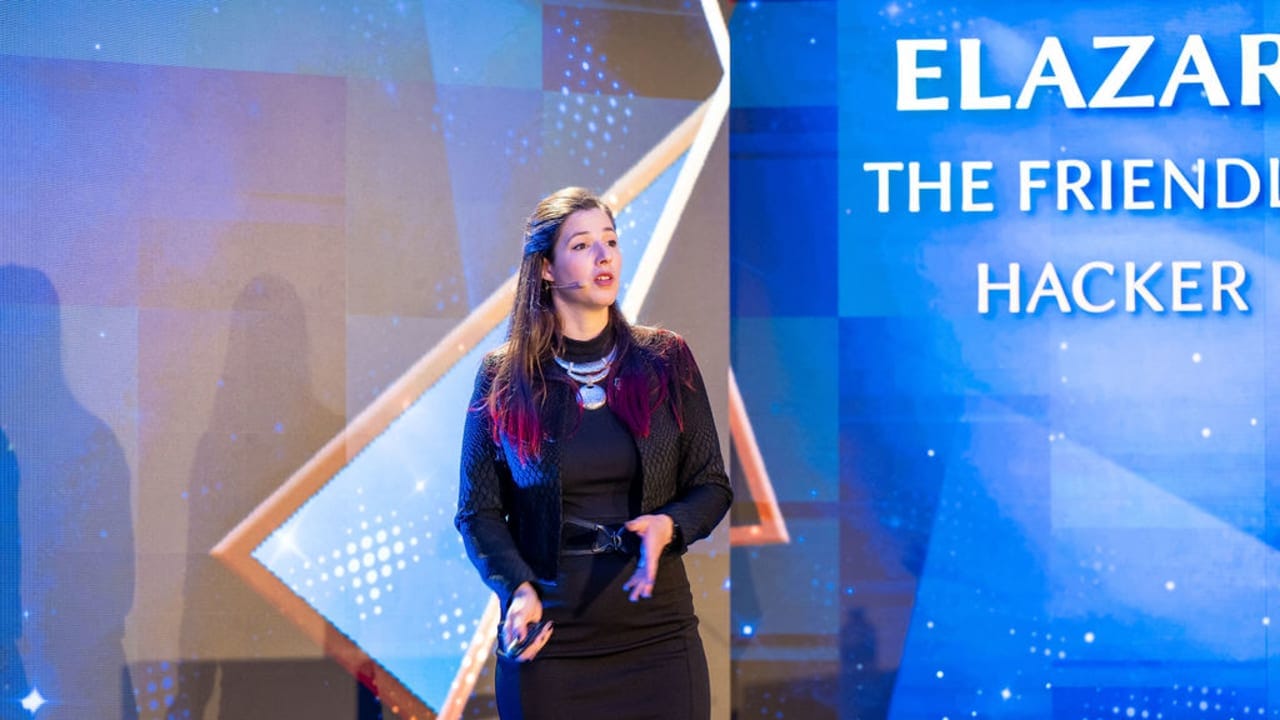
Technologically-enabled personal attacks and antisemitism have been “democratized” due to the accessibility of online tools, self-described “friendly hacker” Keren Elazari told The Jerusalem Post in conversation at the Yael Foundation Awards in Vienna on Wednesday.
Elazari is a cybersecurity researcher, analyst, and author who has worked in the field since the mid-90s. She is best known for her TED Talk, “Hackers: The Internet’s Immune System.”
Elazari told the Post that, while technologically-enabled harassment has been around for over a decade, “it has now been democratized.”
“I use that term very lightly because we consider democracy as a good thing. But when a lot of people have access to technological tools, it makes it easier for them to weaponize technology, find out information, spread fake news, or spread any kind of negative messages, harmful messages. That is certainly one of the problems of the Information Age,” she said.
Online hack-related doxing has become extremely prevalent over the last few years and has often had a significant negative effect on individuals. The Iran-linked hacker group Handala, for example, has leaked personal information of dozens of individuals, such as scientists and engineers, accusing them of “aiding Israeli genocide.”

Elazari says there's more to be done in the aid of cyber-defense
On a national level, “Israel is one of the superpowers of the Cyber Age,” Elazari said. More can be done to provide civilians with the tools to defend themselves, she added.
“I do feel like Israelis should have access to a better digital self-defense curriculum at all ages: young, mature, even the elderly,” she told the Post.
Elazari praised the existence of various volunteer groups and nonprofit associations that help with digital literacy. One of the groups she supports is the Hacker Riot Initiative, which focuses on making cybersecurity entry-level and more accessible to young women, including women from Orthodox backgrounds.
“But in the younger age groups, in the education level, I feel there is a need for teaching people digital self-defense – teaching people critical skills to understand what’s fake, what’s real, what should be shared, and what shouldn’t.”
This was the main subject of her speech at the Yael Awards: why one needs a hacker’s mindset and why Jewish educators need to help their students develop it.
“It’s not just a nice-to-have mindset, it’s almost a survival skill for the 21st century. The hacker mindset can be beneficial, not just destructive. It can lead us to amazing innovations and creativity.”
While in Vienna for the conference, Elazari saw a technology school for senior citizens – a group of “eight white-haired grandmas and grandpas” learning from an instructor who taught them how to use Google Search, share information, and find things online.
“I think we can take that concept, but also empower the younger generation to be almost like guardians of the cyber realm and to teach their communities, their elders, how to use technology in a safe way, how to share or not share, how to harness the creative power of AI without falling prey to the deepfakes and the deceptions. It’s not an easy skill set to cultivate.”
“We are in the age of AI. As more and more people will rely on AI to create technology, we’re going to need more human hackers who can understand what that technology does,” she continued.
Much like Jewish education has always been about literacy, Elazari advocates AI literacy. “That’s why I see the hacker mindset coming into the world because when we let AI create everything for us, build our technology for us, we’re going to lose agency, we’re going to lose the ability to even understand.”
“There is a sense of urgency to build those human skills, to cultivate those human skills – not to sit back and let AI do things for us. Rather, to be able to work hand in hand with AI and understand what it’s doing.”
Nevertheless, Elazari is not scared.
“I’m a techno-optimist. I advocate for developing the skill sets that are going to help us, so I’m not scared of AI.”