Unions and teachers are manipulating their positions of power to advance anti-Israel and antisemitic agendas, witnesses said during two US Congressional Committee on Education and the Workforce hearings last week, while others charged that the federal government was using allegations of antisemitism to pursue its own political ends and vendettas.
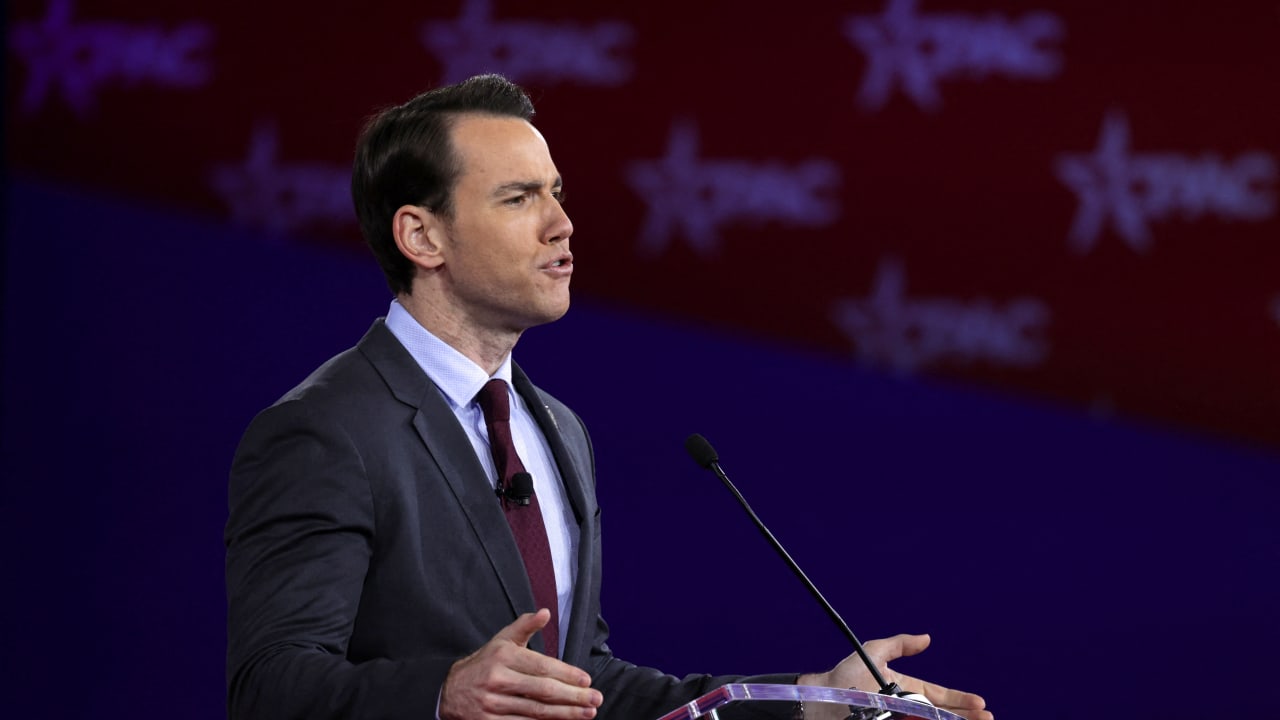
Early Childhood, Elementary, and Secondary Education Subcommittee chairperson Kevin Kiley held a hearing on Wednesday entitled “From Playground to Classroom: The Spread of Antisemitism in K-12 Schools.”
Kiley said that while the committee had investigated antisemitism at universities across the country, leading to reforms, this was a growing problem in kindergarten to high school education as well.
He continued to say that teachers see themselves primarily as educators, not activists, wherein they have actually been using their power within teachers’ unions to implement their activist positions.
The Republican congressman also said that he believed that there is an expansive network of organizations that work with school districts, providing them with material trafficking in acute antisemitic tropes and anti-Israel agendas – all while advancing foreign interests.

“These driving factors incite severe discrimination against Jewish students and teachers, forcing many to move schools to avoid being targeted by their peers and colleagues,” Kiley said. “Administrative malaise – or even prejudice – at the school, district, and state level has allowed antisemitism to fester and even become normalized.”
Brandy Shufutinsky, the director of the Foundation for Defense of Democracies (FDD) Education and National Security Program, said that there are multiple avenues in which anti-Jewish and anti-American ideology is institutionalized in the school system.
Teacher training programs, foreign-funded materials, radical union members, and curriculum development organizations all contribute to this phenomenon, she said.
In one instance concerning foreign funding issues, the FDD found that the Qatar Foundation had been funding multiple school districts.
“The most pressing need right now is for transparency so that parents and their elected representatives can see what is taught in children’s classrooms, who is providing it, and who is paying for it,” said Shufutinsky.
She detailed the issues that were found regarding external programs presented by the Liberated Ethnic Studies Coalition and the Arab Resource and Organizing Center (AROC).
According to Shufutinsky, the coalition, which sought to introduce an “anti-Jewish” curriculum into California schools through the state’s new ethnic studies mandate, had hailed Hamas’s October 7 massacre as a “victory.”
Only two weeks after the pogrom in southern Israel, the AROC had produced a toolkit guide for K-12 students on how to conduct protest walk outs.
Parents Defending Education president and founder Nicole Neily said that the AROC, which regularly led “disruptive” protests such as the closure of the Bay Bridge, had a memorandum of understanding with the San Francisco Unified public schools district to conduct workshops.
She added that administrators have frequently facilitated the type of pro-Palestinian walk out protests encouraged by the AROC, when walk outs for other causes would be penalized.
Congresswoman Suzanne Bonamici, herself Jewish, said that there was no question that acts of antisemitism have increased since 2023, but that this was the 11th hearing on the subject, and not enough was being done.
The hearings were unproductive, said the Democrat, and had instead been used to attack schools and educators rather than have substantive discussions on how to curb antisemitism.
Bonamici said that the best tool for tackling antisemitism was the Education Department’s Civil Rights Office, but President Donald Trump’s administration had cut the OCR’s staff and offices. The Oregon congresswoman introduced a motion to subpoena White House Deputy Chief of Staff Stephen Miller to examine policies that could be taken to “exacerbate antisemitism at our nation’s schools.”
The motion passed at the end of the hearing, 9-5.
“Instead of offering real solutions, Republicans employ antisemitism as an excuse to turn our nation’s civil rights laws upside down and undermine public education,” said Bonamici.
Taking wrong approach, subordinating needs of Jewish students
T’RUAH: THE Rabbinic Call for Human Rights CEO Rabbi Jill Jacobs said that the administration was taking the wrong approach, subordinating the needs of Jewish students to an agenda focused on defunding public education, weakening unions, and cracking down on illegal immigration.
The harsh measures in the name of American Jewry could create resentment and scapegoating of Jewish students, she continued. The answer should be education, rather than punishment, said Jacobs, providing schools with more tools to teach and respond to antisemitism. She also called for the restoration of hate crime prevention grants.
With some material overlapping when it came to the discussion of unions, the hearing was the second in two days on the subject of antisemitism.
Neily went on to say that activists were infiltrating teachers’ unions, while Rachel Lerman, Brandeis Center’s vice chair, said that unions in California and Massachusetts create and provide anti-Israel instructional materials and ceased the demoting of diversity, equity, and inclusion (DEI) materials and programming..
One example she gave was instructions given to teachers to tell children that “a group of bullies called Zionists stole Palestinian land by force.”
Health, Employment, Labor, and Pensions Subcommittee chair Rick Allen opened the Unmasking Union Antisemitism hearing on Tuesday by discussing how unions were choosing to spend time and money on anti-American and anti-Israel political agendas to the detriment of their members.
“We might not all agree on the appropriate role of unions in society, but I believe we can all agree that they should use their resources to promote the workplace interests of their employees and treat each worker who relies on them with equal dignity and fairness,” said Allen.
New York Legal Assistance Group senior staff attorney Kyle Koeppel Mann, a former member of the A Better NYLAG (the ABN) union who had voted to unionize, said that the union had turned her office into a place where she could not openly be a Jew or a Zionist.
For months, posters declaring “intifada now” and “long live the resistance” were plastered on the office’s walls. After Mann and other Jewish employees complained to the NYLAG about the office environment, the employer banned materials related to “the Levantine conflict.”
However, the ABN filed an unfair labor practice charge and launched a campaign promoting pro-Palestinian activism in the office. In 2024, Mann withdrew from the ABN as a religious objector.
CORNELL UNIVERSITY PhD candidate David Rubinstein testified as to how he said the Cornell Graduate Student Union shielded anti-Israel student activists from the repercussions of their behavior.
Advocates at the institution allegedly targeted Jewish PhD students, but the CGSU asserted that Cornell needed its consent first before disciplining them. When two graduate students were then suspended for their role in protest encampments, the CGSU demanded their reinstatement.
Rubinstein said the union’s treatment of him was far less protective in comparison. After he objected to campus celebrations of Hamas’s October 7 massacre, a CGSU organizer allegedly emailed his whole department, calling Rubinstein an “apartheid apologist.”
The PhD candidate had lobbied against forced CGSU union dues, and while Cornell promised to protect his rights, Rubinstein said that his fellow students now had to beg for permission not to fund “pro-Hamas” activism. He attempted to file for an objection to being a member, but after the union stonewalled the process, he felt he had no choice but to file a discrimination lawsuit.
“The CGSU never misses a chance to protect bullies while threatening to fire those who refuse to fund them,” Rubinstein told the committee.
“I’m a registered Democrat. Protecting students from antisemitism and forced association should not be a partisan issue.”
Congressman Mark DeSaulnier was critical of the hearing, saying that the labor unions that had “created the American middle-class” were “now under relentless attack” from the Trump administration.
Georgetown University labor historian Dr. Joseph McCartin told the congressional panel that the labor movement was a diverse and pluralistic entity in which American Jews historically played an important role.
While it could not be certified that there were no antisemites in the labor movement, he continued, the organizations played an essential part in counteracting antisemitism in America.
McCartin also noted that the labor movement was democratic, and allowed for free speech and difference of opinion, and much of what was said at the hearing could be attributed to those values.
National Right to Work Legal Defense Foundation staff attorney Glenn Taubman said during the hearing that the labor unions were not the same as they were in the past. Now, he said, they harbor strong antisemitic and anti-American world views, aided by powers afforded to them by Congress.
Taubman countered claims that the Trump administration was weaponizing antisemitism to attack educational institutions. Instead, he charged that the real weaponization at play was the use of federal labor laws by unions – laws that granted them privileges no other private organizations wielded.
“Federal law tells you to join this union, this Hamas-supporting terror organization, or we’ll get you fired,” Taubman said. “Unions are not the government. They are private organizations, and I think it’s a disgrace that any American has to fund a private organization that they don’t want to.”
The Anti-Defamation League praised the committee for its attention to growing antisemitism.
“To address this rising challenge, leadership is critical,” the ADL said in a Wednesday statement.
“There must be more support for Holocaust education to teach about the importance of confronting antisemitism and hate, adequate funds for the Education Department’s Civil Rights Office to enforce civil rights protections, resources and training for administrators and educators to ensure they promptly respond to incidents of antisemitic harassment in schools, and mechanisms to hold educators and unions accountable if their actions normalize antisemitism or delegitimize Jewish identity.”
The committee hearings came just two weeks after chairperson Tim Walberg announced an investigation into the National Education Association, the country’s largest teachers’ union, over its alleged “antisemitic positions.”