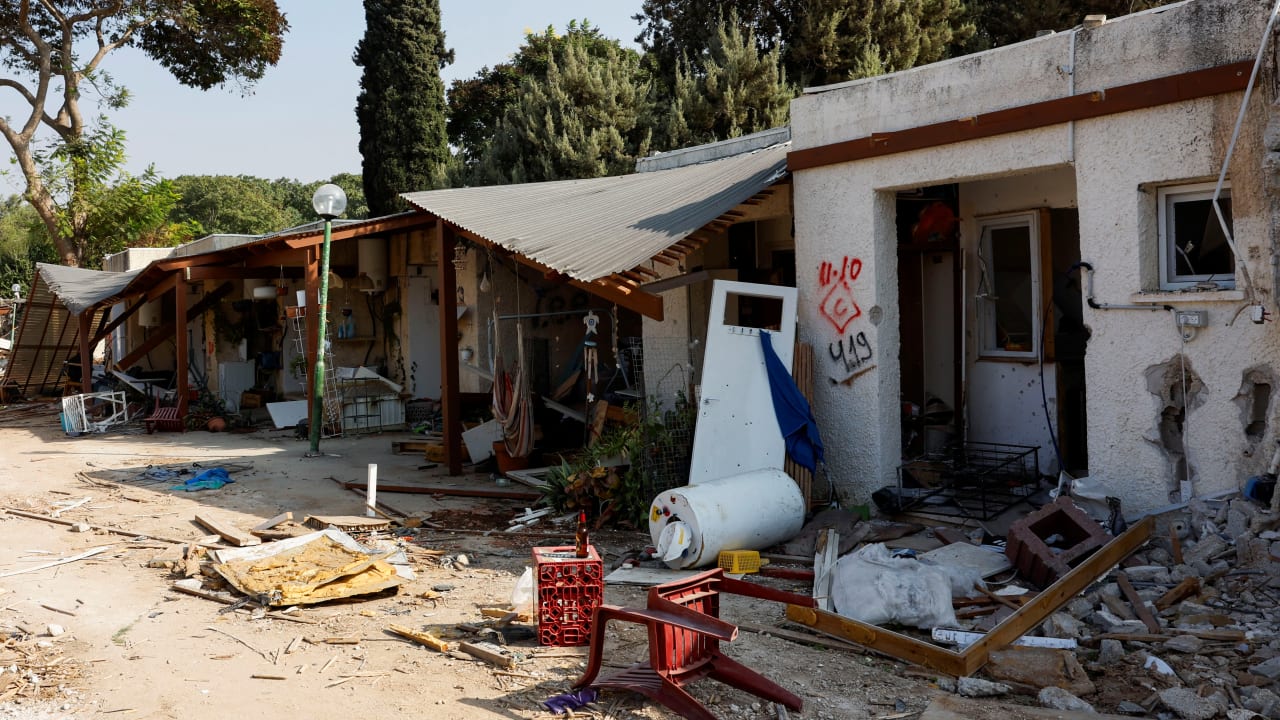
This week, King’s College London hosted a screening of the IDF Spokesperson’s Unit’s 47-minute raw footage film documenting the October 7 Hamas massacre, making it likely the first academic institution in the world to do so.
Until now, Bearing Witness to the October 7 Massacre has mainly been screened privately for opinion leaders, media figures, and politicians.
The event took place under heavy security, including 40 police officers and 15 professional security personnel across the venue. The KCL screening was hosted by the campus’s Israeli Society in collaboration with Stop the Hate on Campus. The event was protested by around 40 members of the university’s Students for Justice in Palestine, who were chanting, “Get the Zios off campus.”
Yael Di Castro, who leads an independent civilian initiative encouraging the screening, wrote on LinkedIn that the screening marked a “significant milestone.”
“Standing publicly behind material that evokes strong reactions is never comfortable,” Di Castro said. “But meaningful dialogue rarely grows from comfort. It grows when institutions and individuals are willing to confront evidence, sit with complexity, and allow informed discussion to take place.”

Event with heavy security, 30 police officers, 15 other personnel
“We wanted to do this a year ago, but due to security concerns, the university canceled it, and then we had to show it at a different occasion in London and not on campus premises,” KCL Israel Society told The Jerusalem Post on Thursday.
“So this year, we said it needed to be on campus.” The society reached out to the university administration four months ago. It told the Post that KCL didn’t like the idea, but they couldn’t say no. “And we met the requirements.”
The attendees of the screening were mostly non-Israelis and non-Jews. In fact, the society had asked people to invite their friends who were either neutral or anti-Israel. They also invited university management, faculty, and staff of the Department of War Studies.
Ultimately, even though there were “more cops protecting the event than people attending the event,” the Israel Society told the Post, “the significance of being able to do it on campus is invaluable.”
“We got to show [October 7] like it happened; no one gets to reshape it with their own words.”
“We are also showing other universities that it is possible, even with universities setting up walls and traps.”
The majority response from those who watched the screening was “trauma,” the society told the Post. “They couldn’t believe it; they had no words.”
“One person said, ‘We should show this to the whole world.’”
“Bringing this initiative into the academic sphere required persistence, trust-building, and cross-sector collaboration,” added Di Castro. “Much of this work happens quietly, navigating sensitive environments and difficult conversations. Seeing this screening take place within such an influential institution represents a meaningful step forward.”