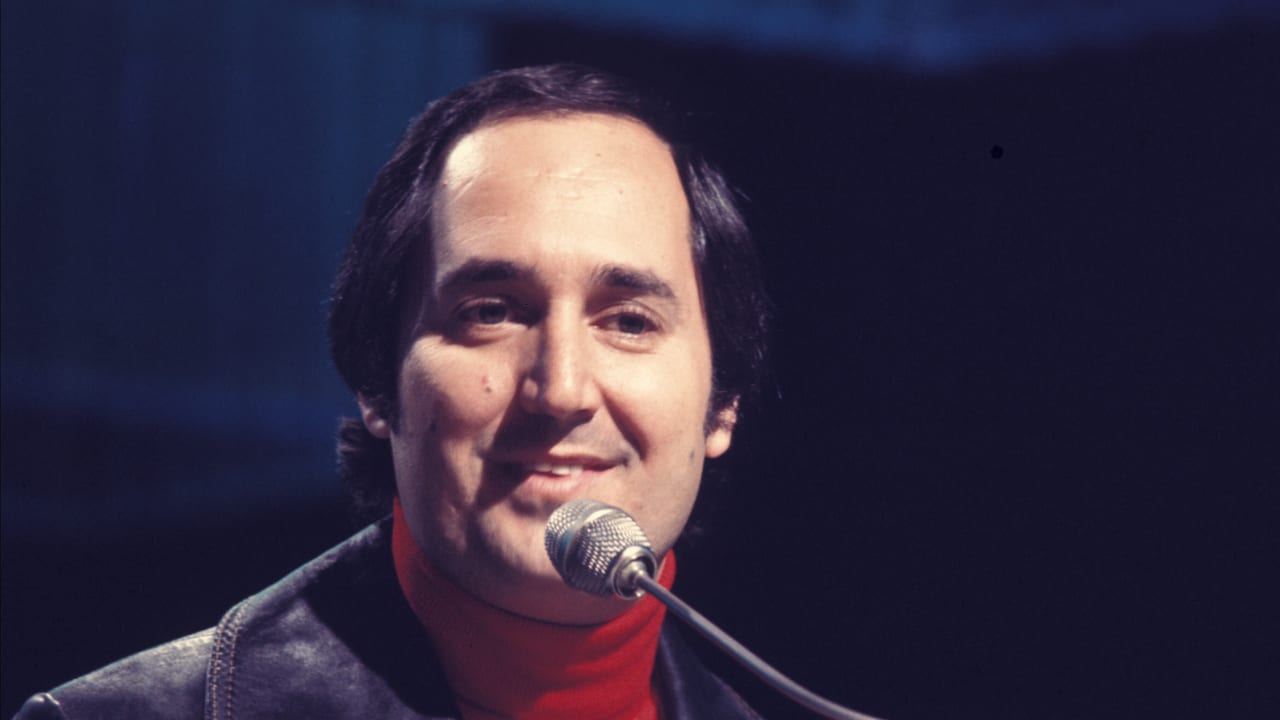
Famed Jewish pop music icon Neil Sedaka passed away on Friday in Los Angeles at the age of 86.
Sedaka’s publicist, Victoria Varela, confirmed that the singer and songwriter was rushed to a hospital on Friday morning, but no further details were immediately provided, according to The New York Times.
“Our family is devastated by the sudden passing of our beloved husband, father, and grandfather, Neil Sedaka,” his family posted on Facebook.
“A true rock and roll legend, an inspiration to millions, but most importantly, at least to those of us who were lucky enough to know him, an incredible human being who will be deeply missed.”
Sedaka was a defining pop songwriter and performer of the late 1950s and early 1960s, co-writing and performing teenage anthems such as “Breaking Up Is Hard to Do,” “Calendar Girl,” and “Happy Birthday, Sweet Sixteen.”
Sedaka also wrote major hits for other artists, including “Stupid Cupid” and “Where the Boys Are” for Connie Francis, and later “Love Will Keep Us Together” for Captain and Tennille.
Born and raised in Brooklyn, Sedaka was deeply influenced by the borough’s Jewish culture, which played a significant role in the early history of rock and roll.

“I thought the whole world was Jewish. I think that our neighborhood was 90% Jewish,” said Sedaka, speaking to The Jerusalem Post’s former managing editor, David Brinn, in 2010 before an appearance in Tel Aviv.
“The times were very peaceful in the 1940s in Brighton Beach. We never had to lock our doors. People would drop in for coffee and a danish at any time. It was a wonderful, kind of naïve, innocent time.”
Aside from having a bar mitzvah and attending services on Yom Kippur, Sedaka joined his family in choosing to express his Judaism mainly through cultural channels.
He recalled soaking up his heritage as a child, learning Spanish to speak with his paternal grandparents and listening to Yiddish records by the Barry Sisters with his mother.
A classical music prodigy
Sedaka received a Juilliard preparatory scholarship at age nine and performed works by Debussy and Prokofiev as a child. He began writing pop songs as a teenager with lyricist Howard Greenfield, eventually becoming part of the Brill Building songwriting scene in Manhattan.
“The whole Jewish songwriting experience was a phenomenon because most of us – Carole King, Barry Mann, Mort Shuman, Neil Diamond – were Brooklyn Jews. I don’t know if there was something in the egg creams or the air,” said Sedaka with a chuckle.
“You know, many of the Jewish parents encouraged music in the house. They either had to play the violin or the piano. I think it was an inborn thing.”
While Sedaka was overjoyed with his teen success as a songwriter and performer, his parents, intent on his continuing his classical education at Juilliard, were less enthusiastic.
But they began to change their tune when Sedaka started to see the royalties that his songs began to bring in to the family.
“They were very upset at first,” Sedaka told the Post.
“They said, ‘Thousands of people can sing and write songs, but you’re a child prodigy at the piano.’ But after I wrote my first big hit – a song called ‘Stupid Cupid’ for Connie Francis in 1958 when I was 19 – everything changed.
“We never saw so much money in our lives. I bought my older sister a home and bought my mother a mink coat. And later I was able to retire my father from driving the taxi. It’s nice to play a Beethoven sonata, I told them, but it’s also nice to get up and travel the world and sing your own songs.”
By the early 1960s, Sedaka had become a major pop star, selling more than 25 million records between 1959 and 1963, with “Breaking Up Is Hard to Do” reaching No. 1 in 1962.
His career declined sharply after the British Invasion, leaving him labeled as an “oldies act” while still in his 20s. However, he reinvented his career in the 1970s, moving to England and later returning to prominence after Elton John signed him to Rocket Records.
Sedaka scored multiple No. 1 hits in the 1970s, including “Laughter in the Rain” and “Bad Blood,” and re-recorded “Breaking Up Is Hard to Do” as a ballad, which again reached the Top 10.
He continued performing into his 80s and later returned to classical composition, writing a symphonic work and a piano concerto. Sedaka is survived by his wife, Leba; his daughter, Dara, a singer and collaborator; and his son, Marc, a screenwriter.
Last week, Sedaka shared a video of himself singing and playing piano while promoting the re-release.
“‘Good Times, Good Music, and Good Friends’ – that’s always been my philosophy!” he wrote, referencing the title of the song he was singing. “This phrase perfectly encapsulates the essence of what it means to enjoy life.”
In his later years, amid the COVID-19 lockdown, Sedaka maintained his relationship with fans – and discovered new ones – by regularly performing 15-minute concerts online.
Before his death, he said he took comfort in the idea of being outlived by his music.
“Songs I wrote 50, 60 years ago I hear on the radio (today), so it’s a form of immortality,” he said.
“I leave it to my children and grandchildren. And the royalties go on until 70 years after my death, then it becomes public domain. That’s what I’m most proud of.”
Sedaka is survived by his wife, Leba Strassberg, whom he married in 1962. They shared two children, Marc and Dara.
New York Daily News/TNS contributed to this report.