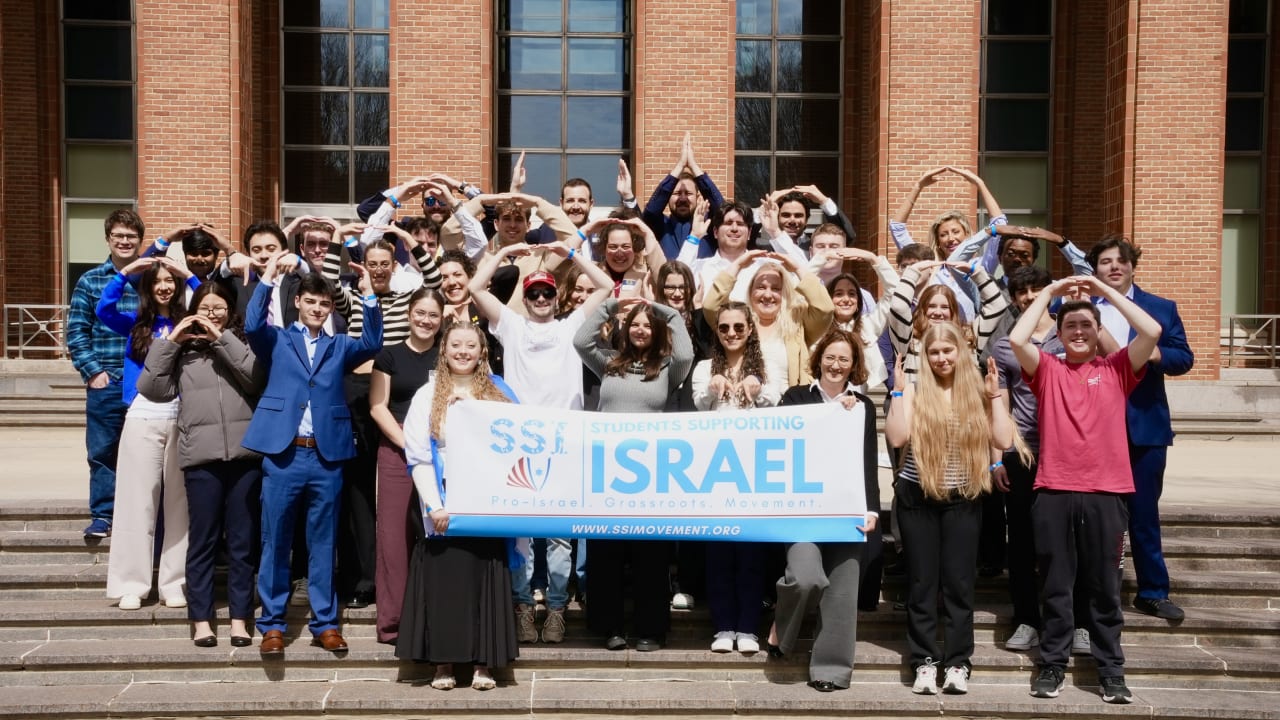
In 2012, when Ilan Sinelnikov founded Students Supporting Israel (SSI) at the University of Minnesota, he had little inkling that the organization he started with his co-founder, Valeria Chazin, to combat Israel Apartheid Week would grow to become a grassroots movement with more than 150 chapters across the United States, Canada, England, Scotland, Wales, Ireland, Poland, Australia, Argentina, and New Zealand, serving over 6,000 members.
“Fourteen years ago, when we sat on the staircase after an anti-Israel event in Minnesota, thinking to ourselves what to do, we never in our wildest dreams imagined that we would be where we are today,” Sinelnikov said with a smile.
“Now, 14 years later, when a student signs a chapter agreement saying that they’ll join SSI, I’m thinking to myself this student decided to do what we started back in Minnesota 14 years ago. It’s crazy to me. I think that our biggest success has been staying relevant.”
SSI’s mission, he explained, is to be a clear and confident pro-Israel voice on college campuses and to support students in grassroots, pro-Israel advocacy. Interestingly, while the majority of the organization’s members – some 75% – are Jewish, a substantial number of its members – 25% – belong to other faiths.

Sinelnikov explained that the organization, which in the past year alone held more than 1,000 events, for over 26,000 students, is currently focused on four main areas: hosting IDF soldiers at college campuses who tell the story of their experiences fighting on Israel’s fronts over the past three years; “Breaking Bread,” a program in which the organization’s members engage with members of Christian clubs on campus; the VAN program, which brings a visible, confident pro-Israel presence to college campuses that have gone without one; and SSI’s initiative to encourage students to run for leading positions in student governments.
From March 2025 to March 2026, SSI hosted IDF soldiers at more than 100 universities in the United States through its “Triggered – IDF from Combat to Campus” program. “It’s important for us that college students hear firsthand from those IDF members, young guys who fought in Gaza and Lebanon, and hear the truth about what was taking place there,” Sinelnikov said.
Sinelnikov explained that many challenges presented themselves during the tour. Some schools denied SSI’s request to have soldiers speak on campus. One university wanted SSI to pay $6,000 to provide security.
Canadian universities were particularly resistant, denying IDF soldiers permission to speak on campuses. SSI events held in Canada outside campuses were met with violent protests in many locations.
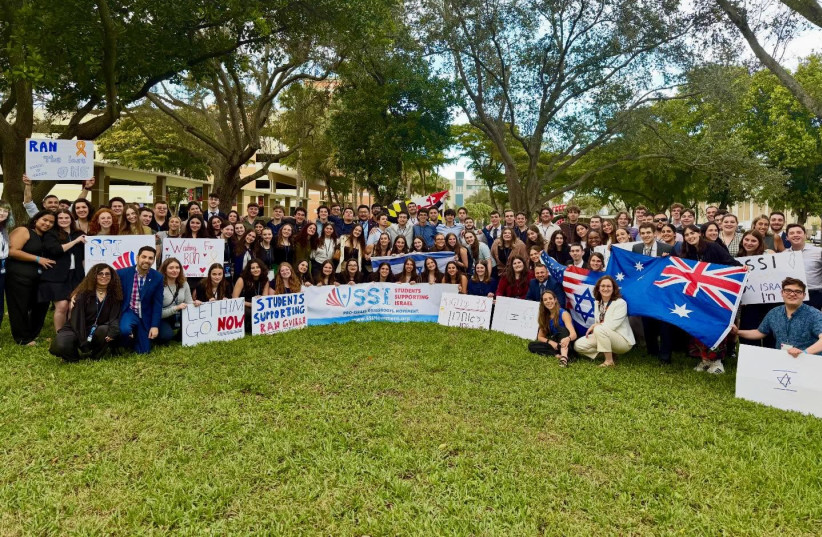
Nevertheless, the program was a major success and had a positive impact on both SSI members and the community at large, Sinelnikov said. Among those in attendance were ROTC soldiers and cadets, professors, and college newspaper correspondents, who provided extensive coverage.
Sinelnikov added that the event was a positive experience for the soldiers as well. “For them to come and share what they have seen with their own eyes helped them to open up about what they faced in a war. It was therapeutic.”
For SSI members, the soldiers’ remarks were motivational. Sinelnikov recalled one event held in Tampa, Florida, in which a female student in the audience said, “I was always afraid to wear a Jewish star necklace in public after Oct. 7. But after I listened to what you faced in Gaza, who am I to not wear it proudly in the open?”
“The tour was a win-win for our students and for our soldiers,” Sinelnikov added.
Many of the IDF soldiers who participated in the Triggered program are SSI alumni who had attended college in the US. When the soldiers appeared on campus, they first told the audiences where they had been on Oct. 7, and then described the mosaic of cultures and backgrounds represented in the troops who served with them.
“The bottom line of what these soldiers communicated to the students,” Sinelnikov said, “was that the students on campus comprise the eighth front for Israel. Israel is currently fighting on seven fronts on the ground. There is a war being fought on seven different fronts, but there is a war going on in America as well, which is world public opinion. They are the eighth front, and are also soldiers for Israel in this war.”
Sinelnikov is planning to continue the Triggered program next year, saying, “We’ll do it again because people need to hear from those voices and people need to hear from our guys, and we’re going to treat them as heroes when they come to the campuses.”
The second signature SSI program, “Breaking Bread,” is a coalition-building initiative in which Students Supporting Israel members meet with Christian clubs on campus. It is designed to bring Jewish, Christian, and other student communities together around one of the most ancient forms of connection – a shared meal.
Breaking Bread is currently in operation at some 10 universities. Sinelnikov said the events are built around conversation-starting questions, including discussions about what religion means to participants, how they define Zionism, and whether they have ever faced discrimination because of their religion.
SSI’s third major program is the VAN Campaign, a mobile advocacy initiative that brings a pro-Israel presence to smaller campuses with little to no Jewish presence. The van is staffed by SSI national representatives who travel from campus to campus and help increase Israel awareness. SSI vans have traveled to campuses across the Florida Panhandle, Utah, Arizona, and Nevada to gauge students’ knowledge of Israel.
“It’s not pretty,” Sinelnikov said, referring to the information that these students receive about Israel. Most students, he explained, get their news from TikTok and Instagram, which is heavily biased against Israel. “We’re trying to have as many conversations as possible within the first two days that we’re there, and then produce educational footage from those locations,” he said.
Sinelnikov explained that SSI’s fourth initiative is geared to increase the number of SSI members who occupy a prominent place in student government in colleges and universities. He pointed out three successes in this area – Chapman University in Orange County, in which the president of SSI became president of the 10,000-strong student body; Florida Atlantic University, where an SSI member was elected vice president of the 32,000 students; and UC Berkeley, not known as a bastion of Israel support, where an SSI student became a student body senator.
“Our goal,” he explained, “is to have SSI students also holding key positions after college, in Jewish communal life or in the political life, and to have our students become the next generation of leaders for Jewish American community and for Israel, in this country.”
After Oct. 7, SSI doubled its size from 70 locations to 150. Sinelnikov said that one of the organization’s major goals is to surpass the number of chapters run by Students for Justice in Palestine, which currently stands at 400.
Sinelnikov noted that antisemitism that flared on college campuses immediately after the Hamas attacks had been brewing for many years. “We knew that all of this was taking place. After Oct. 7, our students started organizing counterprotests and counterdemonstrations. If before Oct. 7 it was not considered mainstream to hate Israel, after Oct. 7 it almost became mainstream.”
At a time when many Jewish students on campus feel isolated and afraid to express their identity, Sinelnikov advises incoming college students to stand proudly as Jews, rather than hiding their identity.
“If you’re not going to express your identity, eventually the trouble will find you regardless, whether you want it or not – so you might as well already get involved,” he said. “If you’re a Jewish student, or a non-Jewish student who is pro-Zionist, get involved right away. Don’t wait for something bad to happen to get involved. If you want to be an activist, Students Supporting Israel is your home, where every student can contribute.”
As our interview concluded, Sinelnikov pondered what he would tell his younger self at the founding of SSI, knowing what he knows today. “If you can dream it, you can do it,” he added. “Just do it.”
This article was written in cooperation with Students Supporting Israel.