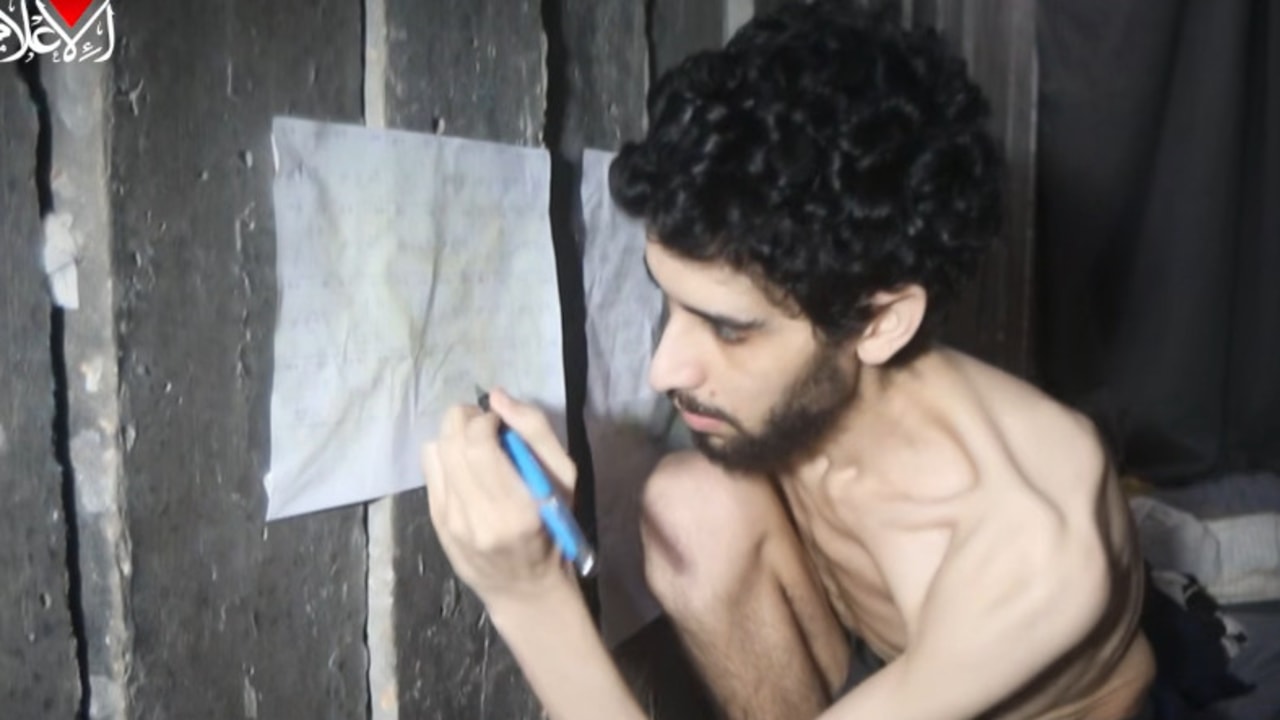
Testimonies from released hostages reveal not only torture and mental anguish but also a prolonged physical process of slow collapse due to starvation.
During their captivity, which lasted nearly two years for some, the hostages received minimal food, sometimes less than 300 calories a day.
In these conditions, where the body requires seven to eight times more energy just to maintain basic functions - not to mention providing building blocks for bodily systems - they had to survive on the number of calories that might be suitable for a small child for a single meal.
According to reports from family members and the hostages themselves, many received a quarter of a pita daily, sometimes with a spoonful of rice or a date, and, in rare cases, half a cup of murky water or seawater. There were also days when they received no food at all. Occasionally, they were given a small amount of beans or a spoonful of tahini, but most of the time, the diet was nutritionally poor, resulting in a significant caloric deficit.
For comparison, an adult who is not particularly physically active requires around 2,000 to 2,500 calories per day just to maintain a caloric balance.
Furthermore, maintaining the proper and healthy function of the body's systems requires not only an adequate amount of calories but also a high-quality food composition, including complex carbohydrates, healthy fats, proteins, minerals, and vitamins. The result for the hostages was the body being exposed to an extreme physiological state, where it had to break down itself in order to survive.
Prolonged starvation alters the body's biochemistry
Professor Yuval Khalad, an expert in human physiology, explains that prolonged starvation like this alters the body's biochemistry. After just a few days without an adequate energy supply, the body enters an "emergency mode."
First, it burns the carbohydrate stores in the liver and muscles, which are the immediate, available sources of energy.
Then, it shifts to using fat and protein as fuel sources. The most difficult stage is the breakdown of proteins, which essentially replaces carbohydrates as the body's most accessible source of energy.
Proteins, which in a balanced and healthy state serve as building blocks for bodily systems, hormone producers, enzymes, antibodies, and more, are now consumed for energy to support the brain and vital organs to survive. The heavy toll is evident in muscle breakdown, bone, connective tissue, and even internal organs such as the heart and liver, to supply energy.
At this stage, Professor Khalad describes a sharp weight loss, along with a general decrease in metabolism. The body tries to slow down every possible process to conserve energy; the pulse slows, blood pressure drops, body temperature falls, and the person begins to feel cold even in warm conditions.
According to testimonies, the hostages shivered from the cold even inside sealed rooms. "At the same time, there is a sharp decrease in muscle and bone mass because they are being broken down for energy and minerals to vital body systems. In fact, the body begins to consume itself," adds Professor Khalad.
After several weeks of such extreme deprivation, deeper damage occurs. The muscle system is nearly entirely depleted, connective tissues break down, and the heart itself loses muscle mass.
“This is a stage where there is a real danger to life,” emphasizes Professor Khalad. “The heart muscle weakens, blood vessels constrict, and the risk of life-threatening arrhythmias increases. At the same time, the immune system, which relies on an intake of proteins and carbohydrates, collapses, and the body becomes vulnerable to any infection.”
In addition to internal organ damage, starvation also affects the brain. The hostages, according to family members, suffered from a sharp decline in concentration, apathy, emotional detachment, and a sense of disconnection from reality - clear signs of advanced hunger.
“The body provides limited energy to the brain mainly to preserve vital functions,” explains Professor Khalad. “This is why prolonged starvation leads to a sharp drop in mood, depression, and sometimes hallucinations.”
As starvation becomes chronic, serious hormonal problems also arise. In men, there is a sharp decline in testosterone, in women, menstruation stops, and in both sexes, there is an increase in the stress hormone cortisol.
At the same time, liver and kidney functions decline, and they can no longer filter toxins or maintain the body’s salt balance. In such situations, a person could die from drinking even a small amount of salty water or from a mild infection.
The damage from prolonged starvation does not end with release. After returning to normal life, a long and complex process of nutritional rehabilitation is required, but even this can be dangerous, especially in the initial phase.
“When a starved body begins to receive food again, especially carbohydrates, a condition called 'refeeding syndrome' or 're-feeding' can develop, where the reintroduction of calories causes severe electrolyte disturbances that can lead to heart failure and thus pose a life-threatening risk. The body simply doesn’t know how to deal with food after such a long period of deprivation,” says Professor Khalad, which requires a gradual approach to nutritional rehabilitation while monitoring electrolyte levels in the blood.
The returned hostages, according to the treating doctors, lost dozens of kilograms of body weight, and some appeared pale, in an extreme state of muscle wasting.
They now require long-term medical care, including muscle and bone rebuilding, gradual nutritional balancing, psychological treatment, and the provision of many vitamins. Some still struggle to stand for more than a few minutes, while others suffer from chronic muscle cramps, general weakness, and hair loss.
“Such extreme hunger is not just a state of food deprivation; it is an extreme and chronic caloric deficit that poses a real threat of total systemic collapse of the body," concludes Professor Khalad.
"Every cell and system is forced to work on its last reserves. When starvation lasts for months or years, it can cause irreversible damage. Therefore, it is very likely that even after intensive treatment, some of the victims may be left with the lasting scars of Hamas's horrors for the rest of their lives.”
Our duty is to minimize it as much as possible and allow the returning hostages to resume a functional, healthy daily life, both physically and mentally, as best we can.