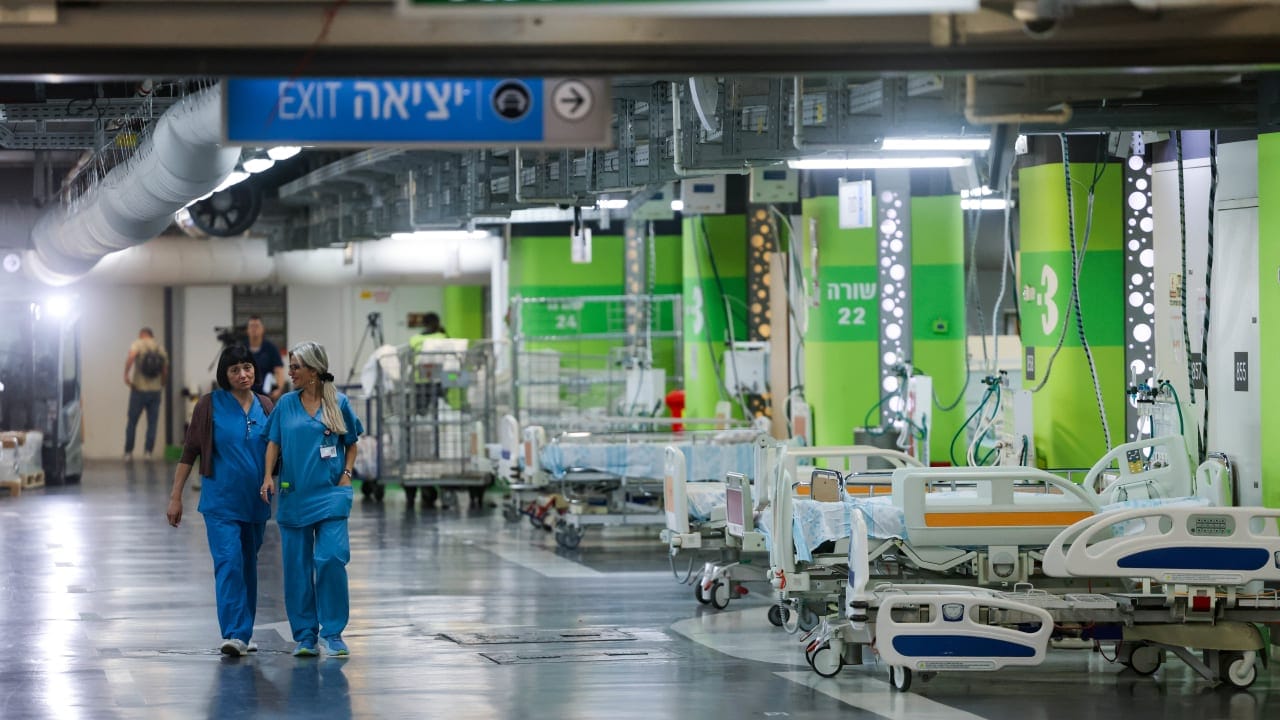
Rambam Medical Center, followed by Rabin and Sheba hospitals, are among the top-tier medical centers on the new Health Ministry's index, which compares internal medicine departments across Israel.
The index examines staffing levels, patient experience, and clinical outcomes and serves as the basis for performance-based incentive grants to hospitals.
In the large hospital category, Shaare Zedek stood out.
Among medium-sized hospitals, Laniado and Emek Medical Center are particularly prominent, posting scores well above the average. In the small hospital category, the Scottish Hospital and the Holy Family Hospital recorded exceptionally high staffing rates, around 120 percent, highlighting the gap between institutional size and the ability to recruit medical personnel.
The patient satisfaction survey, which reflects the hospitalization experience from the patients’ own perspective, presents a mixed picture. Among top-tier centers, Rabin Hospital leads, followed by Ichilov and Soroka.

In the nursing category, the index examined the proportion of nurses with relevant post-basic training for internal medicine departments. Here, too, differences by hospital size are evident. Among top-tier centers, Rambam leads the category by a wide margin.
Among large hospitals, Wolfson emerges as the clear standout. Among medium-sized hospitals, Bnei Zion, the Poriya North Medical Center, and Carmel lead the category. Among small hospitals, the Scottish Hospital and the Holy Family Hospital once again report the highest training rates in the system, pointing to significant investment in nursing staff despite more limited resources.
The patient satisfaction survey, which reflects the hospitalization experience from the patients’ own perspective, presents a mixed picture. Among top-tier centers, Rabin Hospital leads, followed by Ichilov and Soroka.
In the large hospital category, Meir Hospital stands out with a clear gap over its competitors. Among medium-sized hospitals, Laniado received the highest score, ahead of Bnei Zion and Mayanei Hayeshua.
Among small hospitals, Yoseftal recorded the highest satisfaction score, followed by the Scottish Hospital. The Health Ministry notes that high patient satisfaction is not determined solely by hospital size or budget, but also by organizational culture and care delivery.
Health Ministry's index shows small hospitals stood out
Internal medicine departments are the backbone of Israel’s public hospitalization system. Hundreds of thousands of patients are treated in these wards each year, many with complex medical conditions and multiple illnesses.
Population aging, along with the rising prevalence of chronic disease, is steadily increasing the burden on these departments and placing the quality of care and services under daily pressure.
Against this backdrop, the Health Ministry developed a dedicated indicator model to implement the Tur Kaspa Committee's recommendations and strengthen internal medicine hospitalization.
The current index comprises six components. Four are based on activity in 2024, while two additional ones rely on 2025 data.
The indicators included physician and nurse staffing levels, readmission rates, patient satisfaction, and internal processes designed to improve service. The Health Ministry emphasized that the publication is intended not only to rank hospitals, but also to promote public transparency and encourage improvement throughout the system.
In the physician staffing index, which measures the ratio of doctors to beds, a target of 0.42 physicians per bed is considered full compliance.
In the research, readmissions within seven days of discharge were lower, indicating higher-quality care and safer discharges. Rambam and Hadassah posted the strongest results among top-tier centers. Among large hospitals, Shamir Assaf Harofeh recorded the lowest readmission rate.
Among medium-sized hospitals, Carmel leads, followed by Bnei Zion and Kaplan. Among small hospitals, the Scottish Hospital again stands out, ahead of the Holy Family Hospital and Assuta Ashdod. By contrast, higher readmission rates were recorded at some institutions, raising questions about continuity of care in the community following discharge.
The Health Ministry stresses that breaking down data by hospital size enables a fairer assessment of performance and demonstrates that small and medium-sized hospitals can also excel in quality and service indicators.
The index is expected to be updated in the coming years as part of an ongoing effort to strengthen internal medicine departments, which continue to shoulder the primary burden of Israel’s public health system.