A.S., a pregnant, 30-year-old nurse and mother, was declared legally brain-dead in February 2025 following cerebral thrombosis.
Identified as “Baby Chance,” her male infant was maintained on somatic support – intensive medical care designed to maintain stable blood pressure, temperature, and fluid balance. This technology manages metabolic dysfunction after brain-stem death, sustains organ perfusion for donation, and can even keep the fetus in its mother’s womb alive so it can be delivered later.
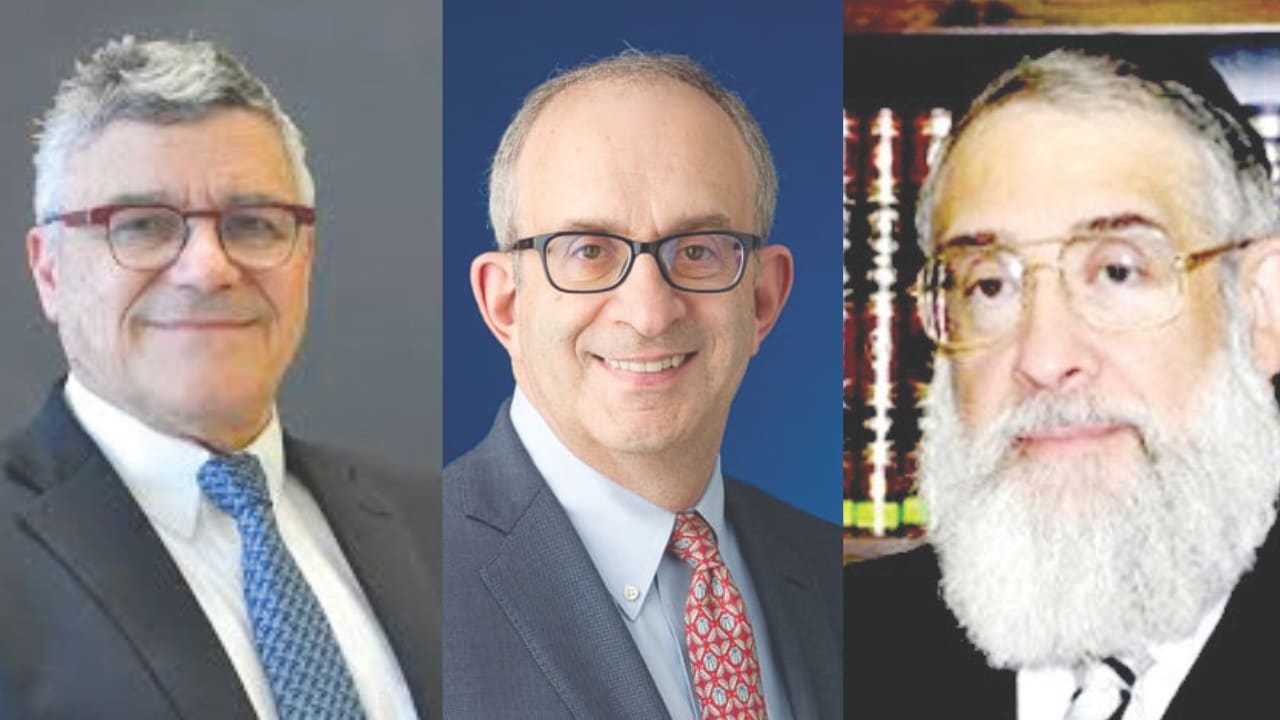
The case that occurred at Emory University Hospital in Atlanta, Georgia, has just been described in an 11-page study in the latest issue of the Rambam Maimonides Medical Journal – published at Haifa’s Rambam Health Care Campus – under the title “The halachic heartbeat at the edge of life: navigating maternal brain death and fetal life” (see link below). It was written by Prof. John Loike, interim director of bioethics at New York Medical College and a professor of biology at New York’s Touro University; Rabbi Prof. Tzvi Flaum, an expert in Judaic studies teaching at Lander College for Women at Touro; and Prof. Alan Kadish, Touro’s president and a well-known cardiologist.
They said that the tragic event “raised profound questions at the intersection of Jewish law and contemporary medical practice, particularly regarding the halakhic definition of death – brain versus cardiac cessation – and the moral status of the fetus.” The paper investigates dissimilar rabbinic opinions on whether sustaining a brain-dead body for fetal viability is halachically permissible or obligatory, and the principle of pikuah nefesh (saving a life), the fetus as a potential such life, and the permissibility of delaying burial to perform a cesarean section.

Jewish law's 'nuanced and compassionate' responses to bioethics
Loike told The Jerusalem Post in an email interview that, “when I read about this case, I was moved by all of the ethical, medical, and halachic controversies that it elicited and decided to write about it with the help of my colleagues in a month-long, intensive collaboration that developed through rigorous cross-disciplinary meetings to ensure medical accuracy and halachic depth.”
The three scholars argued that Jewish law “offers nuanced and compassionate responses to unprecedented bioethical dilemmas and that [it] is ethically responsive, evolving through dialogue with changing human circumstances while remaining rooted in balancing reverence for life with the dignity of death.”
The study stresses the importance of interdisciplinary collaboration among halachic authorities and medical professionals to navigate ethically complex and medically novel scenarios with both compassion and rigor.
“The Talmud permits violating most commandments, including killing a would-be murderer in self-defense or performing medical interventions that save a life, as overriding nearly all commandments,” they wrote, adding that, “It can extend even to cases involving the protection of potential life such as a fetus after 40 days of gestation.”
Hospital doctors decided on somatic support because of the state’s abortion law and to allow the fetus to develop until at least 32 weeks, a stage at which fetal survival outside the womb becomes more likely. The family of A.S. did not agree to or request that he be placed on a ventilator. Instead, family members, including her mother, maintained that they were not given a choice and were told by hospital staff that they had no say, due to Georgia’s restrictive abortion law.
Family calls experience 'torture'
The family described A.S.’s experience as “torture.” Maintaining her on life support demanded more than only mechanical ventilation, nutritional support, and monitoring her vital signs, as doctors gave her a variety of hormones to maintain the pregnancy and support the fetus’s growth.
On June 13, 2025, the brain-dead woman’s baby son was born prematurely via emergency C-section. Although he weighed just 0.82 kilos (1.8 lbs), he was alive and brought to the neonatal intensive care unit. Four days later, A.S. was taken off life support, died soon after, and was buried on June 28.
The case triggered national debate and raised complex ethical questions, especially about the justification for sustaining somatic support in a brain-dead pregnant woman solely to facilitate fetal viability.
“The case of Baby Chance is both a medical marvel and a complex bioethical case,” Loike said. “He has shown remarkable resilience, growing to about five kilos as of last December, but he faces the significant respiratory challenges typical of extreme prematurity. My analysis of this case is based strictly on public records, news reports, and peer-reviewed literature; I have not conducted personal interviews with the parties involved.”
In late December 2025, a Georgia judge awarded the mother’s partner sole legal and physical custody of Baby Chance. This was a significant legal hurdle because, under Georgia law, unmarried biological fathers do not automatically have parental rights. The “legitimation” case was fast-tracked to ensure the infant would not enter the foster care system once discharged.
Loike noted that he always finds it impressive that rabbinical authorities first review the legal/halachic parameters that any case elicits, but they also value the fact that Jewish law is not merely a rigid algorithm. “It is a profoundly person-specific system where a scholar’s ruling on a specific case may change based on a patient’s unique psychological, financial, or spiritual needs,” he said.
The authors said the case and others like it are “remarkable for many reasons. First, in the secular academic world, it reignited fierce debates across legal, medical, and religious circles. American law must wrestle with fetal viability, maternal autonomy, and state-level abortion restrictions. Second, there is concern whether long-term life support or performing a C-section endangers the gestating fetus.” There have been only 40 such cases in medical literature over the past several decades, they wrote, and in at least 28, the baby survived after delivery.
“While American courts grapple with issues of fetal rights and maternal autonomy, continued the authors, Jewish law incorporates a distinct bioethical lens. Before the 1960s, a direct and rapid link existed between the cessation of brain function and the cessation of cardiac function,” they wrote.
“For example, after a cardiac arrest, the brain ceased to function within minutes, and, similarly, following a severe stroke or brain trauma, the heart would stop shortly after the brain – but modern medical technology including respirators has challenged this understanding by allowing a functional heartbeat to be maintained long after the brain has ceased to function. So,” they asked, “does brain cessation or cardiac cessation constitute halachic death?”
The first documented case in the Torah that would allow a pregnant woman to be killed with her fetus is Tamar. Other halachic issues include abortion, heart transplantation, performing a C-section, suffering of the deceased, and destruction of sperm. “What is the humanhood status of a human embryo? This is a crucial question that directly impacts whether one is permitted or even obligated to maintain this brain-dead woman on life support for months in order to deliver the baby,” they declared.
Various experts on Jewish medical ethics in Israel and the US have different views on how Jewish law defines death. The Israeli Respiratory-Brain Death Act of 2008 includes religious accommodations for those who view cardiac cessation as halachic death – the time of death is defined to be either when “respiratory-brain death” is determined under the act, or when cardiac respiratory death is determined.
Respiratory-brain death can be determined if the medical cause leading to cessation of brain function is known and proven; and if there is clear clinical proof of irreversible cessation of whole-brain function (including brain-stem function) and cessation of independent respiration.
After long deliberations in the article and quoting numerous religious scholars through the ages, the authors conclude, inconclusively, that “Judaism teaches responsibility, compassion, and reverence for life. Halacha responds not with legal rigidity but with ethical pluralism, allowing a spectrum of legitimate positions grounded in deep values. This case presents a challenging intersection of medical ethics, legal considerations, and religious beliefs. Jewish law provides a framework for understanding the status of the fetus and the definitions of death, but it also calls for compassion and respect for all lives.”
In Jewish law, “life is not measured solely by the beat of a heart or the hum of a ventilator. The Torah commands us to choose life, but it also commands us to choose wisely. Pikuach nefesh overrides nearly every commandment, yet we are also warned not to desecrate the dead, not to hasten death, and not to confuse compassion with convenience. These tensions are not contradictions – they are invitations to moral greatness,” they concluded.
The study can be accessed at www.rmmj.org.il/userimages/3835/1/PublishFiles/4071Article.pdf