More than four weeks into Operation Roaring Lion, Israelis are not only enduring the relentless pressure of life under fire, but they are adapting, supporting one another, and proving that resilience is its own form of victory.
Life on the home front has settled into a tense but determined rhythm. American and Israeli air forces have destroyed nearly 90% of Iran’s ballistic missiles and launchers, yet the attacks from Iran continue, forcing millions of Israeli into a constant cycle of sirens, shelters, and interrupted sleep.
Even with a 96% interception rate, some missiles break through, and, in recent days, hundreds of civilians – including young children – have been rushed to hospitals as operating rooms work without pause.
These casualties are a stark reminder of the vulnerability we all feel. As a psychotherapist meeting clients both in person and online, I hear their worries daily: children home from school, parents unable to work, businesses collapsing, families stretched thin with loved ones still on reserve duty, many in the North.
And yet, despite the strain, collectively the nation remains steady – determined to endure, to adapt, and to hold onto the hope of victory and a better future.

Iranian missiles cause 'continuous traumatic stress'
Iran’s strategy is not only military; it is also psychological. The missiles are meant to do more than damage infrastructure – they are meant to erode our confidence that we and our loved ones will be safe. Every siren triggers a spike of adrenaline; every sprint to a shelter is a reminder of how formidable our so-called routine has become.
Psychologists describe this as “continuous traumatic stress,” a condition in which the threat is not past but ongoing, and the body never fully returns to baseline. One client told me, “When I leave my home to do a chore or buy some groceries, in the back of my mind I am thinking, ‘Will there be an alert? Will I be close to a bomb shelter?’”
And yet, what stands out in Israel today is not collapse but adaptation. People have learned to function inside the uncertainty, to carry on with a kind of practiced alertness that has become its own form of resilience.
I know one mother who takes her young children to a nearby playground, but she does so with the knowledge that she could get the kids back home to the bomb shelter of her apartment building before a siren sounds.
So many Israelis are actually out and about, going shopping in the mall or sitting at their favorite coffee shops.
Others are continuing to exercise at the gym to release tension.
They know where to go if there is an alarm, but the primary attitude is that they will not surrender to fear and just stay at home all day.
Almost all the people I speak to describe this intense experience as surreal. It certainly is, but the Israeli people during times of national crisis pull together and show remarkable and courageous resilience.
The existential threat is real, but the hopeful belief in the country’s strength, both in the military fight and on the home front, is our winning ticket.
Even though many Israelis feel deep anger toward the government and those responsible for the security failures of Oct. 7, this isn’t the moment to direct that anger outward. Right now, doing so would only pull us away from what matters most.
At this stage, our focus is straightforward: staying safe at home, supporting one another, and recognizing the remarkable courage of our pilots and soldiers who are fighting – and winning.
For the time being, and hopefully for not too much longer, the sirens will continue to resound and fade. But beneath the noise, something deeper is taking shape: a society that refuses to be defined by fear.
The missiles may continue to fall, but the Israeli spirit – alert, exhausted, determined, and unbroken – stands firm.
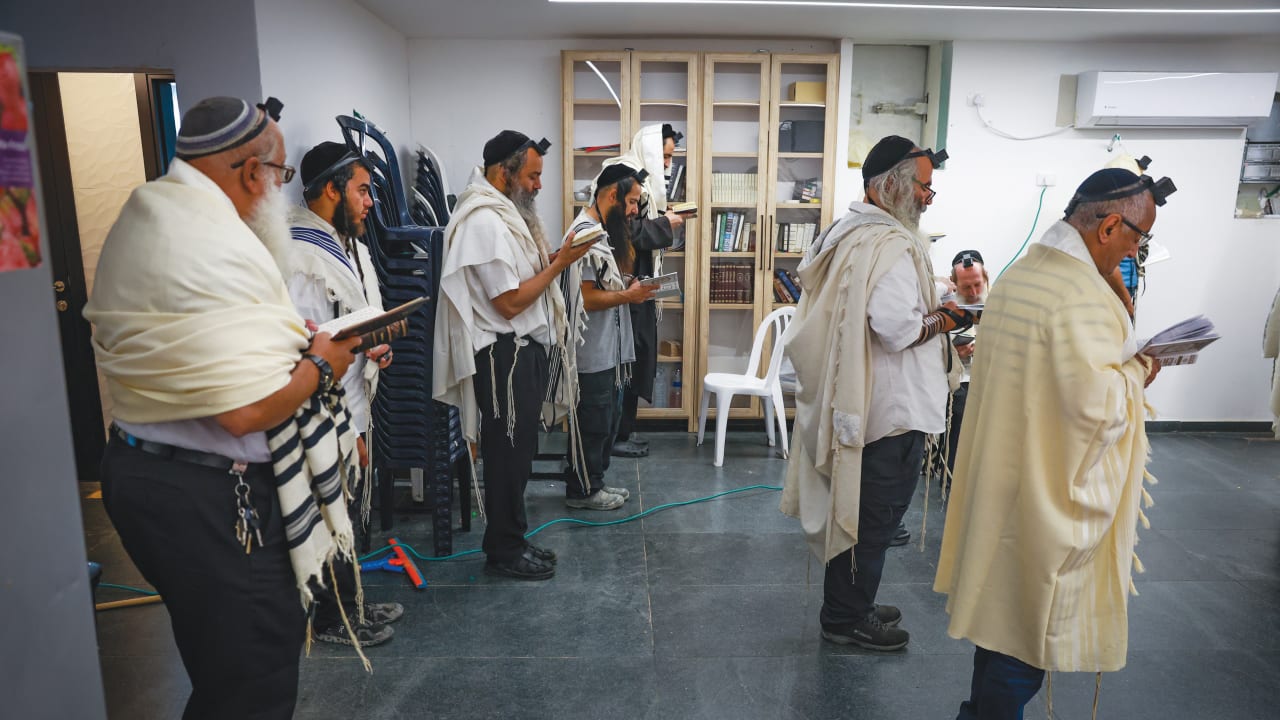
This past Friday, I attended a Shabbat service in a bomb shelter. There were many men and women praying and singing.
It was both moving and electrifying to see the spirit and emotional strength in that shelter, a microcosm perhaps of what Israelis feel collectively.
And in the end, that spirit and emotional strength are what Iran’s strategy could never break. By any measure of psychological endurance, this is a victory.
With Passover upon us, may this season of freedom bring comfort, resilience, victory, and a measure of peace to every home in Israel. Chag sameach.
The writer is a marital, child, and adult cognitive-behavioral psychotherapist with offices in Jerusalem and Ra’anana and global online accessibility. drmikegropper@gmail.com;
www.facebook.com/drmikegropper