
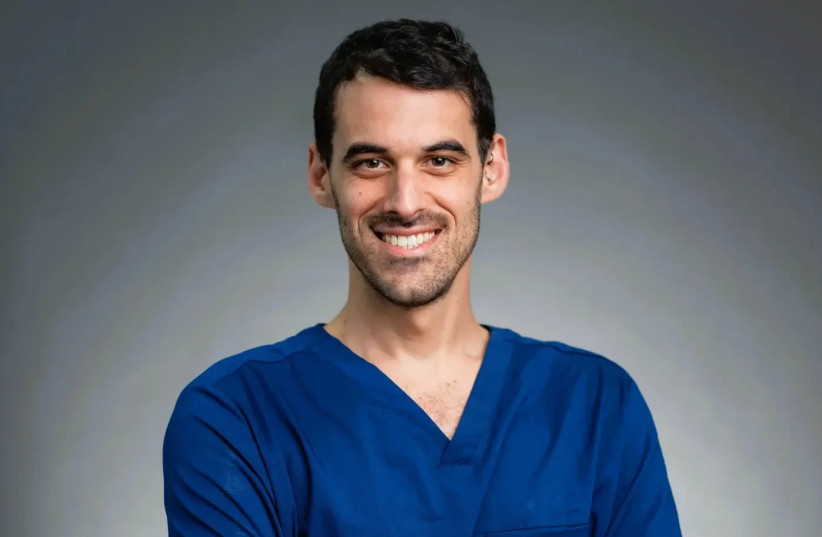
Before I begin - full disclosure. I am writing this column as a dentist, but not only. I am recognized as an IDF disabled veteran, among other things due to PTSD, as a result of an injury during Operation Protective Edge during my regular service. Therefore, the subject I am writing about is close to my heart in both worlds of my life - professional and personal.
For people coping with mental health issues, including PTSD, medical treatment is sometimes complex, and dental treatment especially. A Tel Aviv University study found that among those suffering from PTSD as a result of military service there is a higher prevalence of poor oral hygiene compared to the general population in Israel. In addition, among those suffering from PTSD there is more bacterial plaque on the teeth and, accordingly, also a higher rate of advanced gum diseases.
In addition, teeth grinding and jaw clenching, which cause pain in the facial muscles, are observed at a higher rate among those suffering from PTSD. The researchers even compared patients taking medication with those who are not. As expected, it was found that among those taking common medications, gum disease was almost twice as prevalent. Moreover, they are also heavier smokers, and as is known, smoking is harmful to general health and to oral health in particular.
Studies in other countries such as Japan, Germany and Hungary have also shown similar and concerning results regarding an increase in dental problems and general neglect among people coping with mental health issues.
Arriving for treatment only when it is too late
When trying to understand why many avoid dental treatments, reasons such as symptoms of depression, underlying illnesses, unemployment and a low socioeconomic status arise. The dentist and clinic staff were also among the reasons for lack of treatment, and the healthcare system must recognize the problem and act accordingly.
In practice, many in this population arrive for treatment only when pain or discomfort has already appeared and sometimes at a stage when significant damage has already been done and even tooth loss has occurred.
On the one hand, this population avoids dental treatments, but on the other hand oral and dental health is a significant part of quality of life in the modern era. In addition - missing teeth and dental problems lead to low self-confidence and a reluctance to smile. This is reflected, for example, in job interviews or in feelings of embarrassment every time leaving the house.
Despite the health and social consequences of oral condition, many people suffering from PTSD still avoid dental treatments. The question is why.
The reasons: Stress and hypersensitivity to stimuli
Together with PTSD, symptoms such as a higher-than-normal baseline stress level, hypervigilance, hypersensitivity to stimuli, avoidance of triggers and trust issues sometimes appear. These mechanisms may be expressed during dental treatment.
During dental treatment many patients experience loss of control and a certain level of high stress. Patients with a mental health background or PTSD may experience this more intensely and sometimes alongside additional symptoms. Such a situation may lead to greater avoidance of dental treatments.
In fact, a snowball effect is created. The mental state leads to avoidance of dental treatments. As a result, the condition of the mouth and teeth worsens. Over time shame and guilt develop, increasing the reluctance to receive dental treatment. The neglect may continue to the point of tooth loss, which deepens embarrassment about the appearance of the teeth and leads to further deterioration in mental state and vice versa.
When trying to understand what is actually so problematic about dental treatment, several key factors that may trigger reactions are revealed. Most studies point to the clinic environment, smells and noises from the equipment as main factors.
Alongside them, the position in which the patient lies during treatment may be interpreted as a lack of control. In addition, the oral cavity is a very intimate area and many people experience dental treatment as highly invasive.

The position during treatment - loss of control
When there is a background of trauma, sexual assault or mental illness, the combination of the position during treatment, loss of control and the mental background may turn the treatment into a difficult experience to the point of complete avoidance of dental treatments. For these patients even relatively simple treatments such as an examination or an X-ray may create a trigger and cause flashbacks, dissociation and even more severe reactions.
In addition, the population of people coping with mental illness sometimes suffers from an unbalanced diet and sometimes also a high-sugar diet, lack of attention to hygiene and especially oral hygiene. In addition, the rate of smokers in this population is higher.
In practice, they have to deal not only with the treatment itself but also with getting to the clinic. For some of them, simply leaving the house is not simple. Sometimes there is fear of public places and functional disorders that make it even more difficult to reach the clinic.
It would not be fair to say that only the patients are to blame for avoiding treatment. Many doctors and therapists in the country are not trained or adapted to deal with this population. Many times they will define the patient as difficult or uncooperative, and sometimes will not connect between their physical condition and the mental background.
A study published in the Journal of International Dentistry examined the difficulty of patients with a history of sexual trauma undergoing dental treatments. The study raised several recurring complaints that appeared in many studies, including lack of empathy toward the patient, judgmental attitude toward the patient’s dental condition, and even lack of involvement of the patient in decisions regarding the treatment plan.
It is important to understand that every trauma and mental state has its own triggers and accompanying problems, but many of them ultimately lead to avoidance of medical treatment.
Studies from different countries, from East Asia to the Western world, have found that patients with a mental health background avoid coming to dental treatments and the reasons for this are similar.
As a society, we bear the responsibility to treat this population with sensitivity, patience and tolerance. And we, the doctors, bear this responsibility even more so. Moreover, we must demand proper training that will allow us to provide appropriate care for this population.
The author is a dentist who himself suffers from PTSD