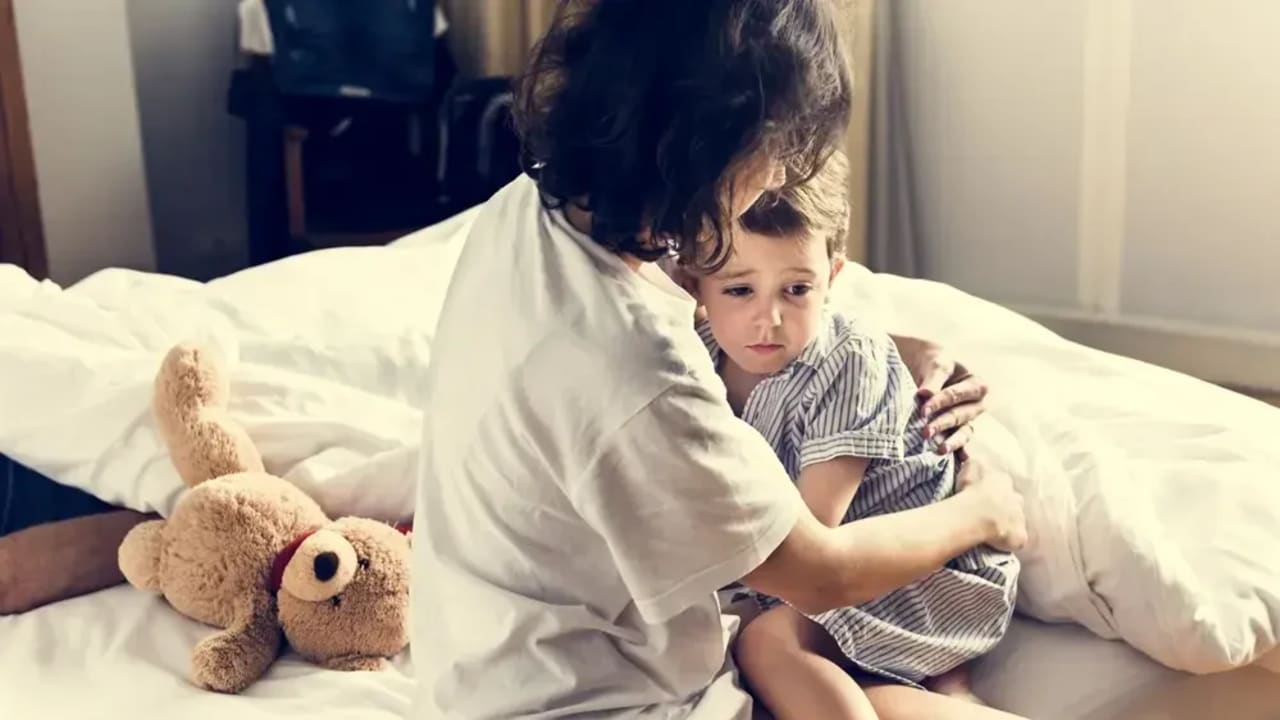
The recent nights in Israel, under the threat of missiles and sirens following the fighting with Iran as part of Operation "Roar of the Lion", are not easy for anyone. But for many children, the experience can be particularly unsettling.
Nighttime fears, difficulty falling asleep alone, and a return to behaviors the child has already "outgrown" are common phenomena during periods of security tension. According to child development experts, this is a completely natural emotional response.
In a conversation on Michal Dalyot’s program on 103FM, a mother of a 10-year-old shared painfully that since the last round of fighting, her child simply cannot fall asleep alone.
According to her, this is a sharp change in behavior.
"He was a completely independent child," she said. "But now he refuses to sleep alone. It comes with crying and puffy eyes. Even when we get up for a moment to go to the bathroom, he immediately jumps up and panics."
Dalyot clarified immediately that this is an emotional response, not a behavioral problem.
"It’s Not Spoiling. It’s an Emotional Injury"
According to Dalyot, many children experience war events much more deeply than adults assume.
"What happened is that the child went through a war and it affected him very badly," she explained.
To illustrate the situation, she used a powerful metaphor. "It’s like a child who knew how to run and kick a ball well, and now he has a broken leg in a cast. Your child now has a cast on his heart."
According to her, the child’s fear is not related to logic or understanding of the security situation. "Cognition can say everything is fine and that there is a strong army, but what drives him right now is the emotion. And he is afraid."
Why Fear Intensifies at Night
Dalyot explains that for children, nighttime is a period when fears tend to intensify. "The night is a truly scary place," she said. "It’s the transition from light to dark, from togetherness to being alone."
During the day, children are busy with activities, at school, or with friends. But at night, when everything is quiet, thoughts and worries come to the surface.
"The monsters come out at night," Dalyot explained. "All the fears awaken." In such a situation, attempts to convince the child that everything is fine do not always work.

Don’t Fight the Fear – Create Security
The most common mistake parents make in this situation is trying to immediately return the child to the independence they had before.
According to Dalyot, the correct approach is actually the opposite. "I want first of all to give him calm," she said. "As long as he doesn’t have calm, he will continue to get out of bed."
According to her, there is no need to fully understand the child’s fear in order to help. "I don’t know what’s happening in depth. But right now he needs to feel safe."
Being the Child’s Anchor
The solution Dalyot offers is very simple but requires patience. Instead of leaving the room and leaving the child alone, she recommends that parents be physically present in the room.
"Sit in the room, bring in a chair, and dad or I will sit there," she said. The key principle: there is no need to talk, have a conversation, or activate the child. "Don’t talk, don’t answer, don’t get up. Just be there."
According to her, the mere presence of the parent provides the child with a deep sense of security. "When he opens his eyes he will see you. He won’t need to call for his anchor because the anchor is there."
Dalyot emphasized that there is no problem in doing this even with older children. "Personally, I see no problem sitting in the room even if they are 11, 12, or 13. It gives them security, and that’s the X factor."
Don’t Analyze the Fears Too Much
Many parents try to understand exactly what frightens the child, ask questions, and analyze the situation. Dalyot actually recommends avoiding this at the first stage.
"You will never know what’s happening in the mind of an 8- or 10-year-old," she said. According to her, children during such periods may even be afraid of things that are not spoken aloud.
For example, the fear that the parents will disappear or not return. "It’s terrible and frightening for them," she added.
Ultimately, Dalyot’s message to parents is very simple. During periods of security tension, children mainly need one thing: presence.
According to her, parents need to become the "psychologists of their children." That is, not necessarily to explain, but to be there.
"My role now is to calm him," she explained. "Not to talk about it, but to create conditions." These conditions include routine, physical presence, and lots of warmth. "Simply be there for him," she concluded. "And simply love him."