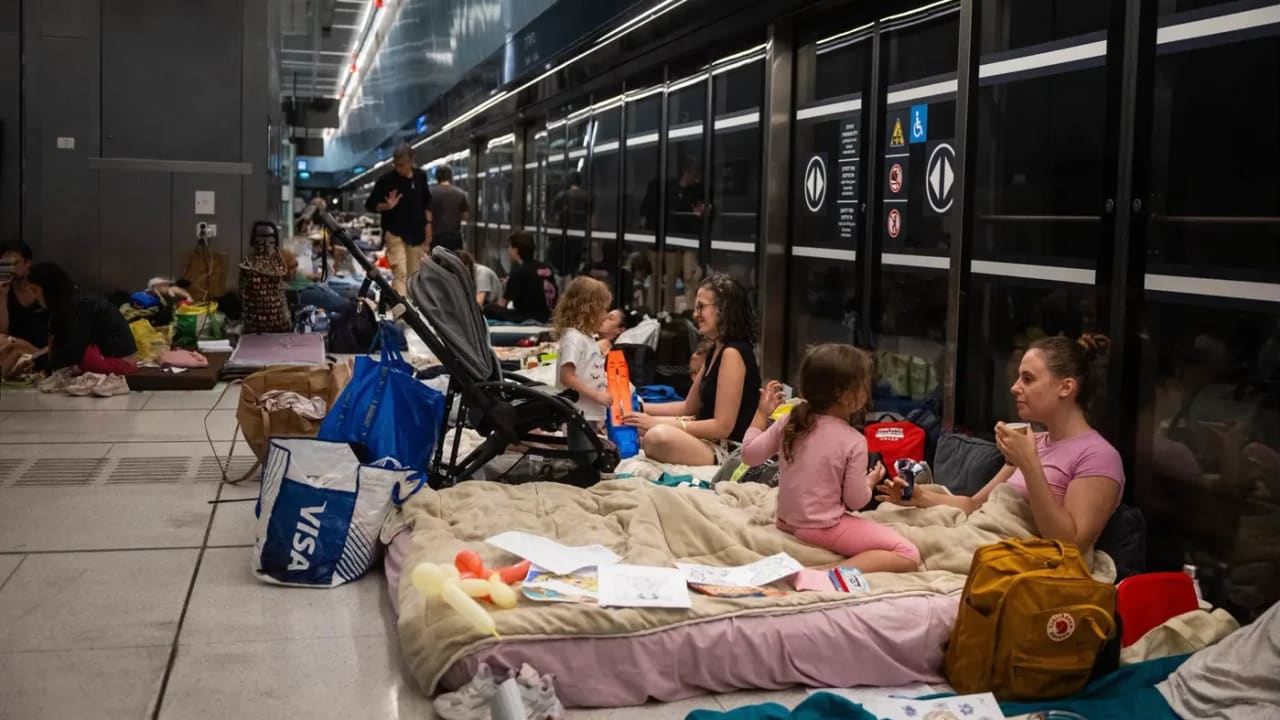
Many of us are not sleeping at home right now. Some are sleeping in a safe room, some in a public shelter, and some in underground parking garages.
There is noise.
There is light.
There is alertness.
There are sirens in the middle of the night.
This is not an environment designed for sleep.
Sleep is not a luxury. It is critical for survival, resilience, and our ability to function.
The goal right now is not “perfect sleep” The goal is to reduce harm and give the nervous system as many opportunities as possible to recover.
1. Change the definition: Not a perfect night, but good enough
If you woke up several times during the night because of sirens or noise, that is normal. Even fragmented sleep is still better than total sleep deprivation.
Try:
• To make up 20-40 minutes of sleep in the afternoon
• Not to panic if you do not fall asleep immediately after a siren
• To remember that the body knows how to fall back asleep even after alertness
The stress about not sleeping harms more than the awakening itself.
2. Creating a “sleep bubble” even in a shelter
You cannot control the entire environment, but you can control your small personal space.
What you can do:
• Simple earplugs
• An eye mask
• A hoodie/scarf that covers part of the face
• A personal pillow from home if possible
• A blanket that feels familiar to the body
Even in a bright and noisy parking garage, a small reduction in stimuli makes a big difference to the brain.
3. Before sleep, intentional reduction of adrenaline
When lying down to sleep after a day of alerts, the nervous system is still on “standby.”
Before you lie down to sleep:
• Slow breathing (inhale 4 seconds, exhale 6-8 seconds)
• Gentle stretches
• Progressive muscle relaxation (tighten and release muscle groups)
• Avoid watching the news in the last 15 minutes before lying down
The goal: To reset the nervous system before lying down.

5. Caffeine, smart management
Lack of sleep causes us to drink more coffee but too much caffeine will worsen the next night.
Try:
• Not to consume caffeine after 14:00
• To drink water throughout the day
• Not to compensate for a bad night with double the amount of coffee
6. Nutrition under stress
In parking garages and shelters, eating is sometimes irregular.
Try:
• To eat something small every 3-4 hours
• To combine protein and quality fat when possible
• Not to go to sleep very hungry
Hunger raises adrenaline and wakes you up at night.
7. Movement even in a parking garage
Even in a protected space and near it you can:
• Go up and down stairs
• Do squats/stretches
• Walk in the corridor
Movement helps the body release stress hormones, thereby improving falling asleep.
8. Realistic expectations
Sleep during such a period will not be perfect, it may be lighter. More fragmented. And that is okay. Our body is built to survive such periods. It does not need perfection, it needs sufficient rest in order to continue.
Why is this so important now?
Lack of sleep harms:
• Decision-making
• Emotional regulation
• The immune system
• Blood sugar levels and hormonal balance
• The ability to respond correctly in an emergency
Precisely now we need optimal functioning because sleep is part of all of our resilience.
In conclusion, if you are sleeping in a parking garage or a shelter, you are already coping with a difficult reality. Do not judge yourselves for less good nights. Do your best under the existing conditions. Even partial sleep, even short rest, even closed eyes for 15 minutes, everything counts. Protect the body, protect the nervous system. This is how we can continue and endure over time.
For Dr. Dalit Draiman-Medina’s website click here