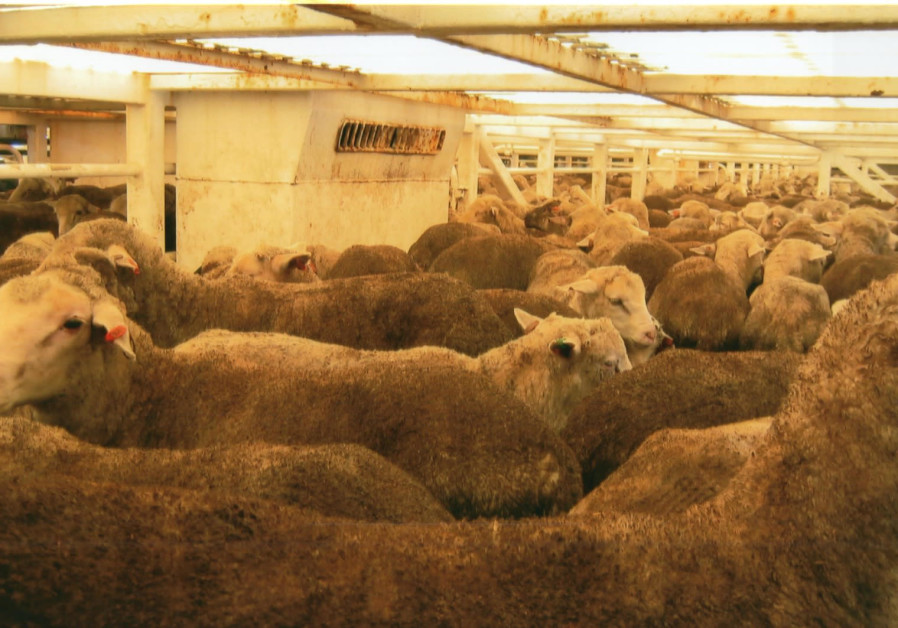
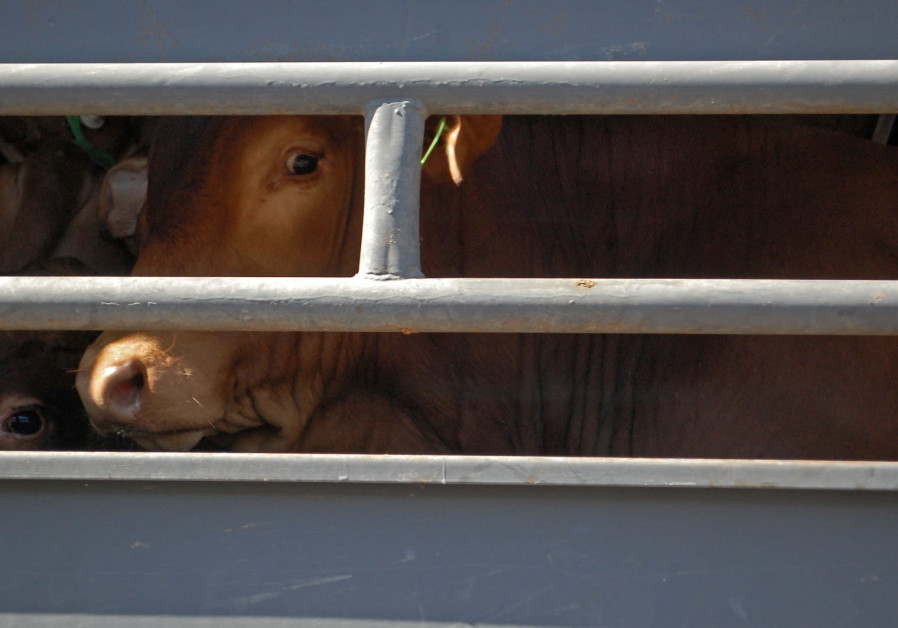
“Since the beginning of the year, we have inspected all 34 ships that arrived, compared to 24 ships in the same period last year. Dozens of animals were found without enough hours of sleep,” according to Yaron Lapidot, founder of the organization Israel Against Live Shipments.
“While 86% of Israelis support legislation to stop live shipments, the Agriculture Ministry exploits the political situation to continue making money by stuffing animals in crowded and polluted ships, drenched in urine and feces, sick, injured and desperate,” announced Animals Now, another Israeli nonprofit that supports animal rights. “By 2021 live shipments should have been history. We call on elected officials and the government to stop the rampage of the shipping industry.”
LIVE ANIMAL shipment isn’t just a humane matter: The unsanitary and diseased ships are a danger to the public. Just two years ago, a shipment of cows from Portugal brought an outbreak of tuberculosis to Israel.
In light of the coronavirus pandemic, such health risks demand attention.
“A pandemic of some sort was inevitable,” explained Prof. Marylouise McLaws, a member of the World Health Organization. “As soon as you push the natural environment further in and they’ve got nowhere else to go, humans and animals will mix, and not respectfully.”
This is precisely the case when potentially ill livestock are packed onto boats and transported to countries not previously exposed to certain diseases.
“I do not think it will change until there is an outbreak in the animals while they are sent to other countries,” Mclaws warned.
However, Israel does not need to wait until then. The Finance Ministry has increased its tax-free importation of frozen meat to over 21,000 tons, the Agriculture Ministry noted. Frozen meat is cheaper than live animal transport, prevents the transmission of diseased livestock, and eliminates the animal cruelty involved in the shipment process. That makes chilled meat a more viable and sustainable alternative.
Israel’s demand on livestock is hefty, amounting to an average of 20.6 kg. of meat per person each year, compared to the global average of 4.6 kg., The Organization for Economic Cooperation and Development recorded in 2018. Importing chilled and frozen meat offers an affordable opportunity to support such demands in both a healthy and moral way.
“From an economic point of view, as long as people still choose to eat meat, the less harmful way to do so is to bring the animals after slaughter, i.e., chilled meat,” Animals Now told The Jerusalem Post.