
On June 24, 2023, the Wagner Group, a once-loyal private military, turned its sights on the Kremlin and threatened to roll tanks into Moscow. This “march of justice,” led by Yevgeny Prigozhin, exposed Russian President Vladimir Putin’s fragile grip on power and the rage of his growing dissenters.
According to the BBC, the Wagner Group first emerged in 2014 and is believed to have been founded by Prigozhin. While the group operated unofficially for years on behalf of Russian interests throughout the globe, Wagner was formally registered as a private military company in 2022.
After Prigozhin’s relationship with the Russian military and government reached an all-time low, he was able to pit Russia against Russia. He commanded his private company to revolt and roll tanks all the way to Moscow if need be.
Prigozhin’s rise to power
Prigozhin, a native of St. Petersburg—also Putin’s hometown—has long been associated with both organized crime and the Russian president himself, according to the BBC. He received his first criminal conviction at the age of 18, and two years later was sentenced to 13 years in prison for robbery and theft, nine of which he served.
Prigozhin began rebuilding his life after his release from prison by selling hot dogs from street stalls in St. Petersburg. His ventures proved successful, eventually allowing him to open high-end restaurants in the city. It was through this new business that he met members of Russia’s political elite, including Putin. In 2003, Putin even celebrated his birthday at one of Prigozhin’s restaurants, New Island.
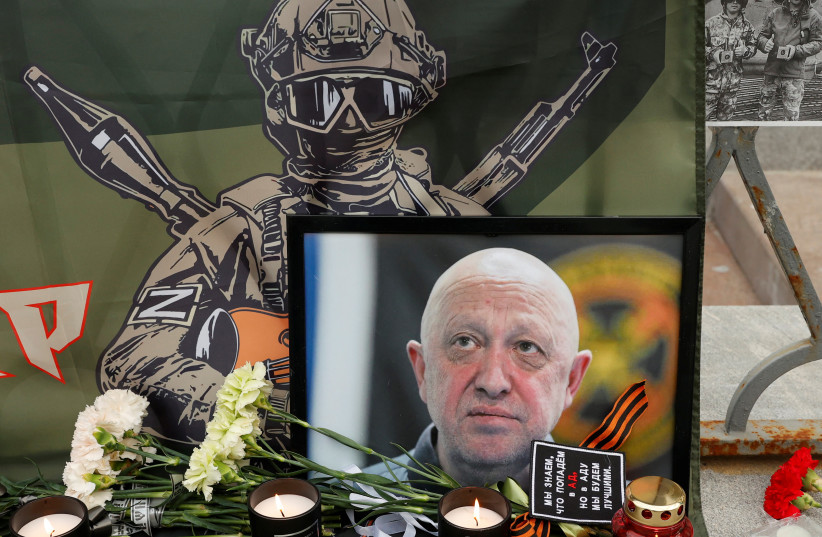
Prigozhin’s catering company, Concord, later secured lucrative contracts to provide food services to the Kremlin, earning him the nickname “Putin’s chef.”
For years, Prigozhin denied any ties to Wagner and even took legal action against those who suggested otherwise. But in September 2022, he publicly acknowledged that he had, in fact, founded the group in 2014.
Since its inception, the Wagner Group has operated across multiple continents, from propping up the Assad regime in Syria to countering French influence in Mali. Its appeal for the Kremlin lay in its utility: a tool for plausible deniability. Wagner enabled Russia to conduct sensitive military operations and expand its geopolitical reach without direct attribution.
Following heavy Russian losses in Ukraine, Prigozhin was granted permission to recruit fighters from prisons. He personally toured correctional facilities, offering inmates the chance to earn freedom in exchange for six months of frontline service with Wagner. The catch is that in order to reap the benefits, they had to be alive by the end of it.
As Russia’s military campaign in Ukraine faltered, Prigozhin’s frustrations with the country’s defense leadership intensified, setting the stage for the armed rebellion that followed.
By early 2023, tensions between Prigozhin and Russia’s military leadership had begun to boil over. The Kremlin banned Prigozhin from recruiting additional prisoners, and he repeatedly accused the Defense Ministry of starving Wagner forces of ammunition—an allegation he claimed had cost countless lives on the battlefield.
Prigozhin’s public criticism escalated to a breaking point in June 2023, when he accused the ministry of launching a deadly strike on a Wagner base in Ukraine. He claimed the attack had killed 2,000 of his fighters. The ministry denied responsibility, but Prigozhin responded by declaring an armed rebellion, framing it as revenge for the blood of his men.
The march of justice in motion
In the early hours of June 24, Wagner forces seized key military infrastructure in southern Russia, including the city of Rostov-on-Don and the headquarters of the Southern Military District. They quickly entrenched their positions, establishing checkpoints across the city.
According to The Wall Street Journal, a Wagner convoy began advancing toward Moscow the morning of June 23 while Prigozhin directed operations from Rostov. The convoy was composed of roughly 5,000 fighters equipped with tanks, armored vehicles, anti-aircraft systems, and even civilian trucks.
Putin swiftly denounced the uprising as treason, invoking Russia’s anti-terror laws and imposing a state of emergency. He described Prigozhin’s actions as a “stab in the back” and ordered a 30-day detention for anyone violating martial law.
The rebellion proved short-lived. By the evening of June 24—less than 24 hours after it began—it was over. According to Reuters, Belarusian President Alexander Lukashenko negotiated a deal with Prigozhin to halt the uprising. In exchange for calling off the advance and withdrawing Wagner forces, Prigozhin was granted exile in Belarus, and criminal charges against him and his men were dropped.
However, on August 23, 2023, Prigozhin’s death was confirmed following a private jet crash that killed all ten on board. Putin offered his condolences, yet denounced accusations of assassination as “absolute lies.”
The consequences that followed
In the months that followed, the consequences of the mutiny reverberated through Russia’s power structure. The Kremlin moved quickly to strip Wagner of its autonomy, offering state contracts to fighters and reining in private military groups.
The Wagner revolt marked the most serious internal threat to Putin’s rule in decades. It exposed deep fractures within Russia’s security apparatus and shattered the illusion of total control. One year later, the Kremlin continues to consolidate power—but the specter of Wagner’s march on Moscow remains a chilling reminder of how quickly loyalty can turn, and how fragile authoritarian stability can be.