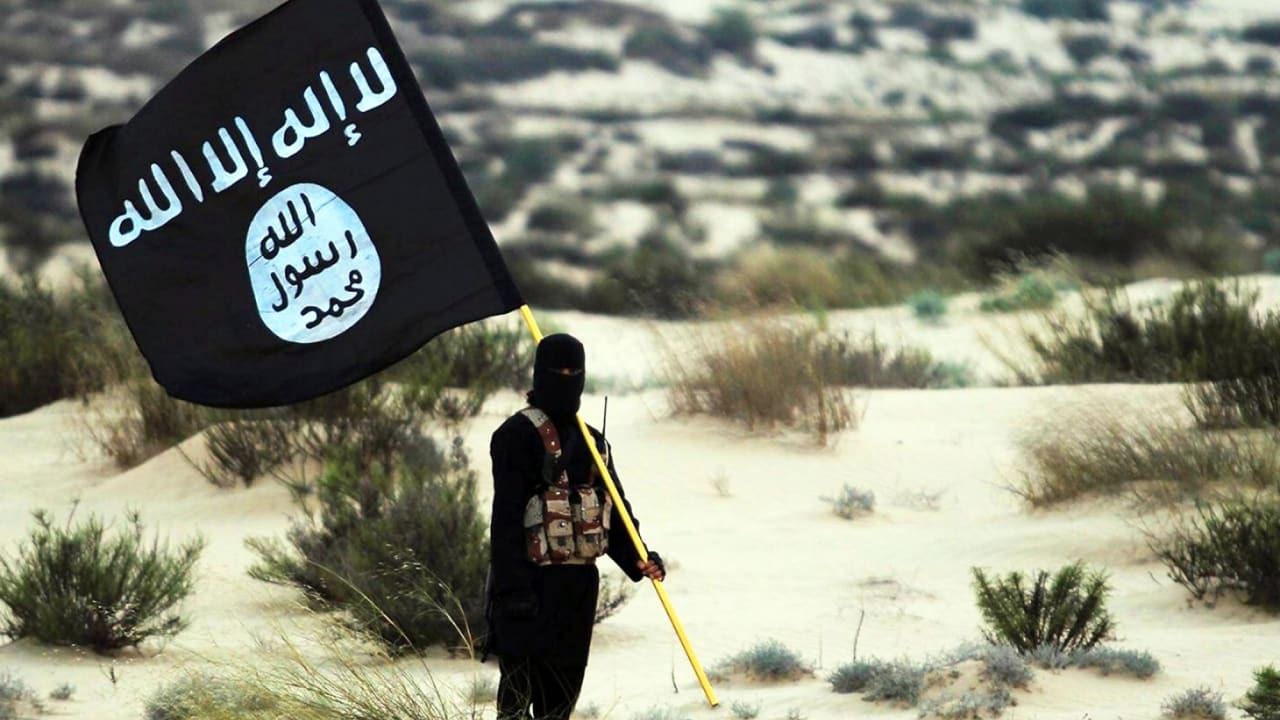
On June 29, 2014, Abu Bakr al-Baghdadi declared the establishment of the Islamic State (ISIS) caliphate in Iraq and Syria. Following this announcement, ISIS launched a major offensive in northern Iraq and Syria, where they gained swathes of new territory.
ISIS aimed to create a theocratic Islamic state across Iraq, Syria, and beyond, with al-Baghdadi asserting complete religious and political control and rooted in Sharia law.
Origins and Background of ISIS
According to the National Counterterrorism Center (NCTC), ISIS is a Salafi-jihadist group known for its anti-Shi’ite sectarianism and for declaring that Shia Muslims and followers of other religions deserve death.
Its fighters carried out and even broadcast their gruesome tactics: public beheadings and sexual enslavement of women and girls, particularly Yazidis. The group’s wealth, firepower, and ability to hold territory made it far more dangerous than typical terrorist organizations.

ISIS emerged from al-Qaeda in Iraq in 2004, led by Abu Musab al-Zarqawi, a Jordanian terrorist. In 2006, the group tried to create a Sunni Islamic state within Iraq, but was crushed by the US troops positioned there.
ISIS started to regain power and influence in 2011, with the power vacuum created by the Syrian Civil War, and the group, now under al-Baghdadi, started sending fighters into Syria.
Recruitment and income methods
The group uses modern tools like social media, particularly videos, as psychological warfare and to recruit members worldwide. Videos are professionally edited and often include graphic violence, such as beheadings or videos of mass killings. In 2014, ISIS released “A Message to America,” in which James Foley, an American journalist, was beheaded.
According to CNN, most of the group's money comes from oil production and smuggling, ransom from kidnappings, extortion, and controlling crops.
The united international response to ISIS's offensive
In response to ISIS’s offensive launched in 2014, a US-led coalition launched Operation Inherent Resolve. On August 7, 2014, the US began launching airstrikes against ISIS in Iraq and expanded its campaign to Syria the following month.
According to The Guardian, when ISIS launched its offensive on June 29, 2014, it released several propaganda videos. In one titled “The End of Sykes-Picot”—a reference to the post-World War I agreement that divided the territories of the former Ottoman Empire—ISIS threatened Israel and expressed support for a free Palestine. The video included the chilling declaration: “This is not the first border we will break; we will break other borders.”
Later in the same video, the fighter reemphasizes the religious nature of their goals: “We are fighting to make the word of Allah the highest," the spokesman said.
In September 2014, the then-director of NCTC, Matthew Olsen, said that ISIS controlled an area similar in size to the United Kingdom, or about 210,000 sq km.
The campaign to dismantle ISIS was one of the largest international counterterrorism efforts in recent years. A network of forces from the United States, European and Arab allies, and many NATO member countries partnered together. They collaborated on the ground, in the air, and with logistics and planning.
Both Iraqi and Syrian forces were involved in combating ISIS on their home turf as well. The Iraqi Army and Counter-Terrorism forces focused on cities such as Mosul, Fallujah, and Ramadi. Syrian Democratic Forces primarily operated in Raqqa, in order to liberate Raqqa.
The international community’s proactive response against ISIS prevented the group from expanding its control over additional territory and imposing its brutal regime on more minority populations. Moreover, ISIS’s propaganda played a significant role in inspiring numerous terror attacks worldwide, particularly at the peak of its influence.
Though ISIS lost its caliphate in 2019, it did not disappear. Thousands of fighters went underground and formed sleeper cells. These groups have returned to insurgency tactics like ambushes, bombings, and assassinations.
While ISIS may have lost much of its territorial strongholds in 2019, its ideological influence still remains active worldwide. The group’s ever-evolving nature continues to pose a threat to global security, particularly in the West.