
ACT I – The clock starts
Just after lunchtime on June 27, 1976, the first report reached the Prime Minister’s Office in Jerusalem: an Air France plane had been hijacked.
The aircraft, carrying more than 250 passengers and crew, had been seized after a stopover in Athens by two Palestinians from the Popular Front for the Liberation of Palestine – External Operations, Jayel al-Arja and Fayez Abdul-Rahim al-Jaber, and two Germans from the Revolutionary Cells, Wilfried Böse and Brigitte Kuhlmann.
Two hours later, at 2:30 p.m., the aircraft was on the ground in Benghazi, Libya. The identity of the hijackers was still unclear at the time. As for the passengers, early Israeli reports listed 83 Israelis and around 140 flyers from other countries.
At 4 p.m., then-prime minister Yitzhak Rabin was briefed. Israel informed France that, because the aircraft belonged to Air France, Paris was expected to act “by all required means” to ensure the safety and release of the passengers, particularly the Israelis.
According to Israeli records, France said it accepted responsibility for the passengers and their release.
Later that evening, the plane departed Benghazi before making its way to Entebbe, Uganda. Rabin was initially relieved that the aircraft had reached Uganda rather than an Arab country.

Uganda was familiar. Israeli officers had trained Ugandan forces in earlier years. Idi Amin, Uganda’s president for life, who was in power since 1971, had once enjoyed warm ties with Israel. Somewhere, it was thought, there might still be a personal channel.
However, that early sense of Amin possibly helping would dissolve over the next few days as the dictator supported the terrorists and distanced himself from Israel.
Amin’s own rise had been through the military. Born in the mid-1920s in northwestern Uganda, he received little formal education before joining the King’s African Rifles, the British colonial army’s East African force, in 1946.
He served in Kenya during the Mau Mau uprising, rose through the ranks, and became one of the first Ugandans to receive a commission as an officer before independence.
After Uganda became independent in 1962, Amin advanced quickly in the new Ugandan army, eventually becoming the army’s commander.
In January 1971, while Uganda’s president, Milton Obote, was abroad at a Commonwealth summit, Amin seized power in a coup d’état and installed himself as Uganda’s ruler.
By the time the Air France jet landed at Entebbe five years later, Amin was in the midst of his dictatorial rule and his “president for life” phase.
One glimpse into the mindset of the Ugandan leader can be found in his official title: His Excellency, President for Life, Field Marshal Al Hadji Doctor Idi Amin Dada, VC, DSO, MC, CBE, Lord of All the Beasts of the Earth and Fishes of the Seas and Conqueror of the British Empire in Africa in General and Uganda in Particular.
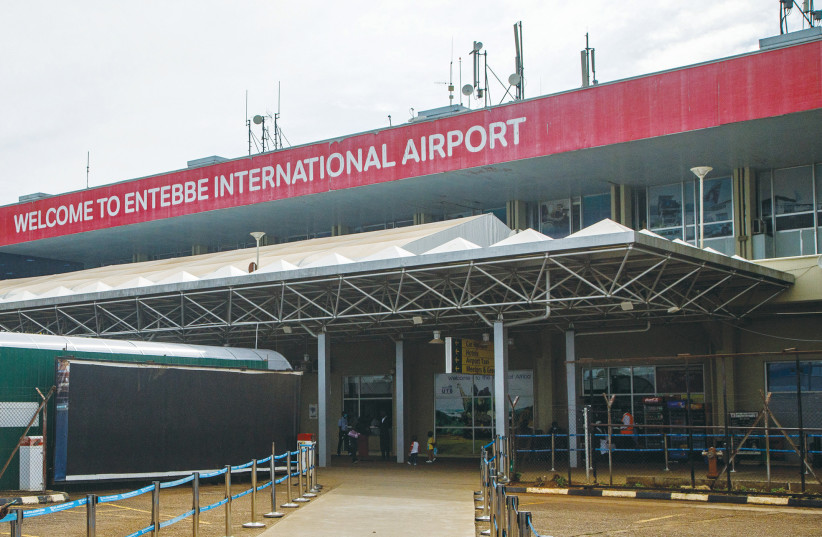
After the plane landed at Entebbe, the passengers and crew were transferred to an older terminal, and three more terrorists were permitted by Amin to join the hijackers.
Around them stood Ugandan soldiers. The area, according to the Israeli archives, was “surrounded by the Ugandan army.” Amin himself turned up to welcome the hostages and hijackers.
One witness later recalled to Haaretz, “We were received by a distinguished delegation of the PLO and of course by [Ugandan ruler] Idi Amin.”
“It was an absurd sight,” this witness continued. “The Israeli government had maintained close relations with him in his first years in power. Israelis built the old terminal in which we were being held. The Ugandans who guarded us wore [Israeli] paratrooper boots and held Uzis.”
Amin’s soldiers controlled the ground, and his airport held the aircraft. His radio would soon broadcast the terrorists’ demands, and, for the next week, any diplomatic effort to save the hostages would have to pass through the dictator.
To the hostages, Amin would present himself as a protector. To foreign governments, he allowed himself to be treated as a mediator. To Israel, at least briefly, he remained a man who might still be of use.
The documents from that week tell the story of how that belief slowly collapsed.
ACT II — Amin steps inside the crisis
On the morning of June 28, the French embassy in Uganda was in contact with Uganda’s Foreign Ministry and with an Air France representative. At that stage, there were still no “specific and authoritative” demands from the hijackers.
Amin had room to perform, presenting himself as the man who might prevent catastrophe. It was his turn to shine on the world stage and get the respect he felt he deserved.
Some of the hostages initially thought Amin’s involvement might mean the nightmare was near its end. They were told that Amin had agreed to take charge of their security and that they would later be told how they would return home.
The hope was short-lived.
To the hostages, Amin would present himself as a protector. To foreign governments, he allowed himself to be treated as a mediator. To Israel, at least briefly, he remained a man who might still be of use
Inside the terminal, the hijackers’ authority was clear. A German terrorist told the hostages that they were in Uganda and in the hands of the PFLP. Negotiations with their governments, they were told, had already begun.
The hijackers, as best they could, split the hostages into Israeli and non-Israeli factions. There was confusion, however, due to several dual-citizenship passengers who managed to be held with the non-Israelis, as well as religious-looking Jews without Israeli citizenship who were held along with the Israelis.
The next day, Radio Uganda broadcast the terrorists’ demands. They called for $5 million and the release of 53 pro-Palestinian “freedom fighters” held in five countries.
Forty of them, the terrorists said, were held in Israel, six in West Germany, five in Kenya, one in Switzerland, and one in France. The deadline was set for 2 p.m. on July 1, or else, they said, they would begin killing the hostages.
The demands belonged to the hijackers, but they were broadcast from Amin’s Uganda. The world was reacting to an ultimatum. In Jerusalem, the question was narrowing.
Was Amin the route to the hostages, or part of the machinery holding them?
ACT III — Searching for the man who knew Amin
By June 30, the deadline was closing in.
France was still trying the official route. At 10:35 a.m., the French ambassador spoke with Ze’ev Shak, a senior Israeli Foreign Ministry official, and reported that French president Valéry Giscard d’Estaing had sent Amin a message appealing to his “conscience and his sense of justice.”
It was the language of diplomacy, but the crisis was no longer moving only through diplomatic channels.
The hostages were in Amin’s airport, under the guard of Amin’s soldiers, while Amin’s Uganda had broadcast the terrorists’ demands. If he was still to be moved, Israel needed someone who could speak not only to the president of Uganda, but to Idi himself.
That man was Baruch “Burka” Bar-Lev.
Bar-Lev had served as Israel’s military attaché in Uganda and knew Amin from the years when Israeli officers had trained Ugandan forces. By 1976, that old relationship had become one of the few possible openings into the dictator’s mind.
“Burka suggested,” one Israeli archive note recorded, “Idi lives in a fantasy.” Perhaps, officials discussed, one could offer him money or speak with him by telephone and try to “fire” or “excite” his imagination.
That was the logic behind the Bar-Lev channel. Amin’s vanity, ego, and need to be seen as a world figure were now part of the Israeli calculation.
The formal route still ran through France. But the personal route, the more delicate and uncertain one, ran through Burka. The question was whether Amin could be flattered into acting, or whether he was already too deeply tied to the hijackers’ demands.
Rabin moved cautiously. The discussions show that he did not want to rush the matter into a wider cabinet forum before knowing how the French would act and whether the move could actually be coordinated.
There was still diplomacy to manage, but the search for a way to reach Amin directly had already begun.
By that afternoon, Bar-Lev would be waiting by the phone.
ACT IV — Burka’s telephone line
By the afternoon of June 30, the official channels had not broken the deadlock. France was still appealing to Amin. Israel was still weighing negotiations. The deadline was moving closer.
Burka Bar-Lev was waiting by the phone. When the call came, Amin recognized his voice.
“How are you, my friend?” he asked, according to accounts of the conversation.
Bar-Lev knew how to speak to him. He did not begin with accusations. Rather, he appealed to Amin’s ego. Here was a chance, he told him, to be remembered as a peacemaker. If he freed the hostages, he would go down in history as a great man.
Amin seemed to respond warmly. He said he had spoken with the PFLP and had good news to report: 48 hostages had been released and handed to the French ambassador. Then he told Bar-Lev to listen to Radio Uganda that afternoon.
When Bar-Lev pressed him about the Israeli hostages, the warmth gave way to threats. The remaining hostages, Amin said, were surrounded by explosives. The Israeli government had to answer the Palestinians’ demands.
That was the contradiction inside the call. Amin spoke as though he wanted to save lives, but the message he carried was the terrorists’ ultimatum.
At 9 p.m., Israeli ministers met. The Shin Bet (Israel Security Agency) briefed them on “the Burka-Idi Amin conversation,” as in call No. 1, which had taken place around 2 p.m. that day.
The discussion quickly turned to the deadline and the need to make a decision by 2 p.m. Thursday. Rabin wanted the decision sharpened before the deadline, because “even no decision is a decision.”
Israel was now choosing under a deadline set by terrorists, broadcasted from Uganda, and carried into Jerusalem through Amin.
The military reality was also put on the table. Mordechai “Motta” Gur, the IDF chief of staff, warned that from that moment until 2 p.m. the following day, the IDF could not carry out an operation.
However, the option of a military or secret-service operation to release the hostages was not abandoned. The ministers would reconvene the next morning.
At 11:30 p.m., the back-channel reached Rabin directly. The Shin Bet reported to the prime minister on “Amin-Burka conversation No. 2.”
In accounts of the later call, Amin followed the same pattern. Bar-Lev pressed him to act, while Amin said the real PFLP leader had arrived in Uganda and that he had to negotiate with him.
He said he was speaking from the airfield, had not slept for three days, and wanted to save the hostages.
It was the perfect Amin performance.
By then, the deadline was split in two. In Entebbe, the hostages waited under Ugandan guard, while in Jerusalem, ministers counted down to the ultimatum. Between them stood Bar-Lev’s telephone line to Amin.
ACT V – Israel keeps negotiating
At 7:45 a.m. on July 1, the ministerial team gathered in Rabin’s office.
Then-defense minister Shimon Peres read out the Burka-Amin conversations. Rabin brought the discussion back to the essential point: five days had almost passed, and Israel was nearing the stage of entering negotiations over an exchange.
“The moment comes,” the note records him saying, “when one must decide on a direction.” There were two directions before them: continue the existing line, or enter negotiations.
Amin’s words, filtered through Burka’s personal connection and the Shin Bet’s reporting, were part of the debate over whether Israel should negotiate or move toward force.
At 8:30 a.m., the government met in full. The decision still kept diplomacy alive.
The corrected draft of the government’s decision, amended by minister Yisrael Galili, stated: “Authorize the ministerial team to continue efforts to free all the hostages, and to open negotiations for that purpose, while being prepared to release imprisoned terrorists.”
Israel had authorized negotiations and considered the release of imprisoned terrorists. It continued to test whether the hostages could be brought home without a military assault thousands of kilometers away.
The meeting schedule from July 1 tells its own story. The ministerial team file lists meetings at 7:45 a.m., 10 a.m., 11 a.m., 1:30 p.m., 5 p.m., and 11 p.m. There was also an operational consultation at 2:40 p.m.
Every few hours, the government returned to the same problems: hostages in Uganda, a deadline approaching, negotiations uncertain, Amin’s unpredictable nature, and the military option moving from possibility to plan.
At the July 1 deadline, Israel’s cabinet had offered to negotiate with the hijackers, and, eventually, the deadline was pushed to July 4.
Amin was also interested in the extension. It allowed him to travel to Port Louis, Mauritius, where he was due to hand over the chairmanship of the Organization of African Unity (OAU) to Mauritian prime minister Seewoosagur Ramgoolam.
July 1 was the day that showed how closely negotiation and planning were running together. Amin’s performance had strategic value.
The longer the world treated him as a mediator, the more time the hijackers gained; the longer Israel tried to reach him, the longer the hostages remained in a terminal controlled by his state.
ACT VI – July 2: the illusion collapses
At 2 p.m. on July 2, the Security Ministers Committee met in the Prime Minister’s Office in Tel Aviv to discuss “the continued handling of the release of the Air France hostages in Uganda.”
The protocol lists Rabin, Yigal Allon, Yosef Burg, Peres, Gad Yaacobi, and other senior officials.
Rabin opened the meeting by explaining why the issue had to be handled by the security ministers rather than by the full cabinet.
Convening the whole government merely for a report, he warned, would create “exaggerated expectations.” The smaller forum had to deal with the substance. The central matter was the continued handling of the hostage crisis in Uganda, and he asked then-foreign minister Allon to begin with a diplomatic review.
Comparing the timing of events, Allon said that it appeared “Idi Amin and the terrorists had in effect decided on extending the ultimatum” before Israel even announced its willingness to negotiate an exchange.
Even if Israel could not have known this in advance, Allon said, the point still mattered, because without action, Israel might simply face another, possibly harsher, ultimatum shortly afterward.
The government had just authorized negotiations. The deadline had shifted. Yet Allon was pointing to the uncomfortable possibility that Amin and the hijackers were controlling the rhythm of the crisis.
Israel’s gestures might not be shaping events, but rather only keeping pace with a timetable being set in Uganda.
Allon also presented another angle: an effort was being made through the Organization of African Unity.
An OAU representative, he said, had been told about the incident and about the French and Israeli positions. There were hopes that the OAU secretary-general, through French channels, might fly to Entebbe.
Again, the world was trying to reach Amin through institutions, envoys, prestige, and pressure.
Amin understood prestige and the value of being treated as a man whom presidents, envoys, and international organizations had to court.
Allon later explained that he was not seeking to tie the Israeli hostages to “any other state.”
The matter, he said, was between Israel and France, because France bore responsibility, especially given that the aircraft flew under a French flag.
He proposed not entering a deal dictated by the terrorists, “not because of the prisoners’ connection and not even because of the pressured deadline,” but in order to show assertiveness, calm, and full cooperation.

ACT VII — The night Israel stopped waiting
The extension of the deadline changed everything.
By July 3, the decision had arrived. At 6:30 p.m., the Israeli cabinet approved the rescue mission presented by Maj.-Gen. Yekutiel Adam and Brig.-Gen. Dan Shomron. Shomron was appointed commander of the operation.
Meanwhile, Amin, the man who had spent the week at the center of the crisis, was no longer at the airport. He was away in Mauritius, playing the international statesman.
There were warnings. Uganda’s ambassador to Lesotho, Isaac Lumago, reportedly heard details from Kenyan Air Force officers discussing possible Israeli compensation for assistance.
He passed the information to Isaac Maliyamungu, one of Amin’s senior commanders. Maliyamungu dismissed the report as “gasiya” – rubbish.
According to other later accounts, Amin may have received a warning by telephone and began heading back to Uganda after completing his duties at the OAU meeting.
A former agent of Uganda’s State Research Bureau later claimed that Amin was informed of an imminent raid and was terrified of possible Israeli reprisals if Ugandan troops fought the Israeli force.
Whatever Amin knew, and whenever he knew it, the result was the same. The Ugandan state that had the hostages surrounded for a week did not stop the Israelis from reaching them.
Israeli forces landed at Entebbe late on July 3, the cargo bay doors of their aircraft already open. The first plane almost taxied into a ditch because the airport’s precise layout was not fully known. Then the deception began.
The Israelis had brought a black Mercedes and Land Rovers, imitating Amin’s convoy. The hope was that, in the dark and confusion, the vehicles would pass as the president’s own motorcade and bypass the airport security checks.
It almost worked.
As the vehicles approached the terminal, two Ugandan sentries ordered them to stop. They apparently knew that Amin had recently bought a white Mercedes. Israeli commandos then shot the sentries.
The first shots were fired with silenced pistols, but another commando opened fire with an unsuppressed rifle. The sound risked alerting the hijackers earlier than planned.
The assault force moved quickly toward the old terminal.
For a week, Amin had controlled the stage. Now the Israelis were using his image, his vehicle, and the assumptions of his own soldiers to pierce it.
The raid itself deserves its own article. It is the well-known story of the commandos, the hostages, the gunfire in the old terminal, and Yonatan Netanyahu’s final moments.
In the Amin story, the raid is the moment his performance collapsed.
The man who had appeared before the hostages as a protector, spoken to Bar-Lev as an old friend, carried the terrorists’ warnings into Israeli decision-making, and allowed the world to treat him as mediator, was not there when the reckoning came.
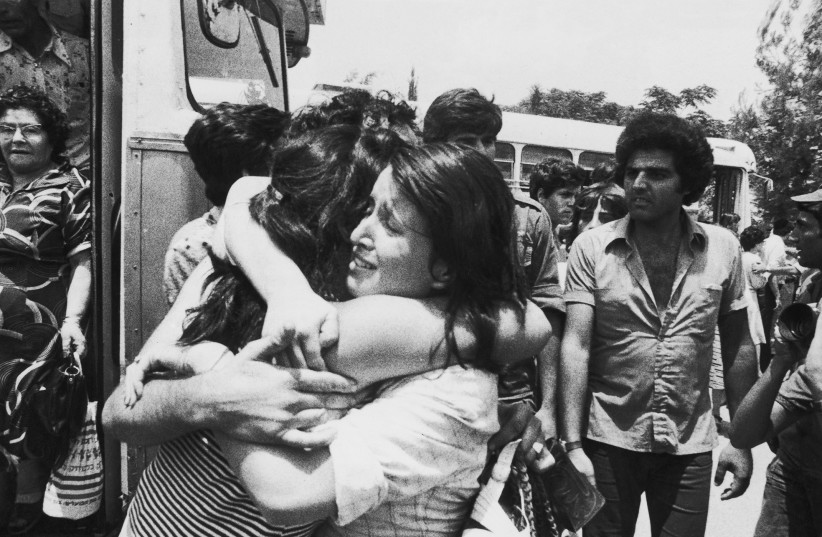
The Israelis stormed the terminal, killed the hijackers, freed the hostages, and flew them home. Netanyahu was killed. The aircraft returned to Israel. Entebbe entered history, while Amin was left behind, humiliated.
According to later accounts, Amin raged that had he known the Israelis would strike, he could have taught them a lesson.
Inside Uganda, the anger turned inward. Maliyamungu reportedly had 14 soldiers arrested on suspicion of collaborating with Israel and bunched together in a room at Makindye Barracks, where 12 of them were shot by the man himself.
Uganda’s military leadership also looked for blame at Entebbe Air Base, where commander Godwin Sule had been absent from his post during the raid.
Amin’s own soldiers were furious. His adviser Bob Astles later said Ugandan troops accused Amin of allowing the Israelis into the country. Amin deflected blame, claiming Ugandan civilian collaborators had helped the IDF.
The mask had fallen, and the reprisals began.
The most notorious victim was Dora Bloch, a 74-year-old hostage who had been taken to Mulago Hospital in Kampala after choking on food before the rescue. She was still there when the Israeli aircraft left Entebbe.
After the raid, men from Amin’s security apparatus came to the hospital and took her away. Henry Kyemba, Uganda’s attorney-general and justice minister at the time, later told the Uganda Human Rights Commission that Bloch had been dragged from her hospital bed and killed by two army officers on Amin’s orders.
Her body was found in 1979, after the Uganda-Tanzania War ended Amin’s rule.
Kenya also paid a price for its role in the rescue. Amin ordered a crackdown on Kenyans living in Uganda in retaliation for Nairobi’s assistance to Israel.
Later accounts say 245 Kenyans were killed, including airport staff at Entebbe, while thousands fled Uganda as refugees.
ACT VIII – Amin’s end
Amin’s own end came three years later. By 1978, the regime that had seemed so theatrical and untouchable at Entebbe was rotting from within.
Uganda’s economy and infrastructure had been wrecked by years of brutality and misrule, while factionalism, purges, and coup attempts increasingly split the army.
Amin’s circle of loyalists had narrowed, several ministers had fled or defected, and the president who had once staged himself as an African strongman was fighting to hold together a state that had become an extension of his paranoia.
The final collapse came after fighting broke out along the Tanzanian border. Ugandan forces invaded Tanzanian territory in late 1978, triggering the Uganda-Tanzania War.
Whether Amin ordered the invasion as a distraction from his troubles at home or had lost control of parts of his army, the result was disastrous.
Tanzania counterattacked in early 1979, joined by Ugandan exiles, and Amin’s forces retreated steadily despite support from Libya’s Muammar Gaddafi and the PLO.
By April 1979, Kampala was falling. Amin fled the capital by helicopter on April 11 as Tanzanian forces and Ugandan rebels entered the city.
First, he escaped to Libya, then eventually settled in Saudi Arabia, where the royal family granted him sanctuary on condition that he stay out of politics.

From exile, Amin continued to insist that Uganda needed him and never showed remorse over his brutal reign.
In July 2003, Amin fell into a coma at King Faisal Specialist Hospital in Jeddah. His family appealed for him to be allowed to return to Uganda, but President Yoweri Museveni said Amin would have to “answer for his sins” if he came back.
Amin died in Saudi Arabia on August 16, 2003, and was buried in Jeddah, far from the country he had terrorized and far from the airport where, for one week in 1976, he tried to convince the world he was a mediator.