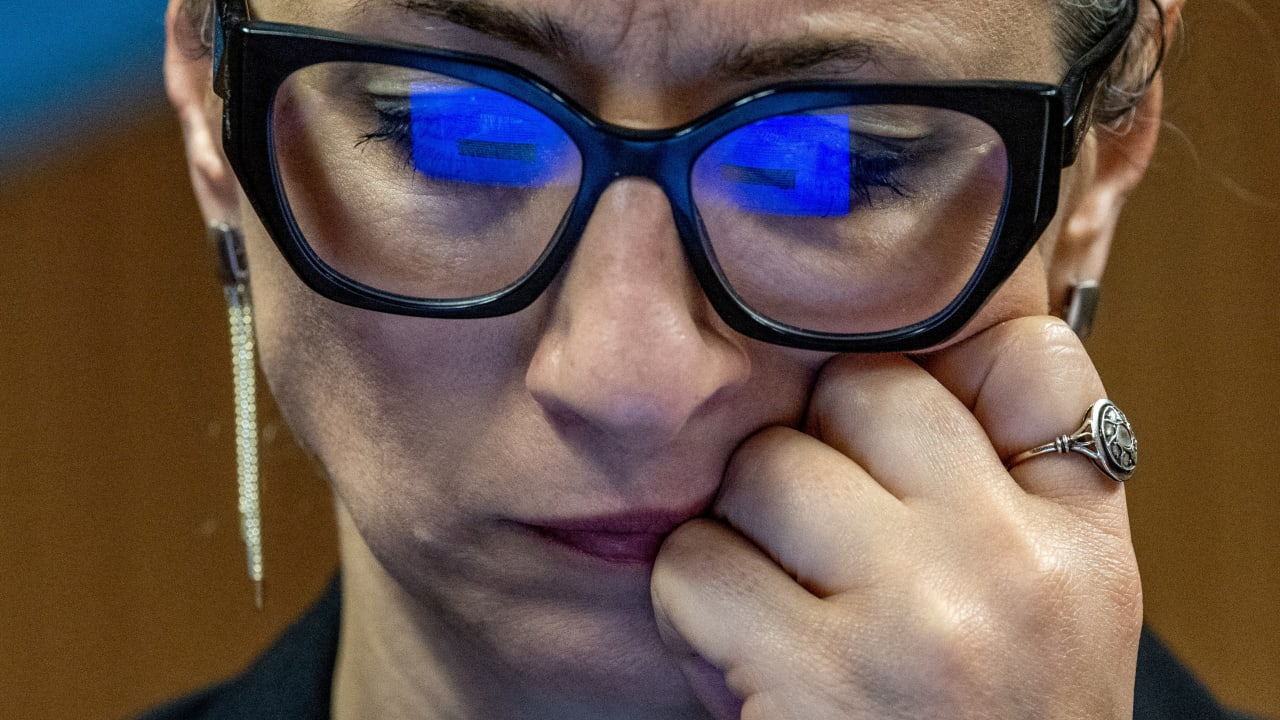
On July 9, the United States sanctioned Italian citizen Francesca Albanese, the UN special rapporteur for the Palestinian territories. Her US-based assets were frozen, dollar transactions were blocked and she was barred from entering the country. The decision was issued under Executive Order 14203.
US Secretary of State Marco Rubio accused her of “spewing unabashed antisemitism, expressing support for terrorism and showing open contempt for the United States, Israel and the West.”
Albanese dismissed the sanctions as “mafia-style intimidation techniques” in an interview with The Guardian, and later described them as “obscene” when speaking to Al Jazeera. She claimed she was being punished for calling out what she described as “genocide in Gaza.”
To me this response reflects a deeper concern. Certain groups disguise their hostility toward Israel and the West by wrapping it in the language of human rights and international law.
One such group is the Lemkin Institute for Genocide Prevention. Based in Pennsylvania and established in 2021, it named itself after Raphael Lemkin, the Jewish jurist who coined the term genocide.

According to family members and scholars, the institute never sought their permission to use his name. They also note that Lemkin was a committed Zionist who would not have supported the agenda the institute promotes today.
Since the Hamas massacre on October 7, the Lemkin Institute has published repeated statements accusing Israel of genocide. On July 2, 2025, it went further.
Baseless accusations
The institute claimed that flour bags distributed in Gaza by the joint US-Israeli Gaza Humanitarian Foundation were laced with narcotics. It offered no evidence. The claim was rejected by US aid officials and condemned by multiple humanitarian organizations.
This allegation closely echoed a statement released by Hamas’s media office on July 14, which also claimed the flour bags contained narcotic pills. Independent outlets including Snopes and France 24 noted that this narrative originated in Hamas-linked channels and spread quickly on social media before being echoed by others, including the Lemkin Institute.
In my view the Institute’s repetition of this narrative - absent any proof - served to reinforce a baseless and inflammatory claim, whether intentionally or through reckless disregard for its consequences.
Albanese herself has engaged with the Lemkin Institute repeatedly on social media. She has thanked the group for hosting her briefings and shared its posts without qualification. While there may be no formal relationship between them, the ideological alignment is unmistakable.
Her professional background has also drawn scrutiny. Although she holds a law degree from the University of Pisa and an advanced degree in human rights law from SOAS, University of London, she is not a licensed attorney. Still she referred to herself for years as an international lawyer.
Watchdog groups such as UN Watch have raised serious concerns about the credibility of that title. At best it reflects poor judgment. At worst it lends undue legitimacy to narratives that align closely with those of groups hostile to Israel.
To be clear, US authorities have not accused either Albanese or the Lemkin Institute of providing material support to terrorism. But words have consequences. The murders of Israeli embassy staffers Yaron Lischinsky and Sarah Milgrim in Washington serve as a grim reminder that incitement and dehumanization can lead to real-world violence.
This is not a call for censorship. It is a call for accountability - for the words we use, the ideas we elevate and the legitimacy we lend. If we allow legal terms and moral language to be twisted into weapons against the world’s only Jewish state, we will find ourselves enabling the very extremism we claim to oppose.
Naming the problem is only the first step. The next is deciding whose voices deserve to speak in the name of human rights, and whose do not.
Dr. Elina Bardach-Yalov is a former member of Knesset, a former advisor to Prime Minister Benjamin Netanyahu, a research associate at Jerusalem Multidisciplinary College, and head of the Antisemitism Watch NGO.