
The High Court of Justice heard on Sunday arguments on the controversial “Al Jazeera Law,” touching on the issues around a heavy debate on the clash between state national security and freedom of the press.
Presiding were justices Alex Stein, Yosef Elron, Noam Sohlberg, Dafna Barak-Erez, Offer Grosskopf, Gila Kanfi-Steinitz, and Chief Justice Isaac Amit. The law, which passed in April 2024, expired in July and has been extended by bills ever since.
The issue at hand is of freedom of speech – against the wide umbrella of “national security” and what falls under it. The petition was filed by the Association for Civil Rights in Israel (ACRI). The government argued that though the law appears broad, it sets a high standard, and several conditions are necessary to be applied. The argument was meant to assuage fears of broad censorship.
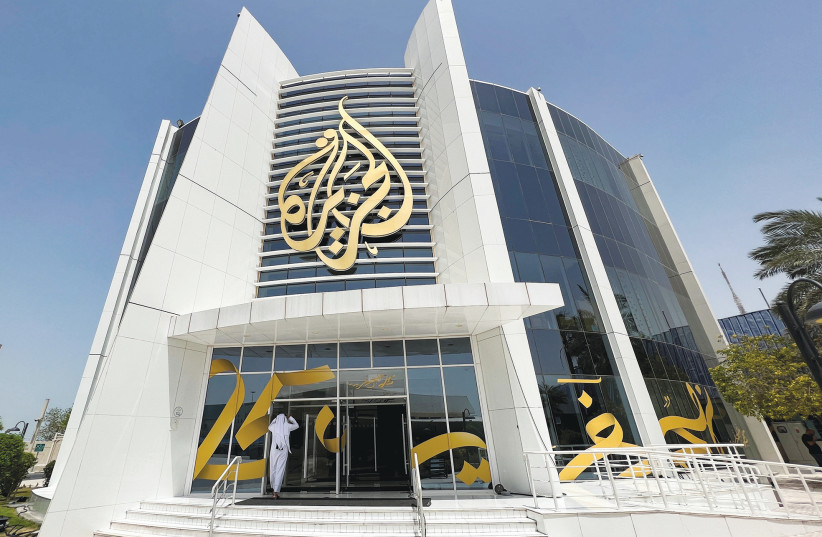
The law gives the government the power to block operations of foreign media outlets in Israel if they are deemed harmful to national security. It has so far been applied to the Qatari network Al Jazeera and the Lebanese outlet Al-Mayadeen.
Civil rights experts warn against law
To avoid a projected chilling effect on foreign media and harm to press freedom, the law included several safeguards: First, for the government to approve the move, all of Israel’s security agencies must provide an opinion and present it to the government, including the “factual foundations” that prove that there is “real harm” to national security;
Second, the law would need reapproval; third, the decision must be brought before the president or vice president of a regional court within 24 hours, and the judges have three days to rule on “changing” the decision or limiting the period of its applicability. This happened several times, and the judges upheld the law, until it reached the High Court of Justice.
Civil rights, some opposition MKs, and legal experts warned during the legislative process that the law could create a “chilling effect” and deter outlets from reporting freely in Israel, something ACRI representatives noted in court on Sunday, adding that it is more of a symbolic punishment than something that is actually powerful and can make a real difference in matters of national security, as it only applies to broadcasts within Israel’s sovereign borders.
After the law passed in April, staff from the office of Communications Minister Shlomo Karhi arrived at the Sderot offices of the Associated Press, with a letter signed by him permitting the confiscation of the organization’s broadcasting equipment. The office said AP violated the new law due to its broadcast restrictions.
That same day, Karhi revoked the decision after international outcry.
Government representative attorney Ran Rosenberg explained that the legislation appears extreme to meet an extreme situation: a continuous war. The context of the law cannot be ignored, he argued, responding to a query from the justices that the nation’s emergency situation has been extended until July 15.
Rosenberg rejected the claim that the decision is entirely political, explaining that the security situation necessitates it and carries its own weight – including in closed-door discussions that took place around the law and convinced lower court judges to uphold it when it was challenged.
Barak-Erez pushed back, arguing that there are aspects of press freedom that should never have been touched by this law in the first place.
Rosenberg insisted that it is sound – as lower courts upheld it – and that, as extensive as the law appears, when it’s been extended, the reasons were concrete.
Barak-Erez insisted on clarifying the blanket term of “national security,” that it grants the government the flexibility to apply it however it sees fit, it is “wholly amorphous.”
Amit pointed out that the only seeming result of this law is that Israelis can’t see what the rest of the world can – and that even MKs knew it “wasn’t hermetic” – how is this not infringing on the right of every Israeli to knowledge? he asked.
Rosenberg explained that the law states that there must always be a clear connection between the dissemination of information and a concrete harm to national security – in each specific case – that it cannot be used as a blanket statement.
The attorney representing the Knesset, Pinchas Gross, added that a separation must be made between the language of the law and how it is practiced, and that district courts have confirmed that the law’s effectiveness is sound.
ACRI representative Hagar Shechter argued that the law rests on an unclear and broad claim of “national security,” and that this premise is not strong enough to limit freedom of speech, which is enshrined in Israel’s Basic Laws. She argued that the “censorship of this law creates a freezing effect” and prevents information that should be given to the public from seeing the light of day, by shutting down an entire news company.
She further argued that it’s impossible for the side that is getting hurt from this law (the public) doesn’t even know, because all of the classified information is presented in closed-door meetings.
She stood on the problematic nature of the law: It can’t prevent a Lebanese journalist from publicizing the location of IDF positions in Lebanon, to the Lebanese public, for example; its reach doesn’t extend that far. She argued that the law is against what the government deems propaganda, and is symbolic because it can only hit hard at specific news organizations within Israel’s borders.
She further argued that the law is being used as a punitive measure, not a preventative one, as what comprised the decision was not materials that were actually broadcast.
She posited that the law’s effectiveness reflects its very essence; that it is more symbolic in nature, “an attempt to rake through an entire field of grass to find one or two spoiled ones.”
Attorney Jamal Abdo, representing Al Jazeera, insisted that the law was personal to Al Jazeera, which the judges wholly tried to avoid, and rather tried to focus on the legalities and rights of the law itself. He added as well the challenge of the amorphous nature of the law, which prevented Al Jazeera from even addressing the handful of content items that were problematic, because the law is so sweeping.
He further explained that Al Jazeera pulls raw footage from wire services – like AP and Reuters – and vice versa. So, when the law is applied, it affects the network’s entire content dissemination – at times because of content that isn’t even theirs.
A representative of the Israeli Association of Journalists raised the very real impact that this law, directly or indirectly, had during the recent missile exchanges with Iran. Israel Police and the IDF worked to prevent the filming and documenting by both Israeli and foreign media of missile impact sites.
However, the directives issued by police disproportionately targeted foreign media, raising questions about press freedom – especially when the location sites became known to the public anyway. While all publications of such fall sites are subject to limitations and review by the IDF Censor, foreign outlets were asked to provide proof of permission even before filming.
By press time, no decision had been issued.
Eliav Breuer and Jerusalem Post Staff contributed to this report.