
Poland intends to rebuild the historic Warsaw Palace known for being location where the German Enigma machine codes were first cracked in 1932, and which was then blown up by the Nazis in 1944.
One of the only sections of the palace which still remains intact is the Tomb of the Unknown Soldier, a monument dedicated to unidentified soldiers who gave up their lives for Poland.
Prior to the war however, between 1930-1937, the palace was used by the Polish Armed Forces Cipher Office, according to AP News. It was during this time period that three mathematicians, Marian Rejewski, Jerzy Rozycki and Henryk Zygalski, cracked the German Enigma encoding machine.
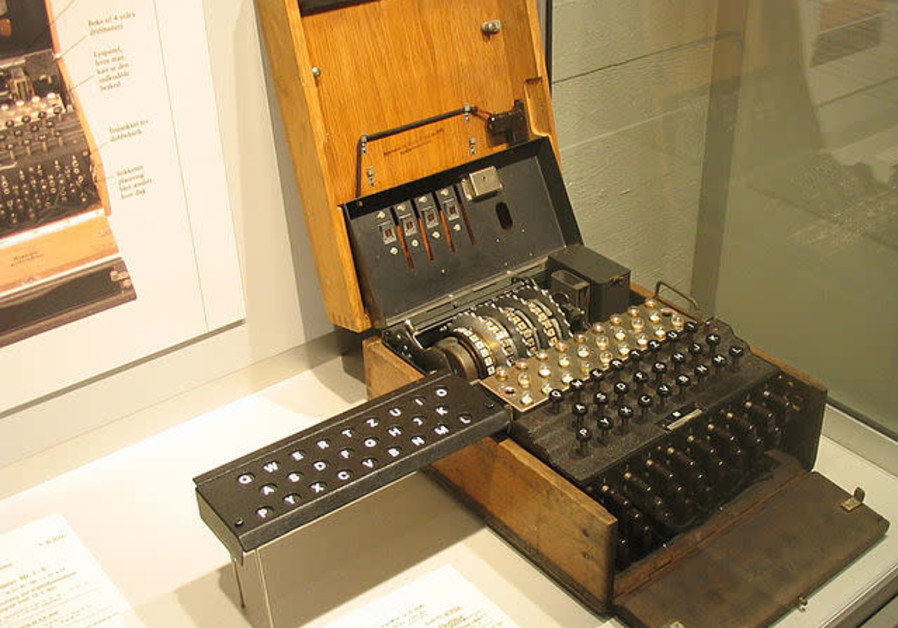
The Polish mathematicians created a copy of the German Enigma machine, known as the "Polish Enigma," and it was with this that they managed to read some 75% of all German Radio transitions by 1938, according to Polish news site The First News (TFN).
In the summer of 1939, at a meeting of French and British cryptologists near Warsaw, the Polish mathemeticians revealed what they had been working on, and passed on two of their Enigma machine replicas, one to the British and one to the French.
Plans to rebuild the Saski Palace have always been in the background ever since 1945, although the rebuilding of Warsaw started with the focus on housing.
In more recent years, however, the foundations of the palace, as well as some other elements, were uncovered. Although this was supposed to lead to the rebuilding of the national landmark, the plans were put aside in the early 2000s, after experts said the old foundations were too weak to be built on, reports AP News.
However, at a ceremony this past Wednesday, President Andrzej Duda handed a law drafted by his office for the reconstruction of the 17th century building to the speaker of parliament for processing.
“Warsaw was being rebuilt for many, many years after the war, in times of poverty, of very modest living conditions, at the cost hard toil, and sweat and blood of the workers, the capital city was being raised from ruins," Duda said in his speech.
Once the Polish government have approved the plans and work can begin, the palace is expected to be completed by 2028, and will house culture and history projects.