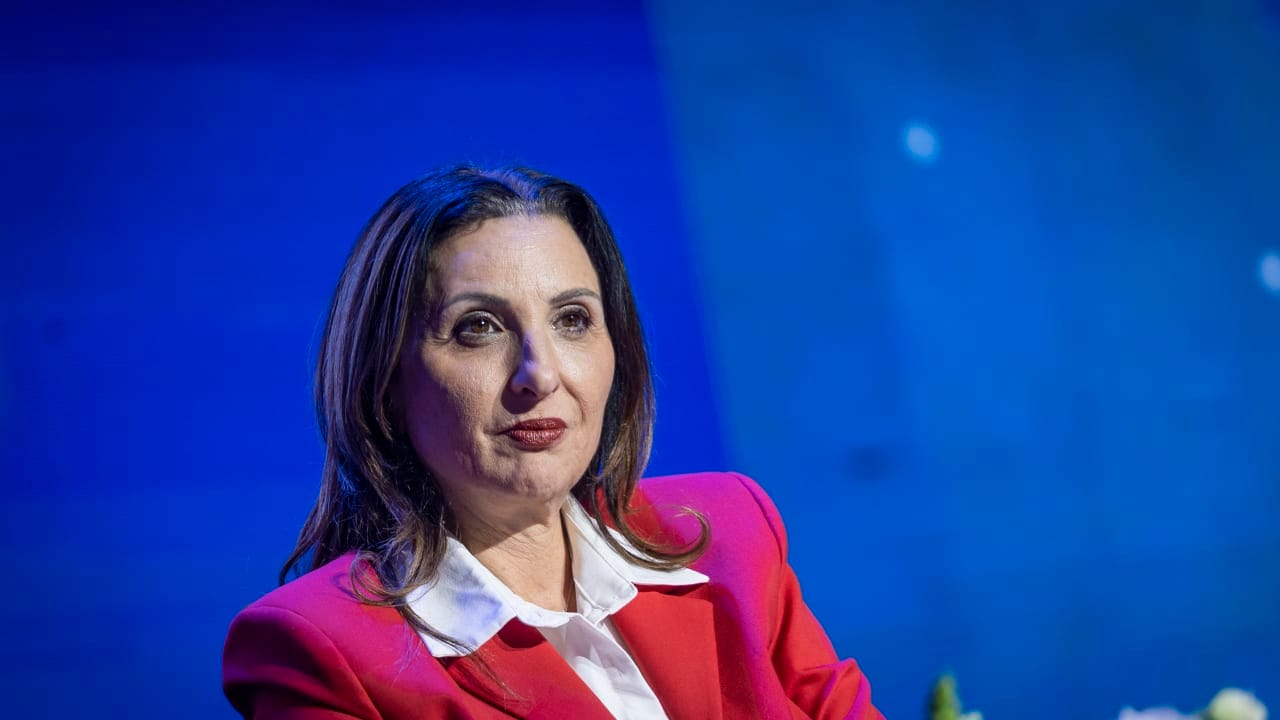
Longtime readers of this publication are likely familiar with Fleur Hassan-Nahoum.
The former deputy mayor of Jerusalem has long been a public face for the city, and was even referred to by some as Jerusalem’s foreign minister.
Those who live here also know her as a friend and neighbor, whose husband, Adam, is also arguably the biggest Star Wars fan in the Middle East.
But after many years in Safra Square and then some time with the Foreign Ministry as both a special envoy for trade innovation and a fierce online advocate for Israel during the war, Hassan-Nahoum has joined the race for the Knesset, where she hopes to make as big an impact as she has in City Hall.
Running with Ofer Winter’s People of Israel Party, this dedicated civil servant sat down with In Jerusalem ahead of elections to talk about her life, work, and what she thinks are the biggest issues the country is facing.

What brought you to Jerusalem?
I was born in London and raised in Gibraltar, to Sephardi Jewish parents. I grew up in a Zionist home, surrounded by public service. My father was the mayor and later the chief minister of Gibraltar.
When I was 14, I visited Israel and fell in love with the country. I knew then that I would come back to live here one day. Then, when I met my husband, Adam, on our second date, he said that he wanted to make aliyah, and I realized we were a perfect match! We moved at a very challenging time, in the middle of the Second Intifada. We came to Jerusalem because this was our ancient and modern capital city.
I made aliyah because I wanted to tie my destiny to the destiny of my people. I could have chosen an easier path, but I chose this one precisely because Israel is our home, however hard it may be to live here. My children were born here, and they are the living proof of that choice – Israel, aliyah, belonging. This is my home, and it always will be.
What got you into politics?
In Jerusalem, I found my calling when I was asked to lead communications for a local political campaign. There, I discovered just how much local government affects people’s lives – and that I could make a real difference.
So I ran for City Council, and in 2016 became a City Council member. In late 2018, I became deputy mayor and Jerusalem’s voice to the world.
What made you join People of Israel?
Amcha Yisrael – the People of Israel – is about bringing a new generation of leadership into government – leadership that understands security, understands diplomacy, understands the world, and, above all, understands that leadership means service.
Running alongside a fresh roster of leaders shaped by this war, under Ofer Winter, allows me to bring my municipal and international diplomatic experience to the national stage – without the partisan baggage of a political system whose failures we all witnessed on Oct. 7.
Winter is the only military leader whom I’ve ever met who truly understands that public diplomacy is a parallel battlefield alongside the military combat battlefield.
I’ve spent my life serving our nation – in Jerusalem, internationally, and on the diplomatic front. I’m not running for Knesset just to be a politician. I’m running because I believe Israel needs people who have spent their lives in service to the nation to step forward now and lead.
What do you think are the defining issues of the election this year?
First, finally win the war.
This means restoring security and ending “forever wars”; making enemies pay a territorial price for war; and destroying Hamas and facilitating voluntary emigration from Gaza.
Next, we must enforce the mandatory conscription across Israeli society and restore the principle of shared responsibility for military service.
As Winter has said, if you serve your country, you get, and if you don’t serve, you don’t get. He also emphasized that our party would create military frameworks enabling haredi men to serve without compromising their religious identity.
We also need to establish a strong Public Diplomacy Ministry. We need to not only fight, but also win on the eighth front: Israel’s information war. Our public diplomacy plan will transform how Israel communicates with the world, replacing fragmented efforts with one unified national strategy.
Led by Yoseph Haddad, the 10-point plan will combat disinformation, strengthen international media engagement, mobilize global advocates, pursue legal action against anti-Israel campaigns, preserve the legacy of Oct. 7, and bring Israel’s story to global audiences through film and television. Our mission is clear: take the initiative, tell Israel’s story, and ensure the truth reaches the world before others define our narrative.
Lastly is a policy for olim and aliyah. We see olim not as a burden, but as one of Israel’s greatest strategic assets. As such, we will cut bureaucracy, fast-track recognition of foreign qualifications, create dedicated employment pathways, strengthen support for olim children, and simplify government services through a single digital portal.
By removing barriers and enabling integration from day one, we can unlock olim’s full potential and make aliyah a powerful engine of Israel’s economic growth and prosperity.
What advice do you have for any olim who dream of making change in Israel and running for office?
First of all, I’d say: just go for it! Follow your dream, and don’t listen to the naysayers. If you know in your heart and gut that you have something to offer our nation and can make a difference, don’t let anyone hold you back.
On the practical side, look into getting involved in your local government. I speak from experience when I say that this can be an excellent way to get your feet wet, start making a difference, and ultimately see whether Israeli politics is really for you.
And one more thing: grow a thick skin. You’ll need it!