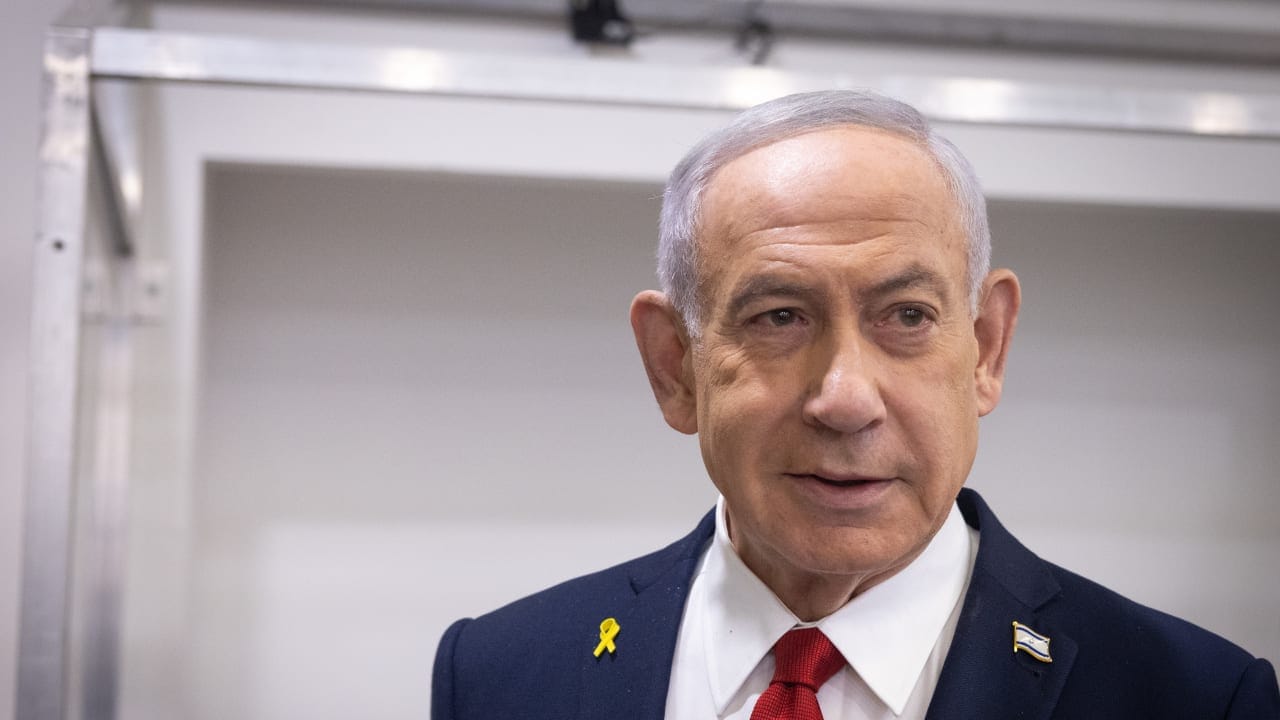
Prime Minister Benjamin Netanyahu will testify on Mondays, Tuesdays, and Wednesdays starting next week, the presiding Jerusalem District Court judges – Rivka Friedman-Feldman, Moshe Bar-Am, and Oded Shaham – ruled Wednesday evening.
Currently, hearings in Netanyahu’s corruption trial occur three days a week: he testifies on two, while the third day is reserved for the defense’s other witnesses.
Netanyahu was indicted in 2019 on bribery, fraud, and breach-of-trust charges in three cases – 1000, 2000, and 4000. He has pleaded not guilty to all charges, and the trial began in 2020.
The judges noted that they considered the complexities of adding another day but said the trial must accelerate, particularly with one judge nearing retirement.
The testimony schedule runs from 9:30 a.m. to 4 p.m., though Netanyahu rarely stays the full day, especially recently due to intense security, diplomatic, and international obligations.

Since September, the defense has filed two requests to cancel the added day.
The most recent, submitted earlier this week, asked the court to reconsider its decision and release the defense team – Amit Hadad, Israel Wolnerman, and Noa Milstein – from representing Netanyahu.
It also requested that a series of scheduled testimony hearings – that conflict with hearings in other cases that are already on the docket – be canceled.
The judges rejected the requests, writing: “We were not presented with any fundamentally new arguments. These arguments do not address the main reason for adding another day: the impending retirement of one judge. That has not changed, nor is it expected to. Accordingly, our decision stands.”
They added that scheduling conflicts necessitating Netanyahu’s absence would continue to be accommodated, as has been the case since testimony began.
Regarding the request to release the defense team, the judges stated: “Given the breadth and unprecedented complexity of this case, as well as its current stage, granting such a request would fundamentally disrupt the ability of proceedings to continue in a fixed and orderly manner.”
They also noted that the schedule of the hearings has been known for a while, and if the defense had a scheduling conflict, it should have raised it earlier.