
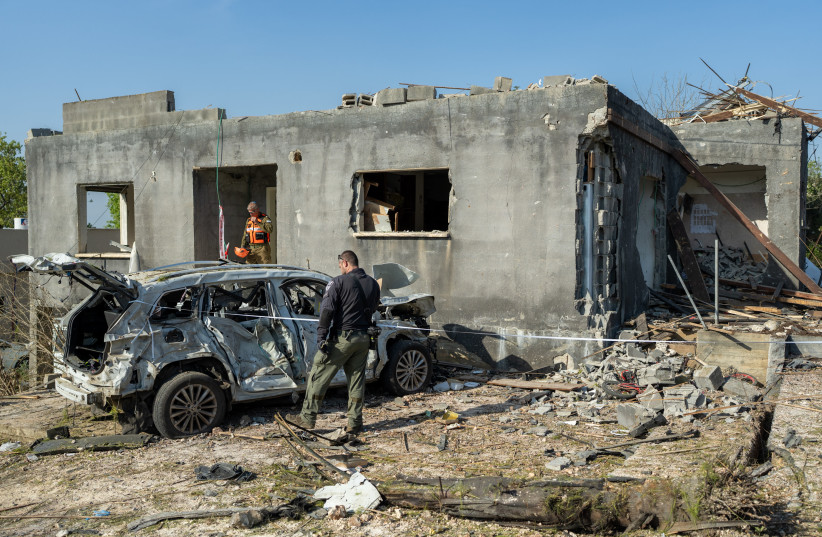
The ballistic missile impact on the northern Israeli community of Zarzir is believed to have been caused by the warhead remaining intact despite a successful interception, the IDF stated on Friday.
The IDF believes that the missile initially came apart on its own before being hit by an Israeli interceptor, leading to the warhead not being destroyed and impacting the town, injuring dozens of civilians.
Despite the attack, the IDF noted that Iran has fired only nine missiles at Israel over the last two days, a major drop in volume since the war began on February 28, leading to a sizable chance that there will be new leniencies in mobility restrictions as of this coming Saturday night.
Updates on IDF ops in Iran and Lebanon
Regarding military offense, the IDF said it has dropped over 10,000 bombs during the war thus far. Furthermore, more attacks are now being developed based on real-time intelligence, compared with earlier in the war, when most attacks were based on pre-selected targets.
Turning to the war in the North, the IDF is moving the Paratroopers Brigade and elements of the 98th Division to the Lebanese front as part of a broad reinforcement of the IDF Northern Command. The 252nd Division and reserve forces will be positioned to fill the gaps left by those called up north.