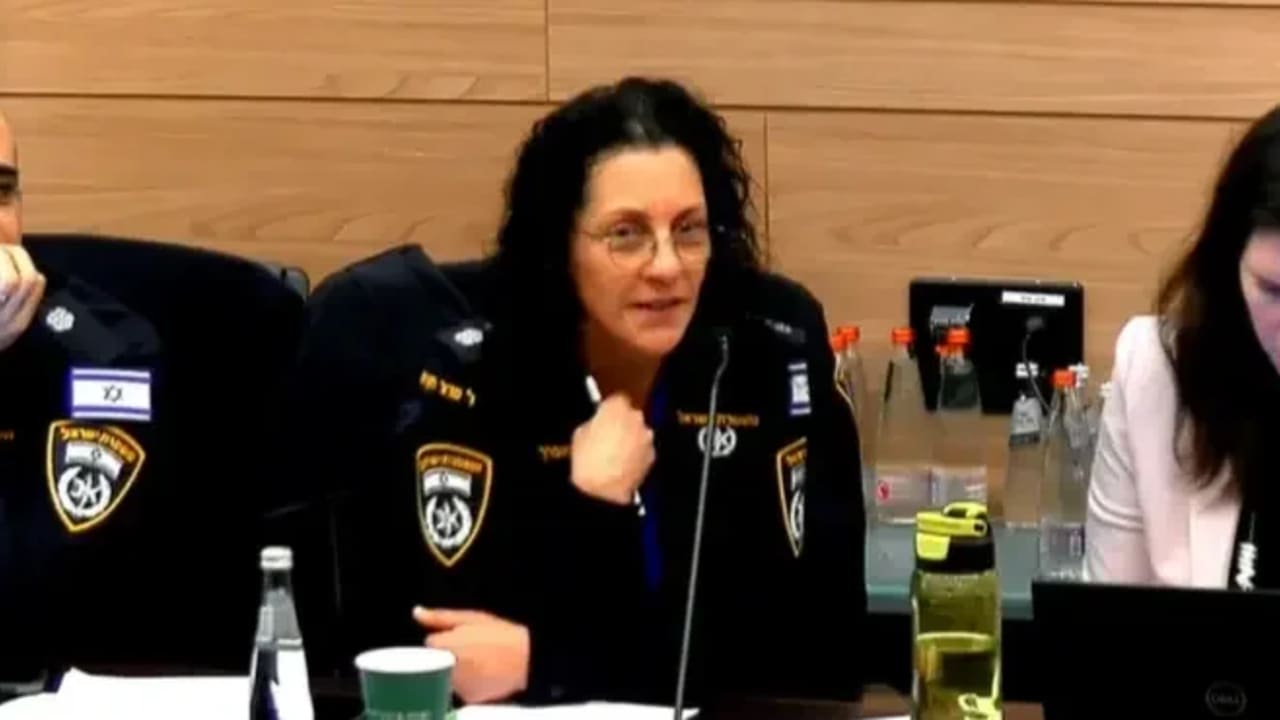
National Security Minister Itamar Ben-Gvir announced on Monday evening that he has decided not to approve the appointment or promotion of senior police officer Ruti Hauslich, citing what he described as a pattern of “grave misconduct,” including impersonation of authority, misleading members of Knesset committees, and violations of police ordinances.
By press time, Hauslich had not formally commented on the matter. The decision was formally conveyed in a detailed letter sent to Deputy Attorneys-General Dr. Gil Limon and Sharon Afek, in response to their objections to the minister’s earlier refusal to advance Hauslich.
Ben-Gvir grounded his decision in a series of factual and legal claims, while explicitly referencing the Rinat Saban ruling, handed down earlier on Monday, as part of the broader context surrounding senior police promotions.
According to the minister, Hauslich signed an official letter on September 10, 2025, addressed to the CEO of the Israel Electric Corporation, while identifying herself as acting head of the police’s Investigations and Intelligence Division - a role to which she had not been appointed, and whose approval was still under ministerial review.
Ben-Gvir characterized the act as a unilateral self-appointment carried out in violation of the Police Ordinance, internal ministry procedures, and disciplinary regulations prohibiting impersonation of authority.

“This is not a technical flaw,” Ben-Gvir wrote, describing the conduct as a fundamental breach by a senior officer charged with enforcing the law. He argued that no satisfactory explanation had been provided by Hauslich for the incident, even months after it occurred.
Beyond the appointment issue, the minister devoted the bulk of his letter to Hauslich’s conduct as a police representative in the Knesset’s Constitution, Law and Justice Committee, particularly during deliberations throughout 2023 and 2024 on enforcement policy and proposed legislation concerning incitement to terrorism.
According to Ben-Gvir, Hauslich repeatedly presented positions to lawmakers that contradicted the official stance of the Israel Police, the National Security Ministry, and government-backed legislative initiatives.
He accused her of providing misleading information, concealing material documents, and falsely asserting that no substantive disagreements existed between police districts and the State Attorney’s Office regarding the handling of incitement cases.
The minister detailed a pivotal closed-door committee session on February 5, 2024, during which, for the first time, significant disagreements between the Jerusalem District and the prosecution were disclosed - after Hauslich initially attempted to prevent a district representative from responding to lawmakers’ questions in an open forum.
Subsequent committee meetings, he wrote, revealed that earlier assurances given to MKs regarding response times and coordination were inaccurate.
Ben-Gvir accuses Hauslich of denying unresolved gaps exist
Ben-Gvir further alleged that in later sessions, including those held in March, June, and September 2024, Hauslich continued to deny the existence of unresolved gaps, even while district-level officials presented contrary information.
He described these actions as violations of explicit police directives governing appearances before Knesset committees, which prohibit representatives from opposing government policy or misrepresenting agreed positions.
The decision comes against the backdrop of the Rinat Saban case, in which the Jerusalem District Court earlier ordered the promotion of the senior officer after determining that her advancement had been unlawfully delayed.
That ruling, which Ben-Gvir said he is considering appealing to the Supreme Court, has become a central reference point in disputes over the minister’s authority and discretion in senior police appointments.
In his letter, Ben-Gvir rejected claims by the deputy attorneys-general that the allegations against Hauslich were vague or insufficient to justify halting her promotion.
He went further, accusing senior legal officials of failing to engage substantively with the factual record and suggesting that their position reflected “foreign and political considerations.”
“If such conduct is acceptable in a democratic state, I cannot accept it as minister,” Ben-Gvir wrote, adding that a system in which unelected officials may mislead elected representatives and advance themselves in defiance of lawful authority “is one the state cannot live with.”
Neither the Justice Ministry nor the police has yet issued a public response to the decision.