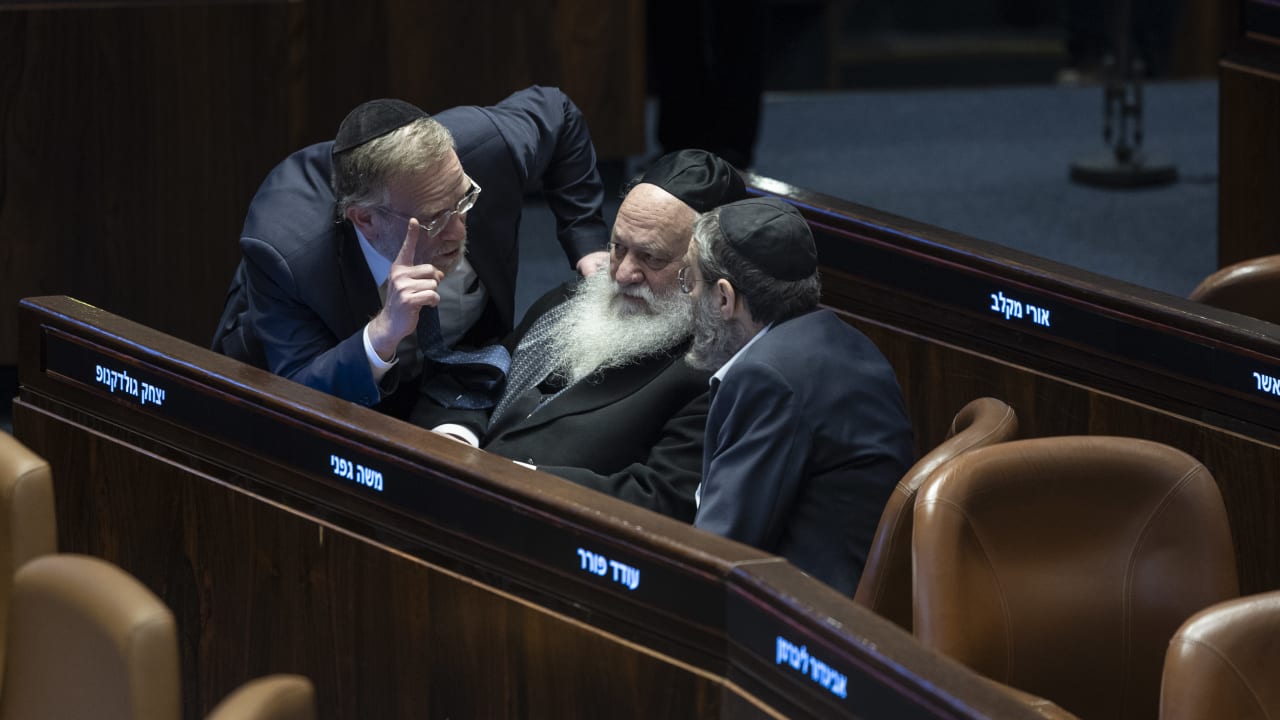
The Knesset plenum voted late Monday evening to split up the Arrangements Bill, which is part of the 2026 state budget bill, in a procedural step aimed at keeping the budget on track as the deadline to pass it approaches.
The decision passed by a margin of 60-56. The two haredi parties – Shas and United Torah Judaism – had threatened to vote against the coalition amid disagreements over the controversial haredi (ultra-Orthodox) draft bill being advanced in the Knesset. This would have created significant delays to an already tight deadline to pass the budget in the annual high-stakes process that could trigger early elections.
By law, the state budget must be passed by the end of March in all three readings, or else the Knesset will automatically dissolve, and early elections will be called. The state budget has already been delayed due to previous issues in negotiations with the haredi parties.
The coalition decided to split the bill to allow for smoother passage of the state budget by removing more controversial reforms from within it.
However, the technical measure led to rifts with the haredi parties, who used the vote as leverage amid ongoing debates over the haredi draft bill.
The United Torah Judaism Party, made up of the factions Agudat Yisrael and Degel Hatorah, split on how they voted.
MKs in Agudat Yisrael voted against the coalition. Meanwhile, Shas and Degel Hatorah voted in favor of making the split. Committee meetings to advance the Arrangements Bill could then begin on Tuesday, following the Knesset’s vote.

The Arrangements Bill is presented to the Knesset each year alongside the state budget. It incorporates numerous legislative amendments that the government wishes to pass, making it a critical part of the state budget process. Coalition whip Ofir Katz announced ahead of the vote that despite the disagreements, Shas and Degel HaTorah would vote in favor of splitting the Arrangements Bill.
“The talks will continue until a solution is reached,” Katz said on Monday evening. The haredi parties have reportedly given up on a clause in the draft bill that would allow for the reduction of draft targets in the coming years, according to a Monday KAN News report.
Haredi parties back Arrangements Bill split after talks
Negotiations on the draft bill have also reportedly faced recent setbacks from the Knesset’s Foreign Affairs and Defense Committee’s legal advisor.
Critics of the draft bill argue that the current outline fails to enforce haredi conscription and serves primarily as a political measure to appease the haredi parties. The IDF has repeatedly said it is in urgent need of more manpower, especially after over two years of war.
The plenum vote on the Arrangements Bill was initially scheduled to take place last week but was pushed off amid disagreements with the haredi parties. Throughout Monday, deliberations continued, causing the vote to be delayed into the evening and raising questions about whether it would be postponed to Wednesday.
In general, attaching the Arrangements Bill to the State Budget Bill has drawn criticism in the Knesset and among the public. Its critics claim that extensive reforms within the bill may not be essential for passing in the state budget, which is already lengthy and has a narrow time limit.
The Arrangements Bill this year includes a controversial structural reform to Israel’s dairy sector, being led by Finance Minister Bezalel Smotrich. A heated first debate on the reform took place on Tuesday in the Knesset. The Knesset’s legal adviser, Attorney Sagit Afik, issued a letter last week recommending that the dairy reform be separated entirely from the state budget and advanced independently.
Afik had noted that this year the Arrangements Bill comprises approximately 420 pages and that there has already been a significant delay in its submission. The Knesset’s House Committee then debated into the night whether to keep the dairy reform as part of the 2026 State Budget Bill.
It ultimately voted against separating it from the Arrangements Bill. The vote passed by a narrow margin, with eight MKs voting in favor and seven against, following a heated debate. The dairy reform was then directed to be discussed by the Knesset’s Public Projects Committee. This committee is headed by MK Ohad Tal, a member of Smotrich’s Religious Zionist Party.
The Knesset advanced the 2026 state budget in its first reading in January by a 62-55 vote. It followed weeks of tense coalition negotiations with the haredi parties. The budget will still need to pass two more readings.