In Israel, there is no shortage of examples of elected officials ignoring the wishes of the public in general or the electorate to which they are responsible.
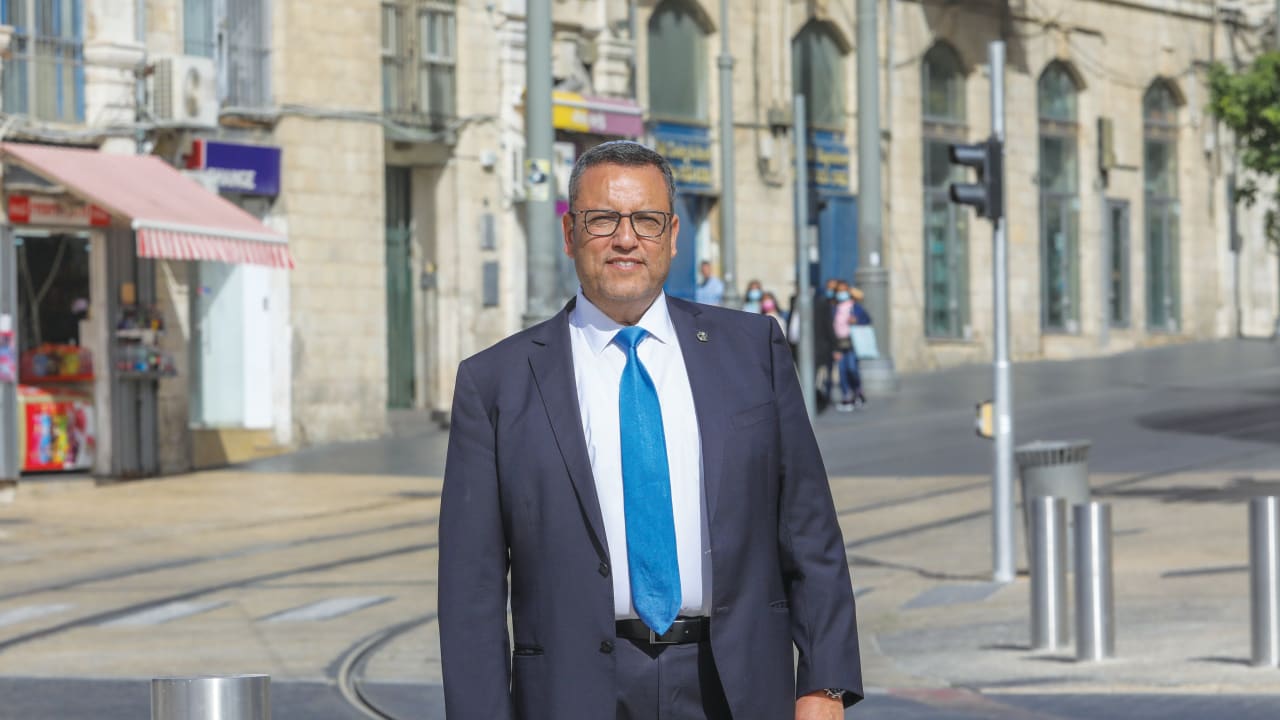
In Jerusalem, Mayor Moshe Lion and the District Planning Committee have ignored protests over tall towers that block out the view, and light rail construction in places where the train is changing the character of the neighborhood.
Demographically, Jerusalem is by far the largest city in Israel, with a population twice the size of that of Tel Aviv. Lion anticipates a large influx of immigrants, which is his rationale for the high-rises sprouting up all over the city, but he closes his eyes to the exodus from the city because the quality of life does not go hand in hand with urban renewal – and it will get worse. As it is, Jerusalem is already overcrowded.
A report in Kol Ha’Ir, the Jerusalem supplement of Haaretz, quotes the quality of life index published by the Central Bureau of Statistics, which lists the largest cities in the country. Jerusalem, the capital of Israel, is in 17th place out of 18 cities listed. Elsewhere in the paper, there are reports of approval being granted for the construction of 35- to 40-story towers.
Yerushalayim Mekomi, the new name for what was previously Yediot Yerushalayim, the Jerusalem supplement of Yediot Aharonot, reports that many residents in the older neighborhoods are upset because the city is losing its familiarity and unique character.

There are also fears that the cost of living in Jerusalem will become much more expensive. Property tax, which was increased this year, will be even higher in projects in which existing buildings are being demolished to make way for high-rises. Residents are told by developers that 25 square meters will be added to their new apartments. But those 25 sq.m. are going to contribute to the increase in property tax.
In addition, there will be maintenance costs for the elevators that will be in the towers but do not exist in many older buildings of four or five floors. Developers promise extra floor space but decline to replace built-in furniture, which in old buildings is fashioned from good quality wood and not from sandwich board. The towers also have a manager or concierge, whose salary is included in the maintenance costs.
In freehold buildings, apartment owners own the land and not just the apartment. When a nine-unit building becomes a 60-unit building, none of the apartment owners own much of the land on which the property is built. In the long run, residents who agree to urban renewal projects are losing, not gaining. If they raise this issue with the developer, they are told that when they want to sell the new apartment, they will get much more money than they would for the existing apartment. Most people buy an apartment to live in, not as an investment to sell at some future date.
The volume of construction, coupled with the noise level, has prompted a considerable number of store owners to close shop and either relocate or go out of business. Sometimes they leave because a row of shops has been designated for a new construction project – usually a hotel. Jerusalem, which has no sea front, is unlikely to become the Riviera of the Middle East.
In those places in which vacated stores are taken over by new tenants, there appears to be a glut of real estate agencies; and judging by the photographs in the window displays, the properties they are handling are not in the high-rises but in the old Jerusalem, which, until Lion became mayor, was familiar. This also points to the extent of the exodus from the city.
One of the positive things the mayor has done is to install more public bathrooms, but most have only one stall for women and one stall for men. The minimum should be three stalls each. He’s also planting more trees, which is a nice idea other than for the fact that not enough thought has been given to where they are positioned on sidewalks.
B’Sheva Jerusalem Conference honors Echad l’Echad
Conferences hosted by media outlets are not a new phenomenon, but the trend is growing, and most of these conferences are held in Tel Aviv and overseas.
Of those held in Israel, the one held consistently in Jerusalem is that of the National-Religious media group B’Sheva, which hosts its annual two-day Jerusalem Conference at the Vert Hotel with a huge array of speakers.
In previous years there were speakers from left-wing political parties and organizations; but this year, finding left-wing activists or politicians in the lineup is like looking for a needle in a haystack. There are people such as former IDF chief of staff Gadi Eisenkot, who are opposed to Prime Minister Benjamin Netanyahu but not to the Likud, so long as it is helmed by another leader.
The conference, on February 16-17, will begin with a tribute to the Echad l’Echad Foundation, an organization founded to help individuals and families with National-Religious affiliations who are facing economic or spiritual distress, as well as Zionist yeshivot with financial needs. Unlike similar organizations, Echad l’Echad, which is celebrating its 10th anniversary, supports yeshiva students on the basis of economic hardship, not scholarly excellence.
Speakers at the evening tribute, which begins at 6:30 p.m., will include Rabbi Yaakov Shapira, head of Yeshivat Mercaz HaRav and Chief Rabbinical Council member; Rabbi David Dudkevich, head of Yeshivat Ro’eh Yisrael in Yitzhar; Rabbi Haim Sabato, head of Yeshivat Birkat Moshe in Ma’aleh Adumim; Rabbi Haim Wolfson, head of Yeshivat Yeroham; Rabbi Pinchas Mondshine, a judge in the Rabbinical Court; Rabbi Zion Luz, a judge in the Rabbinical High Court and head of Yeshivat Tiferet Yisrael; and Rabbi Gad Machta, rabbi of the Alei Zahav community.
Ben-Zvi Institute activities on Friday
Superstitious people are wary of Friday the 13th in any month. To take their minds off such worries this Friday, the Ben-Zvi Institute is providing a variety of distractions starting at 9 a.m., such as a book fair, an artisans’ exhibition and workshop, tours of Rehavia and Talbiyeh, and gallery talks about forgotten places in Israel by Hanan Harif, Eran Glick, and Yigal Mosko.
There will also be a musical performance titled Eretz Ahavati (“my beloved country”), based on poems by Leah Goldberg. Yad Ben-Zvi is located at 14 Ibn Gabirol St.
greerfc@gmail.com