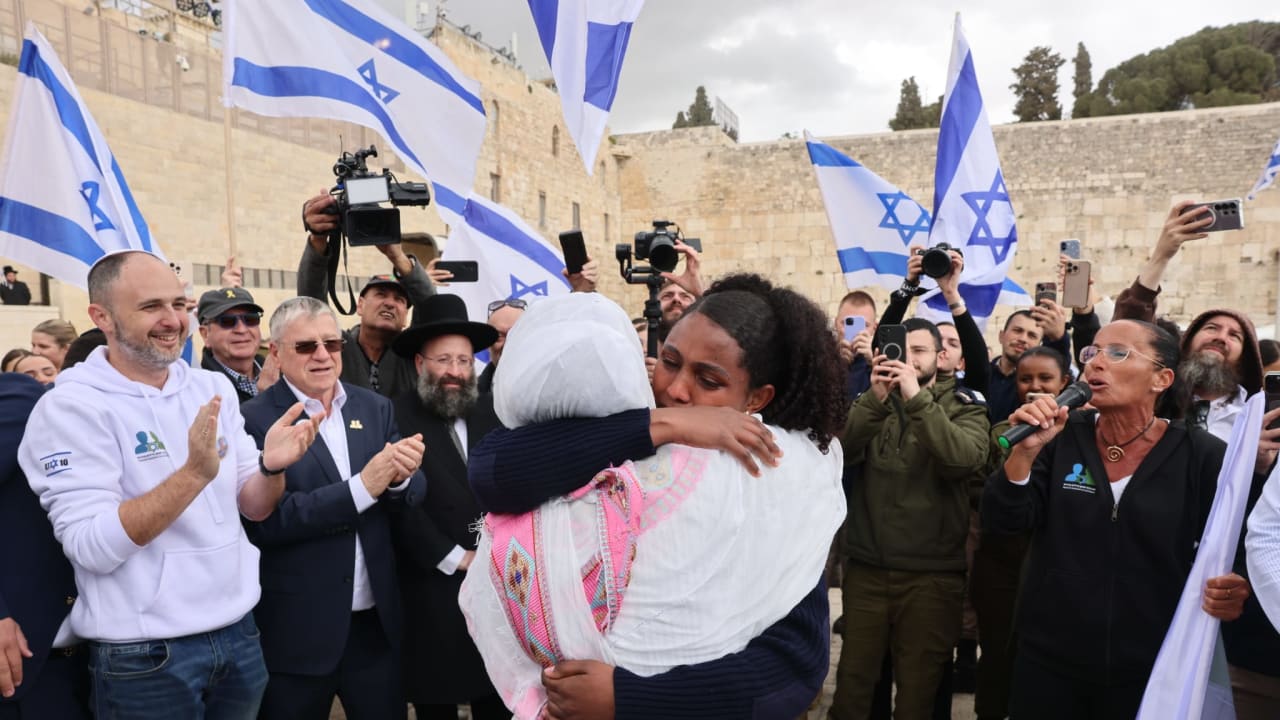
Around 20 IDF lone soldiers celebrated bar and bat mitzvah ceremonies at the Western Wall Plaza in Jerusalem on Monday morning, after completing their conversions to Judaism during their military service.
The ceremony included a festive, musical procession that set out from the Dung Gate at 9:30 a.m., continuing to the Western Wall to hear a Torah reading, where the men would don tefillin for the first time as Jews.
Roughly 150 additional lone soldiers joined the procession alongside volunteer mentors, former lone soldiers themselves who are aware of the challenges involved and understand the value of having a supportive community.
The event was organized by the Big Brother (Ach Gadol) Organization for Lone Soldiers, a nonprofit that provides one-on-one mentorship and community support to soldiers serving in Israel without immediate family.
Among those celebrating was Kidist Mengistu, a lone soldier who immigrated from Ethiopia approximately three-and-a-half years ago. She arrived in uniform, expecting to mark the moment without her family at her side, since they do not live in Israel.

During the ceremony, Mengistu was surprised by the arrival of her mother, who had flown in from Ethiopia after the two had not seen each other for 3 years.
What are IDF lone soldiers?
Lone soldiers are IDF service members who serve in Israel without immediate family support because their parents live abroad or because they are estranged from their families.
Over the past decade, a network of nonprofits and community initiatives has expanded to provide lone soldiers with housing, mentorship, and practical assistance, particularly for immigrants who enlist soon after arriving.

Ach Gadol, which organized the Western Wall ceremony, has been involved in multiple projects aimed at reducing isolation among lone soldiers, such as partnerships that provide housing solutions and structured mentorship.
The organization has previously supported similar Western Wall milestones for lone soldiers who had not celebrated a bar or bat mitzvah earlier in life.
In parallel, state and military frameworks have increasingly addressed the long-term needs of the lone soldier population.
In January 2025, the IDF and the Knesset committee advanced formal recognition and benefits for lone soldiers who had served, reflecting growing institutional attention to the unique challenges of soldiers without family networks.