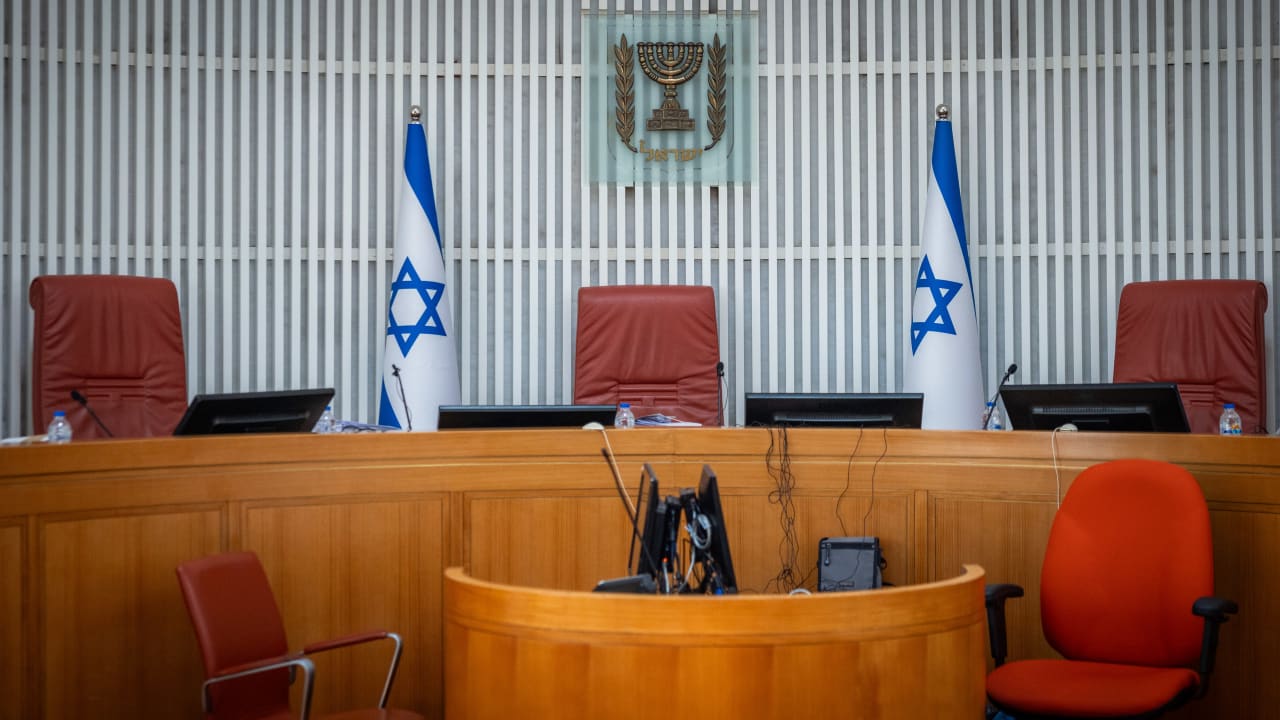
Israel’s court system shifted to an emergency “essential activity” format on Saturday as the country braced for continued fallout from escalating hostilities with Iran.
In a statement issued Saturday morning, the judiciary said that in accordance with updated Home Front Command directives, courts and tribunals will operate in a red-level emergency format through 8 p.m. on Monday. During that period, only urgent proceedings will be heard, and most routine hearings will be postponed.
The move was formalized in a series of orders signed by Justice Minister Yariv Levin on Saturday. In one order, Levin declared the application of emergency regulations limiting court activity through Monday evening, while parallel orders extended similar restrictions to the religious courts and to the labor courts.
Under the arrangement, a limited number of so-called “iron courts” will operate in a reduced capacity to hear time-sensitive matters.
At the magistrates’ court level, the following courts are slated to operate in limited format: Rishon Lezion and Petah Tikva in the Central District; traffic and family courts in Jerusalem; Beersheba, Eilat and Ashkelon in the South; Nazareth and Tiberias in the North; Haifa and Hadera in the Haifa District; and Bat Yam and the Tel Aviv Family Court in the Tel Aviv District.

At the district court level, Lod, Jerusalem (to sit at the Supreme Court building), Beersheba, Nazareth, Haifa and Tel Aviv will operate in reduced format.
The judiciary emphasized that only urgent proceedings will be heard during the emergency period.
In parallel, Levin signed a full declaration enabling detainee hearings to be conducted by video call for the duration of the emergency period, a step intended to reduce prisoner transport and security burdens while maintaining continuity in essential criminal proceedings.
Economy wartime footing
Beyond the courts, the government moved to shore up the civilian economy’s wartime footing. In his capacity as deputy prime minister and labor minister, Levin signed an order which applies to all areas designated as under a “special situation in the home front” and allows the state, if necessary, to mobilize workers to maintain essential services.
Employees in factories and institutions providing vital services - including water, electricity, fuel and gas infrastructure; hospitals, geriatric hospitals, dialysis centers and nursing facilities; community health services; food supply chains; welfare institutions; transportation services; ports; local authorities; government ministries; and facilities supporting the military - may continue operating in accordance with Home Front Command defensive guidelines.
If problems arise regarding employee attendance, the responsible government ministry may turn to the emergency manpower authority to consider issuing compulsory service orders. The practical effect of the order is that, if needed, workers can be drafted to ensure the continued functioning of the essential economy during the emergency.
The sweeping measures come amid intensified hostilities between Israel and Iran. Earlier Saturday, Israel announced that it had carried out a preemptive strike in Iran, and Iranian retaliatory launches followed. The Home Front Command ordered schools closed, banned public gatherings and limited nonessential workplaces across large parts of the country as security officials warned of further potential attacks.
The decision to scale back court operations mirrors similar steps taken during previous rounds of large-scale hostilities, when the judiciary shifted to emergency-only hearings to balance access to justice with public safety concerns.
For now, Israel’s legal system will function in skeletal form, processing only urgent cases while the country remains under emergency directives tied to the unfolding confrontation with Iran.