Tel Aviv University has a broad, multidisciplinary cancer research ecosystem spanning molecular biology, immunotherapy, cancer genetics, drug delivery, and clinical oncology. That ecosystem includes internationally recognized scientists whose work is advancing potential cancer treatments, among them:
Prof. Yuval Ebenstein led the development of a fast, low-cost blood test that detects lung cancer through chemical signatures in cell-free DNA, without DNA sequencing. In a study, the test achieved 93.1% sensitivity and 90.3% specificity for stages 2–4 of the disease.
Prof. Carmit Levy led research showing how melanoma cells disable immune cells by releasing extracellular vesicles. Her findings identify potential strategies to strengthen immune cells and block the cancer’s defenses.
Prof. Ronit Satchi-Fainaro developed targeted cancer nanomedicines and nano-vaccines, and bioengineered 3D tumor models. She received the 2025 NCK Prize for an Outstanding Medicinal Chemist for her contributions to anti-cancer therapeutics.
Prof. Uri Ben-David received the 2026 Blavatnik Award for Young Scientists in Israel in Life Sciences for his research on how cancer cells adapt to abnormal chromosome numbers, a condition known as aneuploidy.
Supporting these individual achievements are TAU’s Shmunis School of Biomedicine and Cancer Research and the Rosalie and Harold Rae Brown Cancer Research Core Facility, which unite expertise and resources across the campus to advance cancer research. In addition, this year the Gray Research Fund launched the first grant cycle supporting BRCA-related malignancies research.
Donor-supported research hubs
The Shmunis School, headed by Prof. Anat Herskovits, is part of the George S. Wise Faculty of Life Sciences. Inaugurated in 2020 through the generous support of Vlad and Sana Shmunis, it brings together experts in cancer biology, immunology, microbiology, biotechnology and computational biology.
“What excites me most about leading the Shmunis School,” says Herskovits, “is seeing how many different paths can lead to discoveries that matter for human health. Someone studying a bacterium, someone investigating the immune system, and someone engineering human tissue may approach biology very differently – but their findings can ultimately contribute to the same medical challenge.”
The Shmunis School develops technologies to deliver medicines, engineer tissues and interpret complex biological information. Underlying all of this is a shared ambition: to understand biology deeply enough to find new ways to prevent and treat disease.
Cancer is a powerful example of how these different fields connect. A tumor depends on its surroundings. It recruits support from neighboring cells, changes its environment, and finds ways to escape immune attack. Understanding those relationships provides more opportunities to intervene.
For example, Prof. Dan Peer and his team develop technologies to deliver RNA and gene-editing tools into cancer cells. These approaches aim to act on the genetic instructions that cancer cells depend on. Prof. Adit Ben-Baruch studies how inflammation and communication between cells help breast cancer grow and spread. Her work reveals how the tissue surrounding a tumor can influence its behavior – and potentially its response to treatment.
“As head of the school, I find the freedom to ask basic questions – alongside the determination to make discoveries – useful and very exciting,” says Herskovits. “Some projects are still uncovering mechanisms; others are developing technologies or moving toward clinical applications. Each stage matters. A treatment can depend on knowledge accumulated long before anyone could imagine its eventual use.
“I am equally excited about the students and young researchers doing this work. They bring the curiosity, imagination and persistence that drive discovery. Training them to think deeply, challenge assumptions and work across disciplines is an essential part of our contribution.
What I hope people take away is that progress against cancer – and many other diseases – comes from connecting knowledge. At the Shmunis School, we have the opportunity to make those connections every day. That is what makes this such an exciting place to do science.”
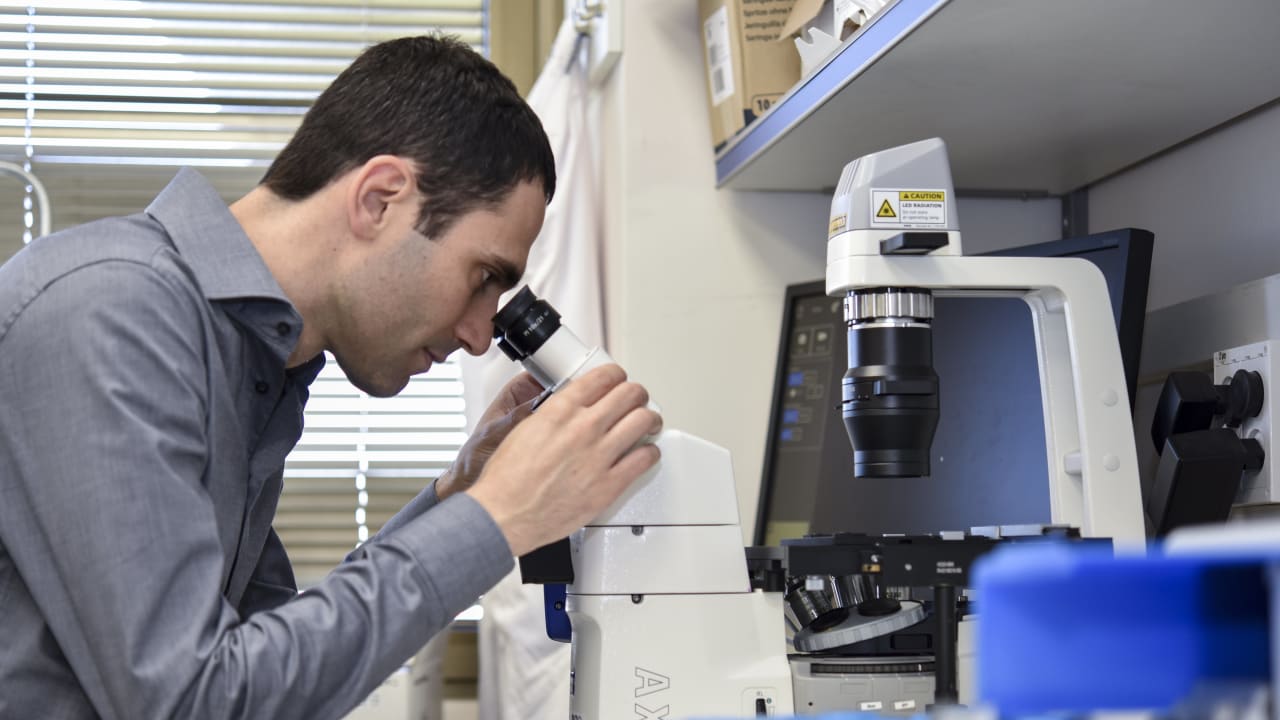
The Rosalie and Harold Rae Brown Cancer Research Core Facility provides access to advanced technologies & services in a wide range of research areas, including biophysics, electron and confocal microscopy, genomics, imaging, spectroscopy, ultracentrifugation, FACS and cell sorting.
Prof. Abdussalam Azem, Dean of Life Sciences, explains that what distinguishes the Brown Facility is its combination of advanced equipment and skilled staff with expertise in experimental design, equipment operation, and data analysis.
TAU cancer researchers have access to the most state-of-the-art equipment, a necessity for modern scientific research. Beyond enabling major cancer research breakthroughs, this equipment will help boost Israeli academia by attracting top researchers and fostering new collaborations with industry and medicine.
The Brown Cancer Research Core Facility offers TAU researchers the tools to examine cancer at the molecular and cellular levels. Advanced microscopes reveal cell structure and behavior, genomic technologies help investigate genetic changes, and cell-sorting systems isolate specific cells for closer study. Together with instruments that measure molecular interactions, these technologies help researchers understand how cancer develops and evaluate potential treatments.
Written in collaboration with Tel Aviv University