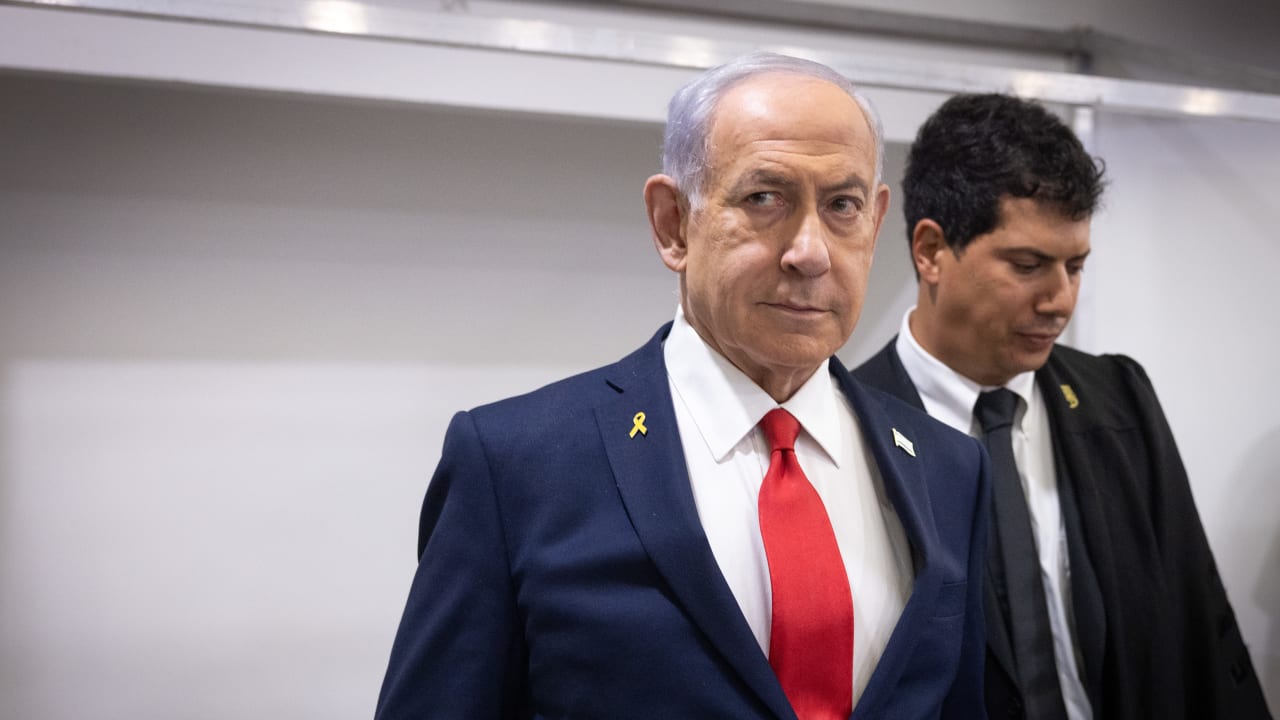
Prime Minister Benjamin Netanyahu’s criminal trial is set to resume on Sunday after weeks in which Israel’s court system operated under emergency restrictions because of the war with Iran.
According to the court notice, the next hearing is scheduled for Sunday at 9:30 a.m. in the Jerusalem District Court for the testimony of a defense witness.
The notice also says that, with the emergency status lifted and the justice system returning to regular work, the hearings will now resume in their ordinary format: Sundays in Jerusalem, and Mondays through Wednesdays at the Tel Aviv District Court.
The pause was not unique to Netanyahu’s case. Following the outbreak of the war on February 28, the Justice Ministry placed the courts under a “special emergency” format that sharply curtailed regular proceedings and left only urgent matters moving. That framework was extended several times, with the latest official notice stating that the emergency regime remained in place through Thursday.
With that period now ending, Netanyahu’s trial, like many other non-urgent criminal and civil proceedings, is returning to the calendar.

Substantively, the trial is resuming in the middle of Netanyahu’s cross-examination in the long-running corruption case involving Cases 1000, 2000, and 4000. Netanyahu was indicted in 2019 and has pleaded not guilty, denying all wrongdoing.
Netanyahu began testifying in December 2024, becoming the first sitting Israeli prime minister to take the stand as a criminal defendant, and prosecutors began cross-examining him in June 2025 after months of direct examination by the defense.
Proceedings centered on Case 4000 when Operation Roaring Lion began
Before the wartime interruption, the proceedings were still centered mainly on Case 4000, the Bezeq-Walla affair, widely regarded as the most serious of the three files because it includes the bribery charge.
In the last hearings before the break, prosecutors were pressing him on issues tied to the Bezeq-Yes merger, his relationship with Elovitch, and the alleged “directive meeting” with former Communications Ministry director-general Shlomo Filber, which Netanyahu flatly denied ever took place.
So procedurally, Sunday’s hearing does not mark a new phase in the case so much as a restart after a war-imposed interruption. But it does bring one of Israel’s most consequential criminal proceedings back into public view at a moment when the trial has already dragged on for years, been repeatedly disrupted by war and politics, and remains deeply entangled with the broader question of whether a sitting prime minister can continue to govern while defending himself in court.