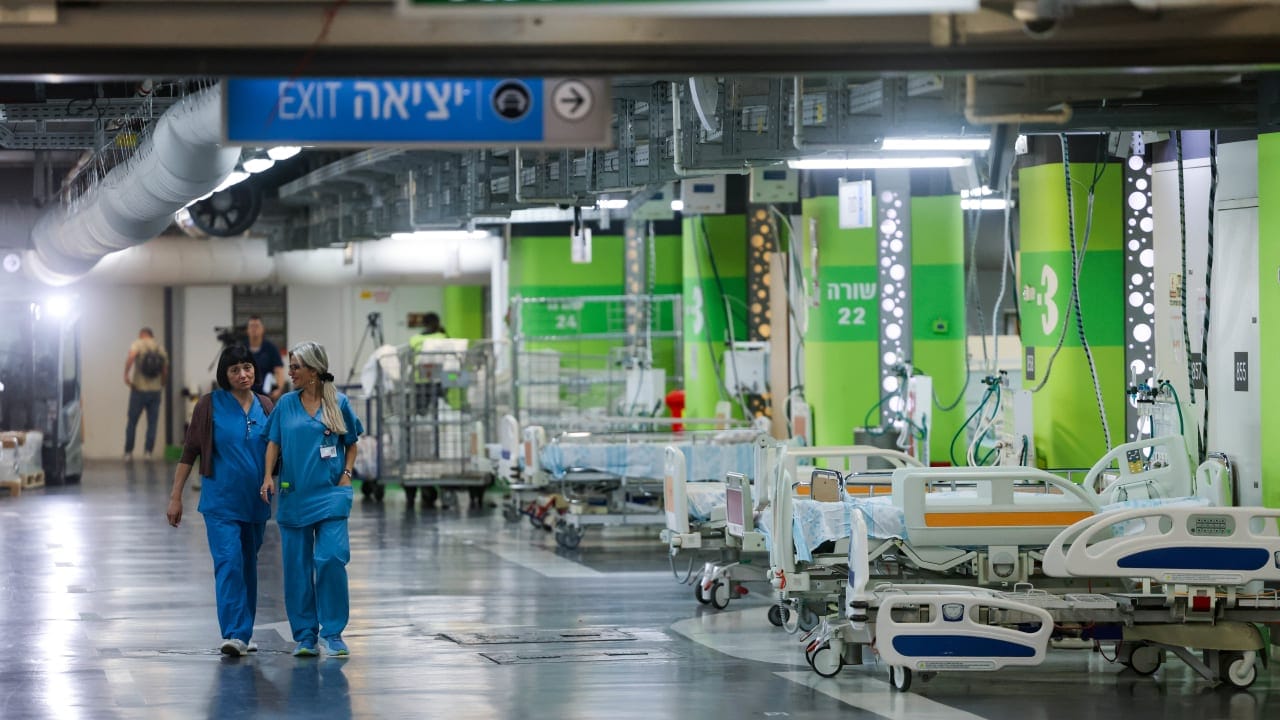
The nation’s hospitals have moved inpatients to protected underground facilities as the war with Iran started.
This follows the previous campaign with Iran, when experience showed that moving underground saved lives during the bombardment of Soroka Medical Center (Beersheba), which was severely damaged.
All hospitals with such facilities were required in advance to prepare protected complexes in underground parking structures.
The private Assuta Medical Center in Tel Aviv also joined the effort, and the new underground hospital will receive patients for hospitalization from public hospitals that are not sufficiently fortified.
The hospital also has a support system and a fully protected surgical suite above ground. In the past, during Operation Rising Lion, large hospitals transferred patients there for lengthy and complex surgeries, and if required in an emergency, the same is expected this time as well.

Assuta’s new private hospital in Beersheba is also preparing for the possibility of receiving inpatients from hospitals in the South.
The HMOs and hospitals have also prepared for a prolonged campaign with Iran. In recent weeks, dedicated discussions were held across all HMOs, examining the level of protection at each clinic and the ability to continue operating during sirens.
Under the guidelines that were set, clinics that do not have a compliant protected space, or do not have a nearby shelter that can be reached immediately, will not open during an emergency. Their activity will be transferred to nearby clinics where it is possible to enter a protected area within a short time after a siren is heard.
Alongside the physical preparations, the HMOs will expand the use of telemedicine. Any visit that can be handled by phone or video will be moved to a digital track. The HMOs will also begin proactive outreach to patients, especially older adults and those with chronic illnesses, to ensure continuity of care and medical follow-up.
Central challenge of homebound patients
A central challenge involves homebound patients and those dependent on electrically powered medical equipment.
This includes ventilated patients, patients using pumps for heart failure, patients who need oxygen concentrators, and patients receiving intravenous nutrition (TPN) that requires cooling or rate control through an electric pump.
The HMOs carried out individualized mapping of all patients in these groups, down to the level of each patient, to identify who depends on continuous electricity and who can manage with alternative solutions.
In Israel, there are about 2,400 complex ventilated patients who have received a personal generator capable of supplying electricity for about 72 hours, operating on fuel that can be refilled.
The Health Ministry provided generators to some patients, and the HMOs maintain updated lists of who has received one and who has not. In the event of a power outage, proactive contact is made with patients to ensure continuity of care.
If needed, their arrival is coordinated at designated hubs for charging batteries and operating devices. Regional centers have also been established where medical equipment can be connected to electricity, pumps can be charged, and oxygen concentrators can be operated.
Some patients also keep portable oxygen cylinders as backup, but in cases of full dependence, a rapid solution is required, coordinated with local authorities.
Another scenario being considered is the evacuation of residents from their homes following a direct hit or an extended stay in shelters. In such cases, the HMOs work in coordination with the authorities, who transfer residents to hotels or other reception sites.
The HMOs locate evacuated patients, provide information on available services, and set up dedicated clinics in areas with large concentrations of evacuees, such as the Dead Sea region, which lacks extensive permanent medical infrastructure.