Israel plans to keep “effective control” of southern Lebanon even for an indefinite period after the current war ends, presuming that Hezbollah will not yet have disarmed, defense sources said on Monday.
At the same time, multiple IDF sources have previously said that this effective control will not look the same as Israel’s occupation of southern Lebanon between 1982 and 2000, when it had IDF and Southern Lebanese Army’s mostly Christian forces physically present throughout the area.
But on Monday, defense sources got more specific about what this effective control would look like and how it would be different from the prior era.
Defense sources said that there would not necessarily be a heavy IDF physical footsoldier presence all the way up to the Litani River and throughout southern Lebanon at all times.
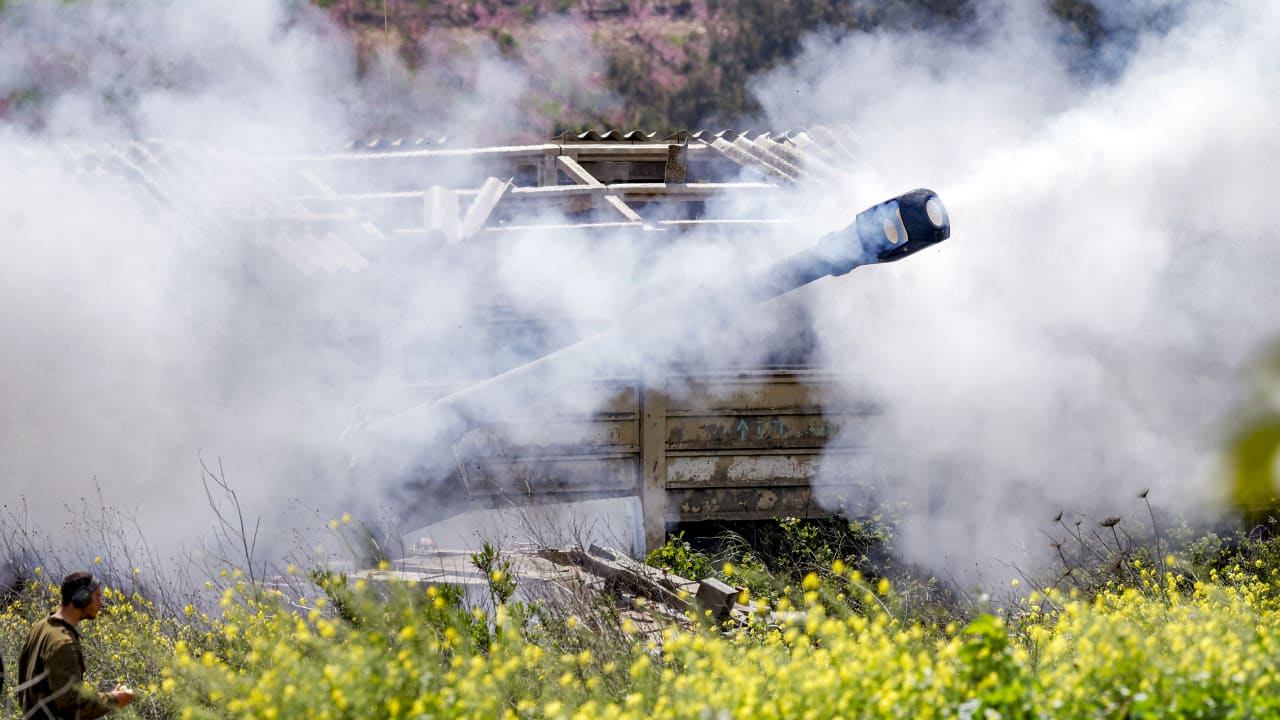
Rather, the IDF would use various sensors, surveillance, aerial power, artillery, and tanks mixed in with ground troops in various parts of southern Lebanon in order to keep Hezbollah out, but without actually holding stagnant positions throughout the area, defense sources stated.

There is no intention at this time to build any more permanent IDF bases in southern Lebanon, although it was unclear if that would remain the case if there was an extended standoff with Hezbollah over disarmament.
In the meantime, defense sources said that Israel will prevent the mostly Hezbollah-affiliated Shiites of southern Lebanon from returning to their villages.
Moreover, defense sources stated that houses on the first line of southern Lebanese villages, which were not destroyed in the fall of 2024, are now being destroyed based on the concept that Hezbollah used and abused any remaining structures in that area.
According to defense sources, 621,000 Shiites have been evacuated from southern Lebanon, and 585,000 Shiites have been evacuated from Dahiya in Beirut during the current conflict.
South of the Litani River, 71% of the Lebanese residents have been evacuated, as have 67% of the Lebanese south of the Zahrani River.
Regarding quarters within Dahiya, multiple key quarters have been nearly fully evacuated, while others are still only one or two-thirds evacuated.
Defense sources added that there was no set time to end the current war with Hezbollah, and were not even willing to commit to several months as an endpoint, saying that it was likely to last longer than the war with the Islamic Republic.
On the other hand, it is also possible that Israel and Hezbollah will mostly stop firing at each other at some point for a period after the Iran war ends, with the question of the IDF’s large presence in southern Lebanon to be addressed in the diplomatic sphere.
Hezbollah and Iran both seriously weighed preemptive strikes on Israel prior to the current war, defense sources said on Monday.
It has been reported before that Israel was concerned that Iran might try a preemptive strike to catch the Jewish state by surprise, but Monday was the first time that any Israeli sources had claimed a potential preemptive strike possibility by Hezbollah prior to this war.
Regarding Hezbollah, defense sources said that Hezbollah even ordered 1,000 Radwan special forces to head south in the direction of Israel and IDF forces.
According to defense sources, Hezbollah found it unacceptable how much the IDF was striking them since the fall 2024 ceasefire, even though the Israeli military’s strikes were far fewer than during the fall of 2024 or currently.
Defense sources hedged on the question of whether Hezbollah intended to try to invade northern Israel, instead appearing to imply that the attack would have focused with ground forces on IDF troops, along with rocket fire on a mix of IDF forces and northern Israeli border villages.
Destruction of southern Lebanese houses
Pressed about why it took over two days for Hezbollah to join the current conflict after Israel and the US were already heavily bombing Iran, if it had been revving up for a preemptive strike anyway, defense sources responded that the IDF and American attacks on the Islamic Republic threw off Hezbollah’s calculations.
In other words, once they lost the element of surprise, Iran was up against the wall, and Washington was involved; it took some time for Hezbollah to reevaluate how and when it would fight as a latecomer to the conflict.
Despite the argument by defense sources, it remains unclear whether Hezbollah would have in fact struck Israel first had Jerusalem not initiated its war on Iran, or whether Hezbollah’s potential preemptive strike would have remained in the realm of theory.