
Israel will need approximately $10 billion beyond existing US military aid commitments to pay for American weapons already ordered, The Wall Street Journal reported on Thursday, citing a State Department document sent to Congress, raising questions about the feasibility of US President Donald Trump's plan to end military assistance to Israel.
The figure, based on orders outstanding as of April 1, represents funding that would still be required after the current US-Israel military aid agreement expires in 2028. It remains unclear whether the amount has changed since April, according to the report.
The disclosure follows Trump's announcement on Tuesday that Washington intends to end military assistance to Israel by the end of 2026, a move that reportedly surprised senior Israeli officials, including members of the defense establishment.
Under the existing 10-year memorandum of understanding signed during the Obama administration, Israel receives $3.3 billion annually in US Foreign Military Financing to purchase American-made military equipment, along with $500 million for missile defense cooperation. The agreement is set to expire in 2028.
According to the WSJ, Washington has already committed nearly $7 billion in military financing over the remaining two years of the arrangement. However, those funds would not cover all of Israel's outstanding weapons purchases.
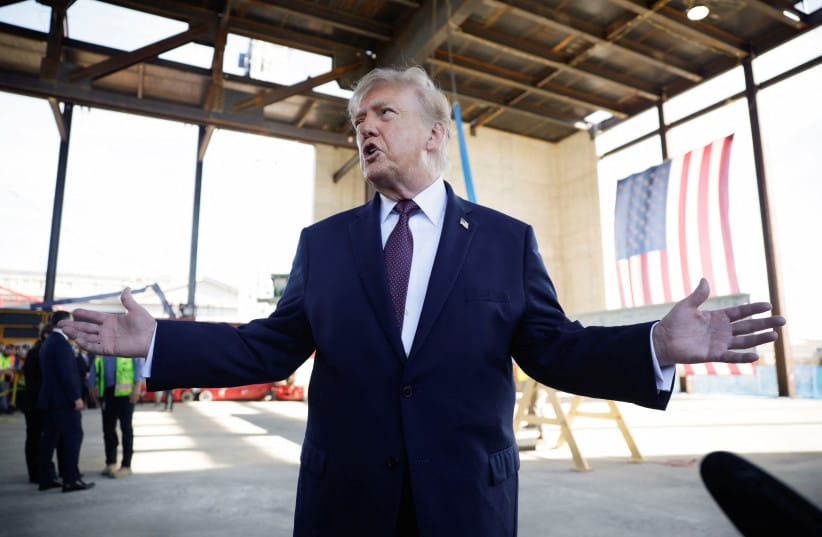
Who will pay for Israel's outstanding weapons orders?
The $10 billion funding gap was disclosed in a State Department letter sent to the office of Democratic Rep. Joaquin Castro of Texas, who had requested information about Israel's military financing obligations.
The letter stated that the outstanding commitments could be financed through future US military assistance, Israeli national funds, or a combination of the two.
"Even if the MOU ran its full course to 2028, there’s still $10 billion above and beyond that, and there’s an issue of who’s going to pay for that," Castro told the WSJ.
Israel's military procurement arrangements allow it to place orders against US funding pledged for future years, enabling long-term purchases before the money is transferred.
Consequently, terminating annual assistance would not automatically eliminate existing weapons contracts or the financial commitments associated with them.
Among the major purchases potentially affected is Israel's acquisition of 25 additional F-35 stealth fighter jets. The Defense Ministry signed a roughly $3 billion agreement for the aircraft in June 2024, with deliveries scheduled to begin in 2028.
The potential funding shortfall comes as Prime Minister Benjamin Netanyahu has advocated reducing Israel's dependence on US military assistance over the next decade.
However, Israeli security experts have warned that an accelerated termination of US aid could have consequences for Israel's defense planning and strategic relationship with Washington.
Washington considers shifting from military aid to joint production
American lawmakers are considering legislation that would replace elements of the existing military financing framework with expanded joint defense development and production.
According to the WSJ, the proposal would incorporate US-Israel defense industrial cooperation into the National Defense Authorization Act, the annual American defense policy legislation expected to be completed by the end of 2026.
Supporters argue that the arrangement could deepen technological cooperation between the countries and enable the Pentagon to work more closely with Israeli defense manufacturers.
They point to the Iron Dome missile defense system, developed through extensive American-Israeli cooperation, as an example of the potential benefits of joint production.
Critics, however, warn that integrating Israeli defense programs further into Pentagon procurement networks could make it harder for future US administrations or lawmakers to reduce military cooperation.
The proposed changes would also leave unresolved Israel's immediate dependence on American weapons deliveries, including the substantial quantities of bombs and other munitions supplied during recent conflicts.
A shift toward independently financing American weapons purchases would place additional pressure on Israel's defense budget, which already accounts for approximately 7% of the country's gross domestic product, according to the WSJ.
Any reduction in assistance would also have to contend with longstanding US legislation requiring Washington to preserve Israel's qualitative military edge over potential regional adversaries.
Political pressure on US military assistance grows
Trump's announcement comes amid increasing criticism of US military support for Israel in both major American political parties, particularly following the wars in Gaza and Lebanon and the joint American-Israeli military campaign against Iran.
The issue gained prominence during Tuesday's US midterm elections, which saw major Democratic gains.
Among the election winners was Abdul El-Sayed, who became Michigan's first Muslim US senator after campaigning against unconditional military assistance to Israel.
El-Sayed has also called for an end to US weapons sales to Israel, going further than Trump's stated intention to end direct financial assistance while maintaining arms sales.
Vice President JD Vance subsequently pointed to public dissatisfaction with the Iran war and Washington's relationship with Israel as factors contributing to Republican electoral losses.
Nevertheless, current and former American officials have questioned whether Trump's proposal could be implemented on the timetable he has suggested, given existing congressional appropriations and weapons procurement commitments.
Josh Paul, a former State Department official who resigned during the Biden administration in protest of US policy toward the Gaza war, told the WSJ that an abrupt termination was unrealistic.
"It’s not plausible we stop by the end of this year" because of funding already committed by Congress, Paul said.
"We’ve not seen anything yet to substantiate this," he added.
The unresolved $10 billion in arms orders illustrates the financial obstacles confronting both governments as they consider replacing decades of direct American military assistance with a different model of defense cooperation.