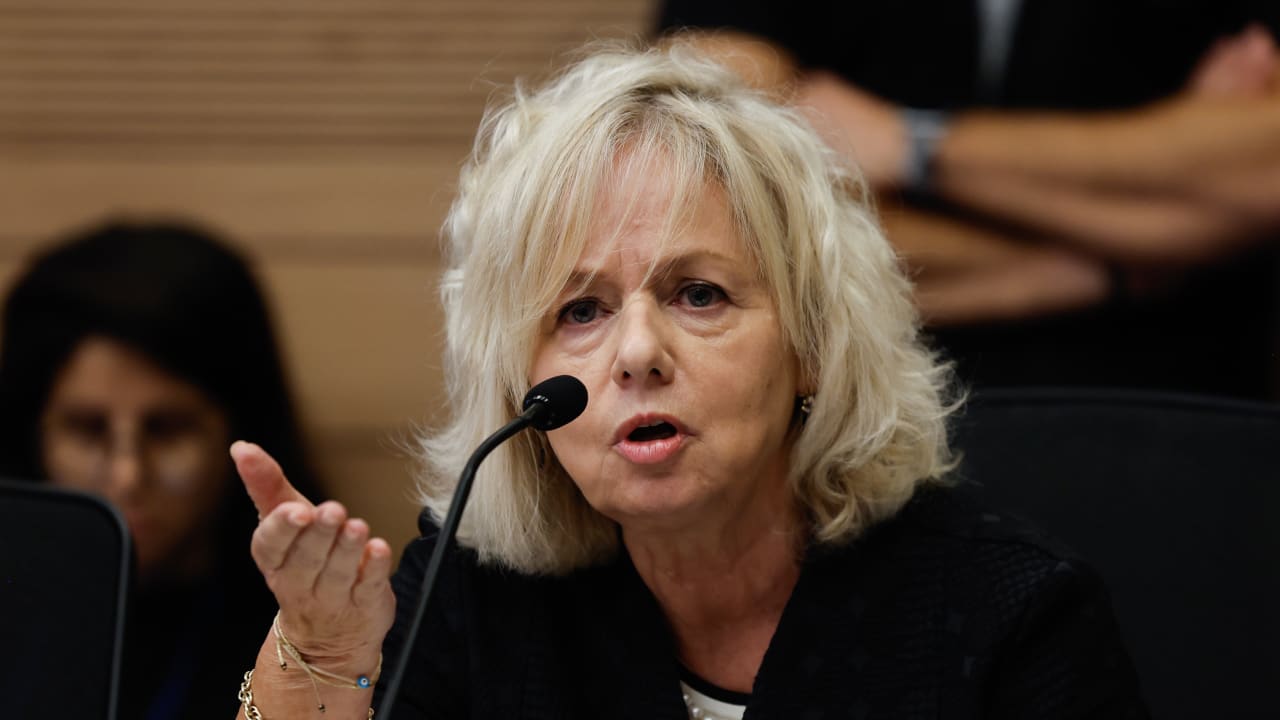
The Knesset plenum on Wednesday advanced the controversial bill to split the role of the attorney-general into three different positions, which was initiated by Religious Zionist Party MK Simcha Rothman.
Rothman’s bill passed its preliminary reading by a margin of 59-44. It will now move on to committee discussions and still needs to pass three additional readings in the Knesset.
Various other versions of bills to divide the role of the attorney-general were also advanced during the plenary session in preliminary readings; however, the bill submitted by Rothman in 2025 is considered among the more radical.
This bill would split the attorney-general’s role into three separate positions: Legal adviser to the government, head of the state prosecution, and representative of the State of Israel in court.
Corruption claims against Attorney-General Gali Baharav-Miara
The bill proposed by Rothman states that the attorney-general’s role should be split due to “inherent institutional conflicts of interest.”

The proposal says this conflict of interest is because the job of the attorney-general is to both advise the government, working in cooperation with it, while also making decisions regarding investigations and prosecutions of ministers and elected officials.
Rothman said the “attorney-general currently holds powers unmatched in any other democratic country.”
Justice Minister Yariv Levin spoke strongly against Attorney-General Gali Baharav-Miara during his remarks in the plenum, stating that she caused the institution “to be corrupted at its core” during her term.
Legal scholars have warned that the new proposals would place unprecedented power in the government’s hands over its principal legal challenger.
The Movement for Quality Government condemned the approval of the bills, stating that they were “a legislative ambush intended to replace the attorney general and dismantle the law enforcement system.”
“This law is not meant to improve the justice system; it is meant to protect politicians suspected or investigated for criminal offenses from the enforcement of the law,” the statement added.
Brothers and Sisters in Arms for Democracy movement called the decision to split the role of the attorney general “another step in turning the justice system into a puppet of this government of destruction, meant to protect corrupt elected officials.”
Under the Rothman bill, the A-G would be appointed directly by the prime minister and the justice minister, with government approval, for a term of six years. The candidate must have 10 years of criminal law experience, including at least five years as a District Court judge, but their legal opinions would no longer be binding.
Among the other bills approved for preliminary reading, which aim to divide the role of the attorney general, was one initiated by New Hope-United Right MK Michel Buskila.
Buskila’s bill also seeks to separate the different roles of the attorney-general, though in a different manner.
The proposal says it will transfer the attorney-general’s authority to the state attorney to decide on opening investigations on the prime minister, ministers, and MKS, subject to the approval of a three-member committee.
Buskila’s bill passed its preliminary reading by a margin of 61-46.
Opposition MKs slammed the proposals to split the role of the attorney-general, while various coalition MKs welcomed it.
“The High Court will shut down this bill, and it’s too bad that this is what you’re busy with these days,” Blue and White MK Orit Farkash-Hacohen said.
Farkash-Hacohen told the plenum that the bill was “a broad, systematic, and fundamental proposal aimed at crushing the status of legal counsel, both in relation to the government and within the civil service itself.
“Today you’ve moved on to dismantling the most important gatekeeper in the country, the last barrier preventing this government from advancing and funding draft evasion,” she added.
According to Israeli legal precedent, the attorney-general is the governmental organ responsible for interpreting the law for the government, and its interpretations are legally binding.
The attorney-general also oversees the country’s public prosecution apparatus and, as such, decides whether or not to prosecute a sitting MK or minister.
The Attorney-General’s Office is also responsible for representing the government in proceedings against it in the High Court of Justice, and for overseeing the legal advisers in each individual government ministry.
Baharav-Miara was appointed to the position during the previous government’s tenure.
The current government has repeatedly accused her of intentionally blocking policy initiatives to eventually lead to the government’s downfall; using her power as chief prosecutor to launch politically-motivated “witch hunts”; and refusing to give the government its day in court by siding with petitioners in a number of court cases.
Sarah Ben-Nun and Eliav Breuer contributed to this report.