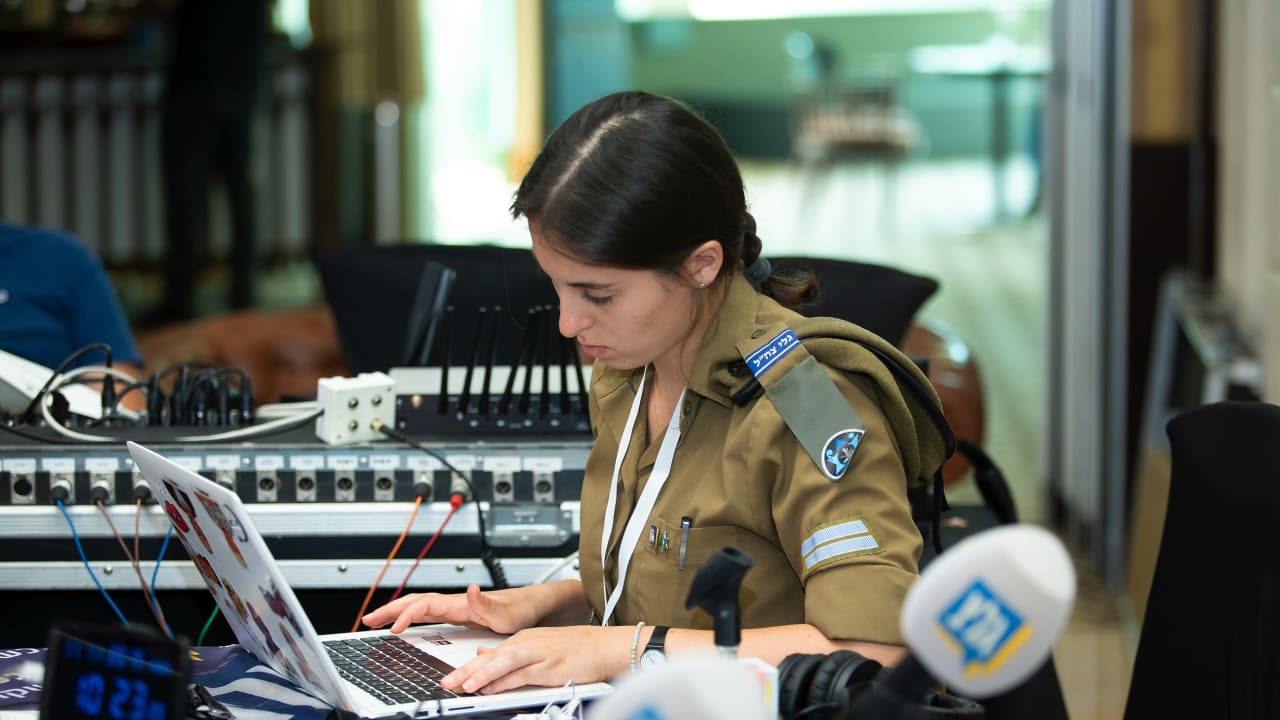
Lawmakers clashed on Tuesday over the government’s decision to shut down Army Radio, calling the closure politically motivated and raising various issues with it during a Knesset State Control Committee meeting.
The panel convened ahead of the High Court hearing scheduled for Wednesday, after the court issued an interim injunction freezing the government’s December 22 move to close the 75-year-old, state-funded broadcaster.
Those who attended the panel raised concerns about government failure to implement professional recommendations, potential harm to press freedom, and the implications of the station’s closure for the IDF, its personnel, and the public.
The shutdown is “a political move with a pre-marked target,” CEO of the Israel Press and Communications Council, Pini Shomer, said.
Committee chairman MK Alon Schuster (Blue and White) told the panel that the decision-making process surrounding the station’s closure raised serious questions, particularly given previous professional recommendations calling for reforms rather than a full shutdown of the station.

MK Tally Gotliv (Likud) was the sole coalition member present at the meeting and repeatedly clashed with opposition lawmakers. She slammed the station and MKs who supported it, arguing that since Army Radio is funded by the state, it should not be permitted to broadcast political content. She also claimed that the content weakens the morale of IDF soldiers.
“I believe this station should not be allowed to operate,” Gotliv told the panel.
MK Naama Lazimi (The Democrats) argued that hostages who were recently released from Hamas captivity testified that Army Radio broadcasts they heard when they were held captive were a source of strength for them.
MK Vladimir Beliak (Yesh Atid) said the process leading to the station’s closure was fundamentally flawed and warned that it fit into a broader pattern of government attempts to suppress independent media, particularly as Israel has entered an election year.
“The goal is to harm freedom of speech,” Beliak said. “This is especially dangerous during an election year.”
MK Mickey Levy (Yesh Atid) cautioned that closing down Army Radio joins a series of actions that weaken freedom of the press in Israel.
Representatives who formerly worked at the station defended Army Radio while acknowledging that reforms may be necessary.
Former Army Radio crime reporter Hadass Steif said that the station had a unique role within the military.
“There is room for changes, but not for closure. Corrections and improvements should be allowed instead of an extreme move to dismantle the station,” she said.
Shutdown unanimously approved by cabinet
That decision to shut down Army Radio was approved unanimously by the cabinet after months of pressure from Defense Minister Israel Katz. It caused the immediate halt of recruitment to the station, initiated the reassignment of serving soldiers, and set in motion severance arrangements for civilian employees.
The move also drew swift criticism from Attorney-General Gali Baharav-Miara, who warned it could amount to an unlawful effort to undermine public broadcasting and freedom of expression.
Journalists’ unions, media organizations, and civil society groups denounced the decision, arguing that Army Radio has become a central pillar of Israel’s media landscape and that its closure, at this political moment, raises serious concerns.
Sarah Ben-Nun and Yonah Jeremy Bob contributed to this report.